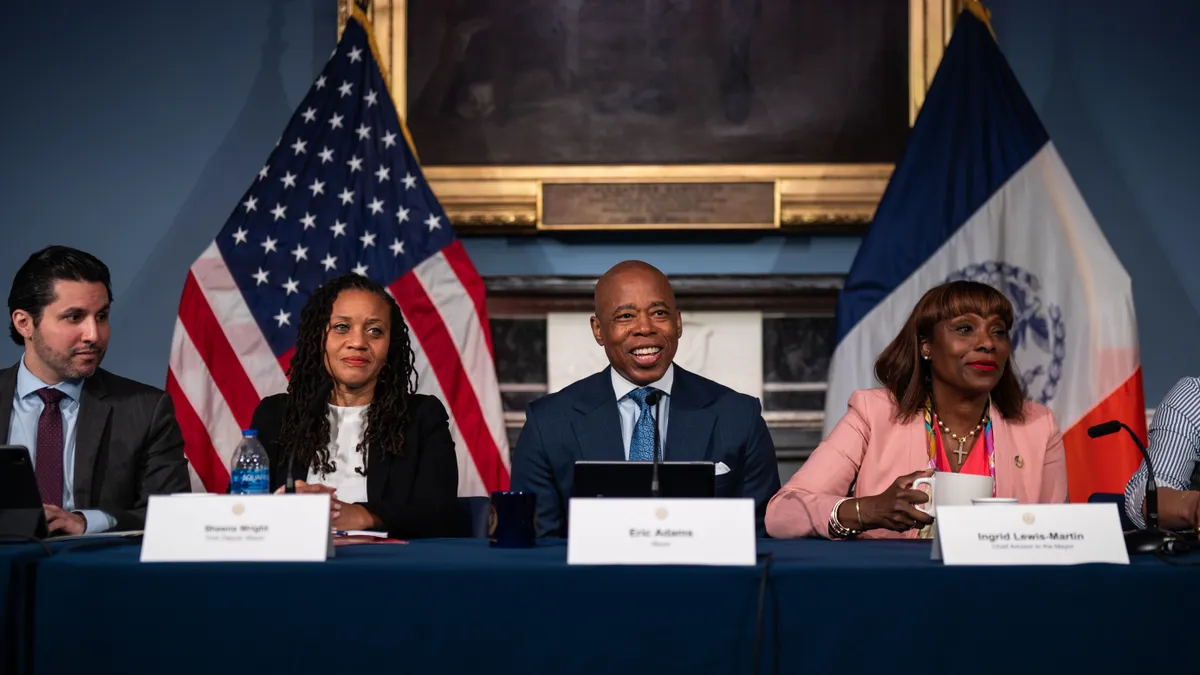
In a significant stride towards modernizing New York City’s landscape, the City Council has approved a landmark initiative aimed at revitalizing commercial zoning regulations. This initiative, known as the Zoning for Economic Opportunity, represents the second phase of Mayor Eric Adams’ ambitious City of Yes campaign, which seeks to transform the city’s economic and environmental framework.
The newly approved zoning changes, which were officially sanctioned on June 6, 2024, are set to overhaul decades-old restrictions, thereby expanding the potential for commercial and manufacturing growth across the city. This update marks the first major revision to commercial zoning laws since 1961, underscoring a pivotal shift towards fostering economic recovery and sustainable job creation.
Key Highlights of the Initiative
Expansion of business locations to include more areas citywide.
Doubling of available space for small-scale clean manufacturing.
Facilitation of adaptive reuse projects for existing buildings.
Elimination of zoning impediments that hinder business expansion.
Mayor Adams, in a statement, emphasized the importance of this initiative, stating, “We have taken another historic step to bring our city’s zoning code into the 21st century.” The changes are designed to support local businesses, fill vacant storefronts, and promote vibrant commercial corridors throughout the city.
Driving Economic Recovery
This zoning update is part of a broader strategy to drive New York City’s economic recovery through commonsense policy changes. These changes aim to help businesses find space, support entrepreneurs, and enable more vibrant streetscapes. The initiative also places a strong emphasis on expanding manufacturing, allowing small enterprises like microbreweries and apparel makers to thrive in commercial corridors across all five boroughs.
The initiative follows the City of Yes for Carbon Neutrality initiative approved in December, which aimed to remove barriers to renewable energy installations and promote cleaner air and lower energy costs.
In addition to supporting local businesses, the zoning changes aim to enhance pedestrian experiences and ensure that commercial uses contribute positively to their surroundings. The city council is expected to vote on the third and final phase of the City of Yes initiative, City of Yes for Housing Opportunity, by the end of the year. This phase will focus on adaptive reuse as part of a plan to build 500,000 new homes in New York City by 2032.
More Articles
Getting licensed or staying ahead in your career can be a journey—but it doesn’t have to be overwhelming. Grab your favorite coffee or tea, take a moment to relax, and browse through our articles. Whether you’re just starting out or renewing your expertise, we’ve got tips, insights, and advice to keep you moving forward. Here’s to your success—one sip and one step at a time!
Imagine a morning where the commute is just a few steps from your bedroom to your home office. This is the reality for many in today's post-pandemic world, where remote work has become a staple of the modern workforce.
CRISPR technology has become the frontrunner in genome editing, surpassing earlier methods like zinc finger nucleases and transcription activator-like effector nucleases. The recent FDA approval of the CRISPR-Cas9 drug, exa-cel, marks a significant milestone particularly for treating sickle cell disease and transfusion-dependent beta thalassemia.
In recent years, artificial intelligence has emerged as a revolutionary tool in the field of oncology. AI's integration into healthcare transcends buzzwords, transforming cancer diagnosis, treatment personalization, and drug discovery.
The rapid advancements in artificial intelligence (AI) are transforming the landscape of radiology, promising to enhance diagnostic accuracy and support personalized medicine. However, as this technology becomes more integral to medical imaging, it brings with it a host of ethical and societal considerations that cannot be ignored.
AI's promise in healthcare is undeniable, with its ability to uncover hidden disease patterns and predict illnesses. However, the reliance on historical data can exacerbate existing biases, particularly affecting marginalized communities such as the LGBTQIA+ and certain ethnic and racial groups.
Telemedicine stands out as a transformative force, offering a lifeline to patients and providers alike. As we move beyond the pandemic, the challenge is to integrate this technology without escalating costs or overshadowing the indispensable role of in-person consultations.