Rising Home Insurance Costs Are Quietly Reshaping America’s Real Estate Market
Across the United States, a new force is beginning to reshape local real estate markets — and it isn’t mortgage rates, inflation, or even inventory shortages. It’s home insurance. In the most disaster‑prone areas, skyrocketing premiums are eating directly into home values, upending long‑held assumptions about affordability, risk, and long‑term investment viability.
The New York Times recently published a deeply reported investigation into this rapidly expanding crisis, revealing how rising premiums — often fueled by global reinsurance upheavals — are placing thousands of homeowners under intense financial pressure. Their reporting, grounded in national data and real‑world interviews, highlights an emerging trend that real estate professionals must watch closely.
When Insurance Becomes the Dealbreaker
In coastal Louisiana, residents are facing insurance increases that would have seemed unimaginable just a few years ago. Sandra Rojas, a fifth‑generation resident of Lafitte, saw her annual premium soar to $8,312 — more than double what she paid four years earlier. She considered selling, but with home values in her region down 38% since 2020, her options are limited. “You’re kind of stuck where you are,” she said.
Similar stories are emerging nationwide. In Colorado, buyers are walking away from deals after failing to secure affordable wildfire coverage. In California, 13% of real estate agents report transactions falling apart because buyers couldn’t obtain insurance at all.
New research from the National Bureau of Economic Research provides numbers to match the stories. Disaster‑exposed ZIP codes are seeing home values fall in direct response to rising insurance costs. According to researchers Benjamin Keys and Philip Mulder, homes in the top 10% most exposed areas are selling for an average of $43,900 less than they would have otherwise.
Their study of 74 million payment records from 2014–2024 found that nearly one‑fifth of the national increase in premiums since 2017 is tied to “rapid repricing” of climate‑driven risks. Meanwhile, global reinsurers — absorbing mounting losses — have doubled the rates they charge insurers, who then pass the burden directly to homeowners.
A Growing National Ripple Effect
In hail‑risk Midwest states, insurance now consumes more than 20% of total housing payments. In parts of Louisiana, it exceeds 30%. For buyers, this means steeper monthly costs. For sellers, it means fewer qualified buyers and declining property values.
Some homeowners are even dropping coverage entirely. In Lafitte, Clarence Guidry received a quote for a $20,000 premium — plus a $50,000 hurricane deductible. Unable to sustain the cost, he paid off his mortgage and now self‑insures. He’s not alone: 13% of U.S. homeowners are now uninsured.
What This Means for Real Estate and Professional Licensees
Insurance‑driven pricing pressures are no longer hypothetical — they are here, reshaping how agents, lenders, appraisers, and insurance professionals work. Deals stall, lenders tighten, buyers hesitate, and municipalities face shrinking tax revenue as home values cool.
For professionals, especially those working in high‑risk states like Florida, staying current on these shifts is essential. Cameron Academy offers real‑estate and insurance licensing education designed to help professionals understand not only the rules of their industry but also the evolving economic forces that shape it. Understanding how climate‑risk and insurance impacts property value is now a core professional skill.
Looking Forward
As reinsurers adjust their risk models and climate‑driven disasters grow more severe, insurance premiums are projected to keep rising. Industry analysts expect home values in high‑risk markets to adjust further downward as buyers push for affordability.
For many Americans, the dilemma is becoming painfully clear: pay soaring premiums, sell at a loss, or self‑insure and hope for the best.
Real estate, insurance, lending, and financial professionals will need to stay educated and adaptable — and up‑to‑date training is one of the most powerful tools available.
More Articles
Getting licensed or staying ahead in your career can be a journey—but it doesn’t have to be overwhelming. Grab your favorite coffee or tea, take a moment to relax, and browse through our articles. Whether you’re just starting out or renewing your expertise, we’ve got tips, insights, and advice to keep you moving forward. Here’s to your success—one sip and one step at a time!
Artificial intelligence is rapidly reshaping the mortgage industry, boosting productivity, reducing manual work, and accelerating loan closings. From automated document data extraction to AI‑generated underwriting narratives and predictive analytics, lenders are using new tools that improve accuracy and drastically speed up processing times. With chatbots, next‑gen point‑of‑sale systems, and end‑to‑end automation, preapprovals that once took days now take minutes. For mortgage and real estate professionals, mastering AI is becoming a major competitive advantage—one that defines who will thrive in the future of lending.
Florida’s property insurance rates are finally starting to drop, but many homeowners are still seeing higher monthly bills. The reason isn’t insurer price hikes—it’s soaring replacement costs driven by construction inflation, labor shortages, and rising home values. Nearly 75 percent of recent premium increases came from higher property values alone. Understanding this gap between “rates” and “premiums” helps homeowners—and real estate and insurance professionals—navigate the shifting Florida market and make smarter coverage decisions.
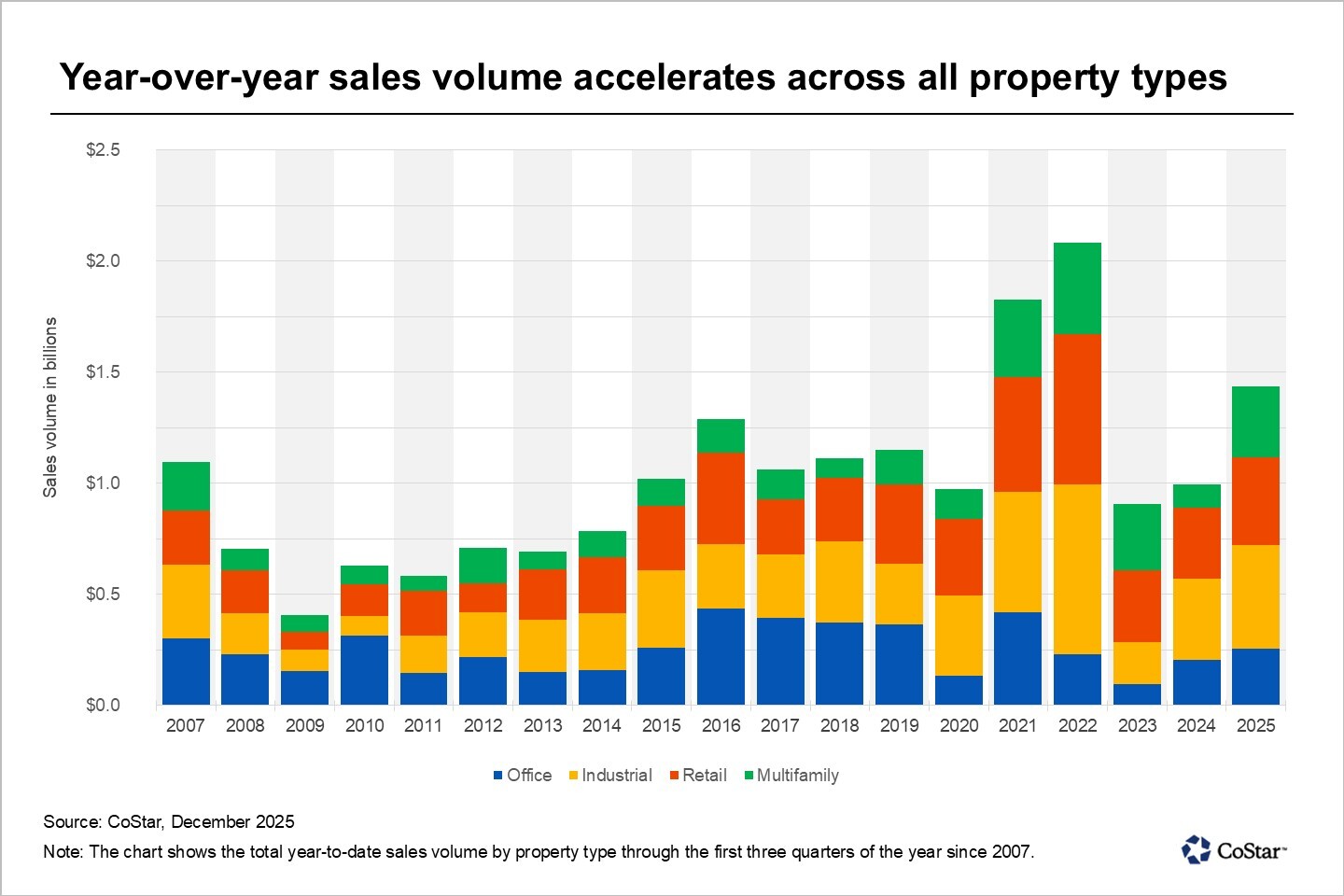
Milwaukee’s commercial real estate market is finally showing real signs of recovery, with 2025 sales volume hitting a three‑year high and investor confidence steadily returning. Driven by selective, fundamentals‑focused buying—favoring strong cash flow, quality assets, and strategic pricing—the city is moving from a period of correction into a healthier, opportunity‑rich phase. For real estate professionals nationwide, Milwaukee’s momentum reflects broader CRE market stabilization and the growing importance of disciplined underwriting and market expertise.
Industry leaders project a major surge in reverse mortgage activity heading into 2026, fueled by rising proprietary products, lender innovation, and strong investor interest. As high interest rates push originators to adopt new strategies, flexible private‑label options, senior‑focused HELOCs, and a wave of big‑capital investment are reshaping the market. With education and policy shifts poised to unlock even more demand, reverse mortgages are entering their most transformative era yet.
Experts forecast that 2026 may bring long‑awaited relief to homebuyers, with both existing and new home inventory expected to rise. NAR predicts a boost in home sales, a slight drop in mortgage rates, and a modest 4% increase in prices—conditions that could motivate more homeowners to list while builders add over a million new homes to the market. For first‑time buyers, higher loan limits and easing qualification standards may make entering the market more achievable than in recent years.
South Florida enters 2026 with renewed optimism as falling mortgage rates, improving buyer confidence, and a strong job market help stabilize a housing landscape that struggled in 2025—especially in the condo sector. While single-family homes remained resilient last year, condos faced price drops, rising fees, and hesitation tied to new safety regulations. With rates projected to fall to around 5.8% by year’s end, buying power is increasing, inventory may loosen, and activity is expected to pick up. Still, affordability challenges persist, Miami’s rental market remains intensely competitive, and the condo sector’s recovery will take time.

 The Mortgage Industry’s AI Transformation: Automation Reshapes Lending From Application to Approval Gallery