In the picturesque yet precarious landscape of North Carolina’s Outer Banks, the allure of oceanfront living is increasingly shadowed by the ominous threat of climate change. Just last week, a $650,000 beachfront home succumbed to the relentless encroachment of the sea, collapsing into the Atlantic. This marks the sixth such incident in the region over the past four years, underscoring the urgent climate threats coastal properties face while the housing market seemingly turns a blind eye.

Despite the stark reality of rising sea levels, which research suggests could impact up to 13 million American homes by 2100, the demand for coastal properties remains robust. According to a recent paper published in Nature Communications, U.S. coastal properties have appreciated faster than those in inland zones, driven by affluent buyers eager for waterfront views.

“Consumers are clearly mindful that…climate change impacts could be within the window of a 30-year mortgage, but their current behavior still implies that to have a view of the ocean is more desirable,” explained Lawrence Yun, chief economist at the National Association of Realtors, to the paper’s authors.

The Outer Banks, a series of low-lying barrier islands, are particularly vulnerable to rising sea levels and coastal erosion. Some areas have recorded sea level rises of up to seven inches in recent years. Following last week’s house collapse, local authorities have taken action, shutting down a stretch of road and urging visitors to remain cautious, as detailed in a National Park Service advisory.

This phenomenon is not isolated to North Carolina. Coastal regions across the U.S. are experiencing more severe storms and heavier rainfall, further eroding shorelines. In Salisbury, Massachusetts, homeowners spent half a million dollars trucking in sand to protect their properties from coastal storms earlier this spring. Similarly, a $16 million mansion in Dana Point, California, teeters on the brink of collapse into the Pacific.

Average sea levels along the American coastline are expected to rise exponentially over the coming decades, threatening the 40% of the population residing in coastal zones, as reported by the NOAA.

The rising threat of coastal flooding and erosion has led to insurance companies retreating inland. In Florida, a state whose highest point is a mere 345 feet above sea level, multiple major insurers have pulled out, causing consumers’ premiums to soar. Nonetheless, Florida home values have surged since the pandemic, with the average home in the southern part of the state reportedly 35% overvalued.

“It’s not a matter of if, but when coastal communities approach complete inundation,” said Duke University economics professor Martin Smith, who co-authored a paper proposing a model for coastal property values. “The question is: Are there more effective ways to manage coastal areas in the next few decades that could smooth this transition?”

As the tide of climate change continues to rise, the juxtaposition of booming coastal property values against the backdrop of environmental peril presents a complex challenge for homeowners, policymakers, and the real estate market alike. The original article from Fortune provides an in-depth exploration of these pressing issues.

More Articles

Getting licensed or staying ahead in your career can be a journey—but it doesn’t have to be overwhelming. Grab your favorite coffee or tea, take a moment to relax, and browse through our articles. Whether you’re just starting out or renewing your expertise, we’ve got tips, insights, and advice to keep you moving forward. Here’s to your success—one sip and one step at a time!

Commercial Real Estate Slows Again as Investors Flock to Larger, Safer Deals

November marked another cooldown for commercial real estate, with total deal volume dropping 10% year over year and falling below even 2020’s levels. While overall activity is slowing, investors are concentrating their money on bigger, more resilient assets—driving a 51% surge in deals over $100 million and pushing average transaction sizes well above historical norms. Multifamily remains the strongest sector, office deals are becoming more strategically focused, and medical office and data centers continue to outperform as long‑term demand stays solid.

Lower Rates Could Spark a Commercial Real Estate Comeback in 2026

After years of stalled activity, commercial real estate may finally be nearing a rebound. Experts say that expected interest‑rate drops in 2026 could reignite investor confidence, unlock sidelined capital, and boost deal flow across multiple sectors. But the outlook isn’t uniformly sunny—multifamily faces oversupply, industrial is cooling after years of rapid growth, and weakening employment conditions may slow absorption. For professionals across real estate, mortgage, insurance, and finance, the shifting landscape presents both challenges and major opportunities for those who stay informed and properly licensed.

Consumer Reports Warns Congress About Rising Fintech Risks in 2026

Consumer Reports delivered a major warning to Congress, highlighting how rapidly expanding fintech tools—especially AI‑driven platforms—are outpacing consumer protections. In testimony before the House Subcommittee on Digital Assets, Financial Technology and AI, CR called for stronger, clearer rules to prevent hidden fees, predatory practices, and confusion within digital financial products. For professionals in real estate, mortgages, insurance, and finance, these emerging regulations may soon influence lending decisions, underwriting, credit evaluations, and compliance expectations across the industry.

Amazon’s Massive Corporate Shakeup Signals a New Era of AI‑Driven Workforce Transformation

Amazon is preparing to cut up to 30,000 corporate jobs by mid‑2026 as it pivots aggressively toward automation and AI. Following 14,000 layoffs in late 2025, the company is eliminating layers of management to redirect billions into robotics, generative AI systems, and supercomputing partnerships. While warehouse hiring continues for seasonal demand, Amazon’s internal shift reveals a broader nationwide trend: white‑collar roles across tech, finance, logistics, and more are being reshaped by automation at unprecedented speed.

Chuck Bonfiglio Steps In as 2026 Florida Realtors President, Signaling a Year of Big Industry Shifts

Florida’s real estate market enters 2026 with new leadership at the helm as Chuck Bonfiglio, broker-owner of AAA Realty Group, is officially installed as President of Florida Realtors. With more than 230,000 members behind the association, Bonfiglio highlights affordability, insurance reform, and taxes as key priorities while expressing optimism about easing mortgage rates, stabilizing prices, and growing inventory. Backed by years of statewide and national Realtor leadership, he aims to guide professionals through another transformative year alongside a newly appointed 2026 leadership team.

Tampa’s Real Estate Market Enters Its Selective Era

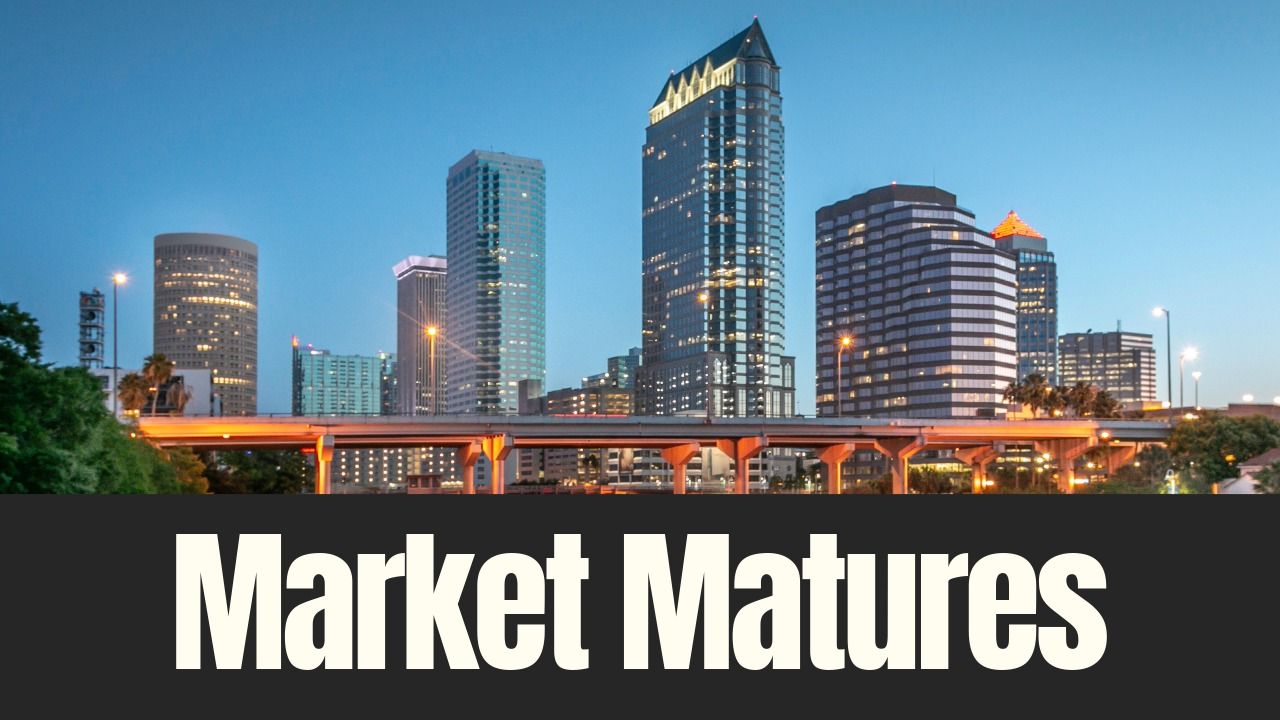
Tampa isn’t cooling off—it’s getting smarter. After years of rapid expansion, the city’s commercial real estate market has shifted into a more disciplined, selective phase. Population growth remains strong, office leasing is outperforming national trends, industrial activity is normalizing sustainably, and retail is seeing renewed investor confidence. With capital becoming more cautious and health care real estate emerging as a major growth sector, Tampa is entering a new era focused on strategy, execution, and long‑term fundamentals.