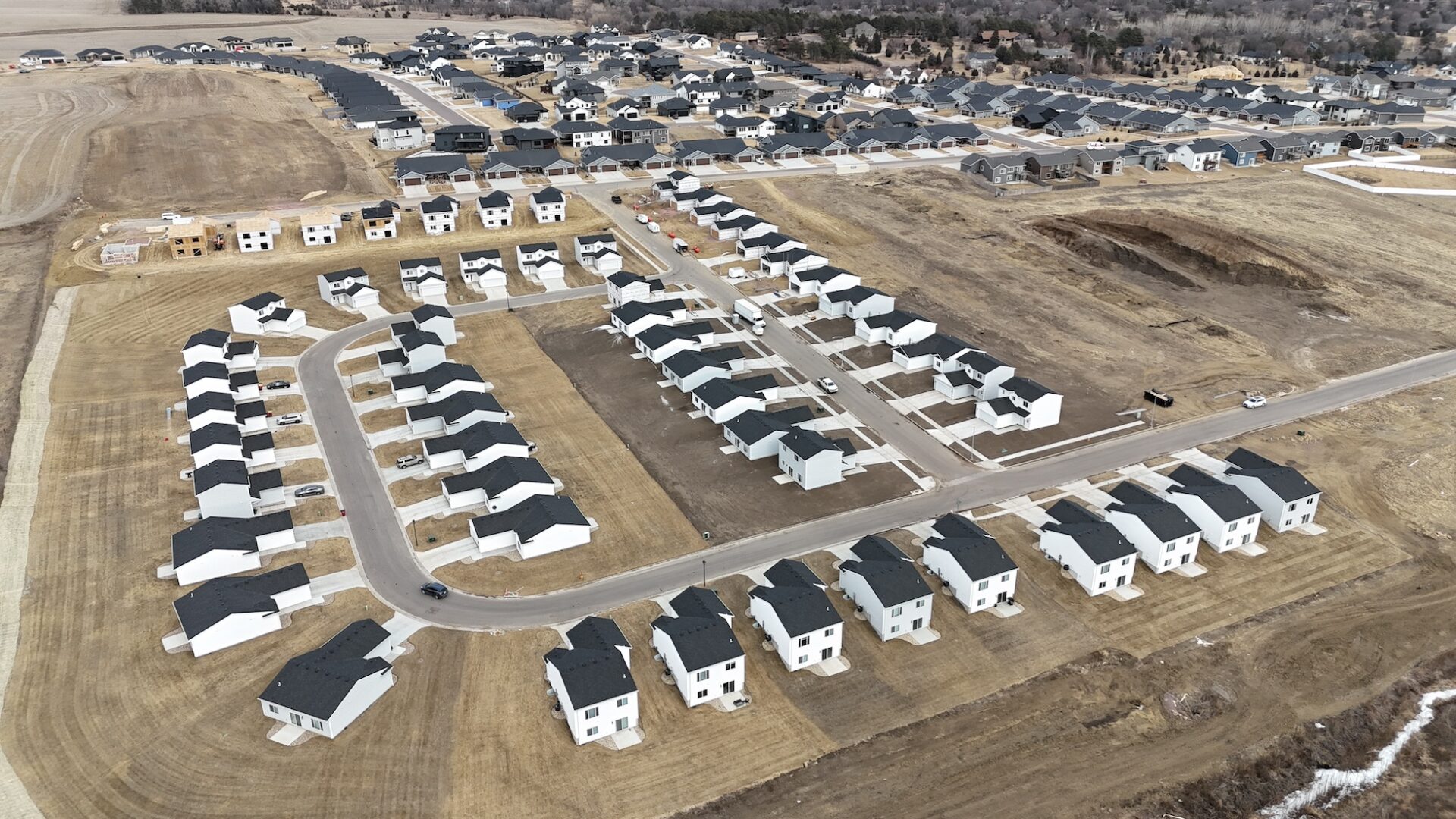
Two pioneering multifamily projects in the eastern part of Sioux Falls are gaining ground, backed by compelling interest and investment from local stakeholders. Spearheaded by the Sioux Falls-based Ernst Capital Group, the city sees a significant influx of new housing options tailored to meet diverse rental needs.
“We’re seeing an exceptional performance in our portfolio, especially highlighting some of the best winter leasing activities on record,” said Chris Daugaard, a partner in Ernst Capital Group. “This enthusiasm encourages us as we progress with these new projects.”
Willowbrook Village
The first project, Willowbrook Village, has already welcomed its initial residents. Situated northeast of Veterans and Arrowhead parkways, this build-to-rent community introduces 57 single-family homes managed by Lloyd Companies. Each residence boasts two- or three-bedroom configurations complete with attached garages. Residents have noted the quality finishes, comparing them to freshly constructed homes intended for sale rather than rentals.
This innovative approach to multifamily living focuses on striking a balance between affordability and quality, making it an appealing option without the overhead of luxury amenities. This move aligns well with the broadly thriving residential market within the area, further fortified by the strategic location chosen for development.
Split Rock Village
Simultaneously, Split Rock Village, another development under Signature Fund VI, is progressing at 26th Street and Six Mile Road. It targets a mix of dwellings with upcoming leases for 100 units across studio, one-, two-, and three-bedroom apartments. The inclusive amenity package planned features a clubhouse, pool, and additional recreational facilities, aligning with the growing expectations of the modern tenant.
Ernst Capital’s ventures reflect years of strategic investment and partnership, marking its 38th collaboration since 2007, with 16 specifically focused on projects like those seen with Signature Companies. Chris Daugaard notes the long-term potential of these locations, tying their development closely to the ever-increasing population and demand.
These developments signify more than just urban expansion; they offer local investors a chance to engage deeply with Sioux Falls’ growth story, emphasizing quality and evolving residential preferences. As Ernst Capital opens doors to new investment opportunities, there’s little doubt these projects will carve out a new definition for Sioux Falls’ multifamily housing landscape.
For further information or to get involved with Ernst Capital Group, visit their official website here.
For the full story, refer to the original article on SiouxFalls.Business.
More Articles
Getting licensed or staying ahead in your career can be a journey—but it doesn’t have to be overwhelming. Grab your favorite coffee or tea, take a moment to relax, and browse through our articles. Whether you’re just starting out or renewing your expertise, we’ve got tips, insights, and advice to keep you moving forward. Here’s to your success—one sip and one step at a time!
Illinois kicked off the new year with more than 200 laws taking effect, impacting professionals across healthcare, insurance, real estate, education, and other regulated industries. From major healthcare coverage expansions to new AI hiring limits, enhanced worker protections, school safety reforms, and upgraded public‑safety standards, nearly every sector will see meaningful changes. As compliance expectations grow, institutions like Cameron Academy help professionals stay prepared and career‑ready in an evolving regulatory landscape.
As commercial real estate moves beyond two turbulent years, 2026 is emerging as a year of growth for professionals who know where to look. According to First American economist Xander Snyder, the biggest wins may come not from booming sectors but from distressed properties—especially those with short‑term issues that can recover with creative financing, recapitalization, or strategic repositioning. Multifamily distress, selective office restructuring, and the rise of non‑QM lending are setting the stage for brokers, investors, and new licensees to capitalize on flexible deal‑making and evolving market conditions.
Housing is taking over the national spotlight in 2026, with federal leaders, big‑city mayors, and market professionals all zeroing in on affordability, supply, and sweeping policy changes. From President Trump’s promised reform agenda to looming Section 8 funding risks and aggressive city‑level zoning overhauls, the year is shaping up to be one of the most consequential periods for real estate and related licensed professions. For agents, mortgage brokers, insurance specialists, and anyone tied to the housing ecosystem, rapid shifts in policy and market conditions make 2026 a year where preparation, education, and adaptability will be essential.
A lender wires $4.2 million after receiving what sounded like a routine call from a borrower’s attorney—same voice, same tone, same mannerisms. By morning, the truth emerges: the email was hacked, the phone call was an AI‑generated voice clone, and the money is gone. As scammers use AI to mimic voices, emails, and documents with startling accuracy, real estate finance has become a prime target. The industry’s growing reliance on AI brings efficiency, but also dangerous new vulnerabilities, pushing regulators, insurers, and professionals to rethink verification, security, and trust itself.
A new wave of migration is changing the shape of commercial real estate as Americans trade costly metros for more affordable, lifestyle-friendly regions. Smaller Southern and mid‑Atlantic markets are gaining momentum, while pandemic boom states like Florida, Texas, and Arizona are now leveling off. These shifts are influencing demand for housing, retail, office parks, warehouses, and even self‑storage, signaling both fresh opportunities and heightened caution for investors and real estate professionals.
Florida is gearing up for a potential overhaul of its property tax system, with lawmakers pushing proposals that could dramatically reduce or even eliminate property taxes by 2026. Homeowners facing rising bills welcome the idea, but city and county leaders warn it could cripple essential services like police, fire response, and local infrastructure. As political tensions escalate — including accusations of overspending and sharp pushback from local officials — real estate professionals should prepare for major market impacts if reforms move forward.