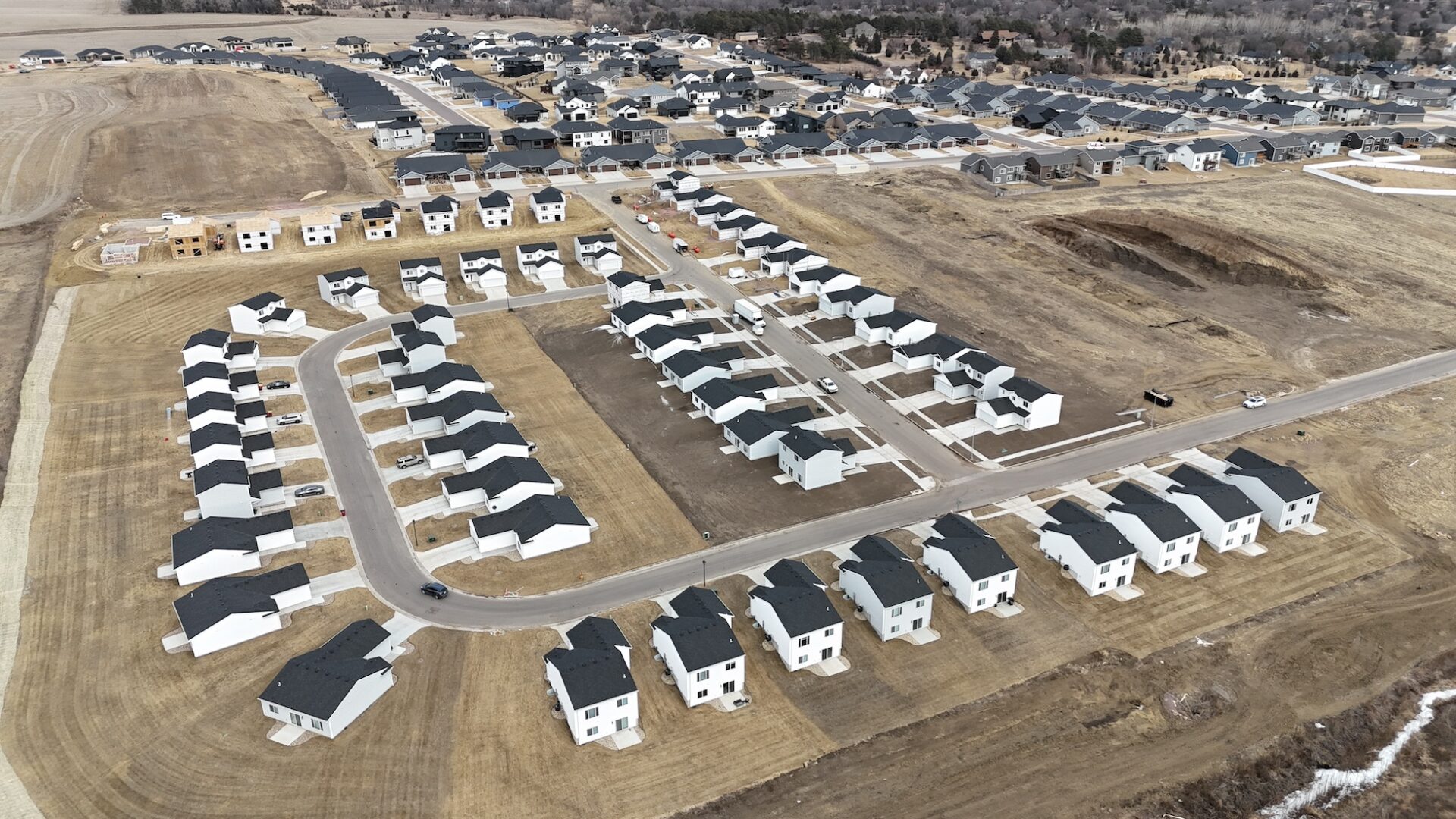
Two pioneering multifamily projects in the eastern part of Sioux Falls are gaining ground, backed by compelling interest and investment from local stakeholders. Spearheaded by the Sioux Falls-based Ernst Capital Group, the city sees a significant influx of new housing options tailored to meet diverse rental needs.
“We’re seeing an exceptional performance in our portfolio, especially highlighting some of the best winter leasing activities on record,” said Chris Daugaard, a partner in Ernst Capital Group. “This enthusiasm encourages us as we progress with these new projects.”
Willowbrook Village
The first project, Willowbrook Village, has already welcomed its initial residents. Situated northeast of Veterans and Arrowhead parkways, this build-to-rent community introduces 57 single-family homes managed by Lloyd Companies. Each residence boasts two- or three-bedroom configurations complete with attached garages. Residents have noted the quality finishes, comparing them to freshly constructed homes intended for sale rather than rentals.
This innovative approach to multifamily living focuses on striking a balance between affordability and quality, making it an appealing option without the overhead of luxury amenities. This move aligns well with the broadly thriving residential market within the area, further fortified by the strategic location chosen for development.
Split Rock Village
Simultaneously, Split Rock Village, another development under Signature Fund VI, is progressing at 26th Street and Six Mile Road. It targets a mix of dwellings with upcoming leases for 100 units across studio, one-, two-, and three-bedroom apartments. The inclusive amenity package planned features a clubhouse, pool, and additional recreational facilities, aligning with the growing expectations of the modern tenant.
Ernst Capital’s ventures reflect years of strategic investment and partnership, marking its 38th collaboration since 2007, with 16 specifically focused on projects like those seen with Signature Companies. Chris Daugaard notes the long-term potential of these locations, tying their development closely to the ever-increasing population and demand.
These developments signify more than just urban expansion; they offer local investors a chance to engage deeply with Sioux Falls’ growth story, emphasizing quality and evolving residential preferences. As Ernst Capital opens doors to new investment opportunities, there’s little doubt these projects will carve out a new definition for Sioux Falls’ multifamily housing landscape.
For further information or to get involved with Ernst Capital Group, visit their official website here.
For the full story, refer to the original article on SiouxFalls.Business.
More Articles
Getting licensed or staying ahead in your career can be a journey—but it doesn’t have to be overwhelming. Grab your favorite coffee or tea, take a moment to relax, and browse through our articles. Whether you’re just starting out or renewing your expertise, we’ve got tips, insights, and advice to keep you moving forward. Here’s to your success—one sip and one step at a time!
Seattle now holds the second‑highest office vacancy rate in the nation at 26.6%, with some downtown areas soaring past 35% and Pioneer Square reaching 50%. Mayor‑elect Katie Wilson steps into office with bold proposals—including a vacancy tax and office‑to‑housing conversions—amid tech pullbacks, shifting work habits, and investor uncertainty. Despite alarming numbers, signs of resilience remain, offering opportunities for savvy real estate professionals watching this market transform in real time.
Florida lawmakers are once again targeting the fast‑growing litigation‑financing industry with House Bill 1157, a proposal that would restrict how outside investors participate in lawsuits. The bill would limit funder influence, cap their share of settlements, and require new disclosures—especially for foreign‑backed financing. As similar measures emerge nationwide, the outcome could significantly impact professionals across law, insurance, finance, and real estate who depend on predictable risk and regulatory environments.
Starting April 1, Philadelphia homeowners and renters with federal flood insurance will see a 15% reduction in their premiums thanks to the city joining FEMA’s Community Rating System. The discount reflects Philadelphia’s growing investment in flood‑risk mitigation and is expected to save residents and businesses more than $424,000 annually. Beyond easing household expenses, the change also reshapes how real estate and insurance professionals evaluate flood‑zone properties, opening the door to improved affordability and stronger buyer confidence.
Newrez is doubling down on artificial intelligence with a strategic investment in Homevision, an advanced AI underwriting platform designed to automate collateral, income, assets, credit, and full loan decisioning. After seeing Homevision’s MIRA system boost collateral underwriting efficiency, Newrez plans to expand the technology in 2026—signaling a breakthrough year for real-time automated underwriting across the mortgage industry.
A new United Van Lines migration report reveals that Americans are trading big-city ambition for affordability, shorter commutes, and better quality of life—reshaping where and how commercial real estate will grow. Southern and smaller markets continue to attract new residents, but pandemic‑era assumptions of endless demand are fading as rent growth cools and new inventory floods the market. For investors and real estate professionals, the opportunity now lies in affordable housing, modest office parks, value‑focused retail, and support‑industrial spaces like self‑storage.
The 2026 housing market is finally shifting into balance, with economists forecasting rising home sales, improved affordability, and a more diverse buyer pool. Inventory is up, mortgage rates are easing, and demographic changes—from returning first-time buyers to dominant baby boomers—are reshaping demand. New construction is stabilizing, price growth is moderating, and millions of buyers could re-enter the market as rates fall toward 6 percent. For real estate professionals, this rebalanced environment offers fresh opportunities for growth, strategy, and education.