Tampa’s Real Estate Market Shifts Into a Smarter, More Selective Phase
Tampa’s commercial real estate landscape is still expanding, but the era of rapid-fire, instinct-driven decision making is transitioning into a more thoughtful, selective strategy. According to Lisa Jesmer, Florida Market Leader for Avison Young, investors are now honing in on long‑term value as the market matures.
“Tampa continues to attract people and businesses,” Jesmer said in an interview with TBBW. “What’s different now is how carefully deals are being evaluated.”
Overseeing Avison Young’s operations across Tampa, Orlando, Fort Lauderdale and Miami, Jesmer emphasizes that Tampa remains one of Florida’s most dynamic environments—even as investors slow down to scrutinize pricing, risk and performance.
Population Growth Still Drives Demand
With a projected 400,000 new residents expected in the Tampa region by 2030, demand for office, industrial, retail and health-care real estate remains elevated. Tampa is also one of the few Florida markets where office leasing continues to grow, defying national trends.
“Tampa checks a lot of boxes,” she said. “A diverse job base, lifestyle appeal, and continued in‑migration.”
For real estate professionals—new or seasoned—understanding these demographic insights is essential. Students at Cameron Academy often learn this on day one: population growth creates opportunity.
Industrial Activity Normalizes
Industrial real estate, which surged during the post‑Covid era, is returning to a more predictable pace. Jesmer notes this is not a slowdown—simply a return to normalcy.
Deals are still active, but underwriting has tightened and pricing is more precise.
Retail Foot Traffic Makes a Comeback
Retail is emerging stronger than many expected. Institutional investors are showing renewed interest as Tampa’s growing population increases retail demand and foot traffic.
Stabilized centers bring longer leasing terms, stronger credit tenants, and improved financing—making retail a rising favorite again.
Capital Takes a Cautious Approach
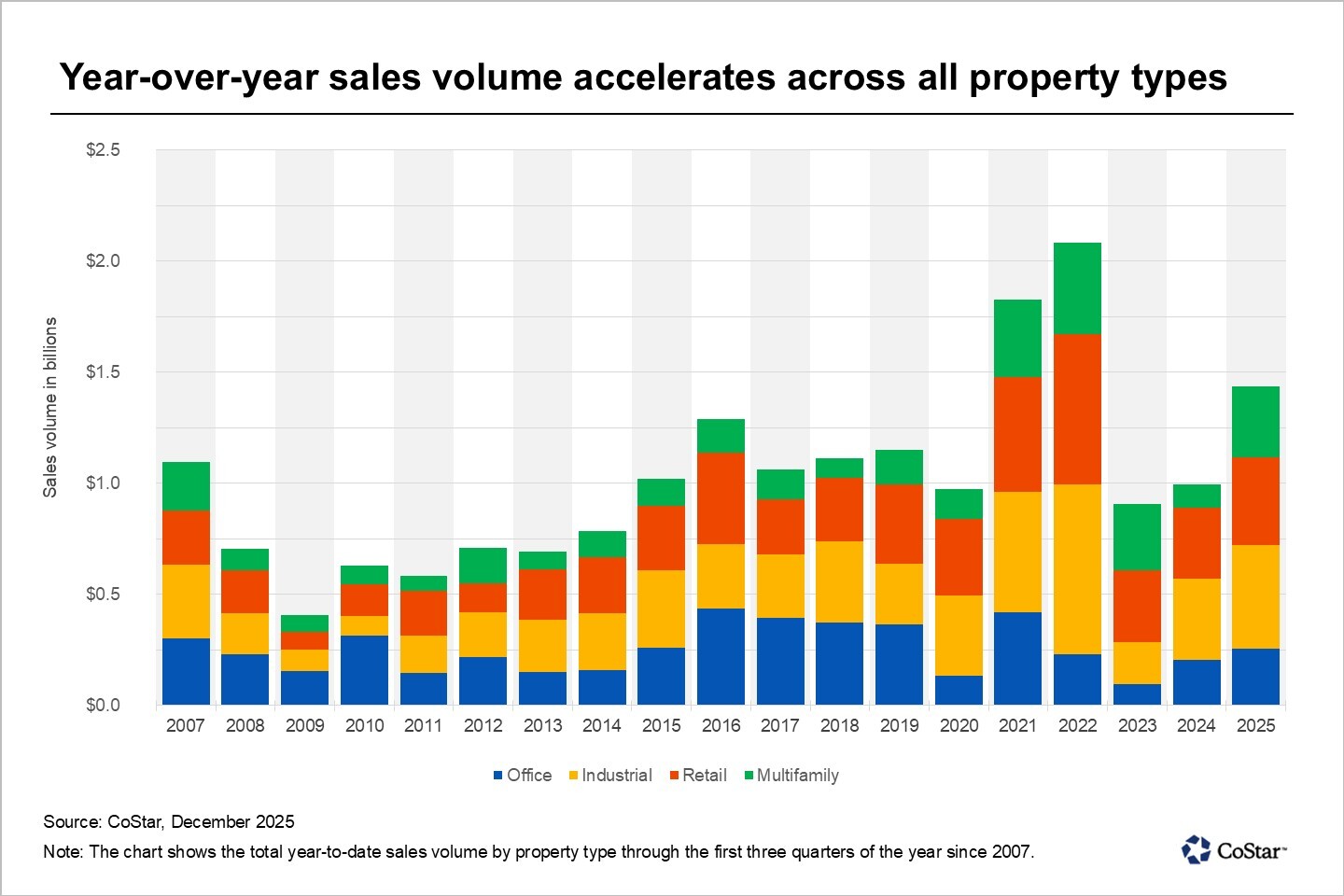
Although transaction volume is climbing, investors are performing deeper due diligence than ever before. Off‑market opportunities are rare, and on‑market deals undergo intense analysis, especially regarding insurance exposure and deferred maintenance.
“Buyers want to know exactly what they’re walking into,” Jesmer said. “Surprises are expensive right now.”
More court‑appointed and specialty sales are surfacing as loans mature—prime opportunities for well-prepared buyers.
Health Care Real Estate Takes Center Stage
Health care is expected to be one of Florida’s hottest commercial sectors in 2026. With both a growing and aging population, demand is rising for medical office buildings, outpatient facilities and hybrid retail‑health care spaces.
Tampa’s strong hospital networks make it a natural hub for this expansion.
“There’s a lot of land being acquired and repositioned for health-care use,” Jesmer explained. “That trend is just beginning.”
What This Means for Tampa
The next chapter for Tampa real estate focuses on precision over speed. Growth and opportunity remain abundant—but those who win will be the professionals who analyze the details and plan for long‑term performance.
“Tampa is moving from expansion to execution,” Jesmer said. “That’s a healthy place for a market to be.”
Stay Connected and Stay Informed
For more insights, analysis, and regional business intelligence, explore Tampa Bay Business & Wealth below:
Getting licensed or staying ahead in your career can be a journey—but it doesn’t have to be overwhelming. Grab your favorite coffee or tea, take a moment to relax, and browse through our articles. Whether you’re just starting out or renewing your expertise, we’ve got tips, insights, and advice to keep you moving forward. Here’s to your success—one sip and one step at a time!
In 2026, financial advisors are no longer just experimenting with AI — they’re relying on it. Once confined to back-office duties, AI now supports meeting prep, portfolio analysis, and even early-stage financial planning. Advisors say the tech is strengthening client relationships by freeing them from administrative overload, though entry-level roles like paraplanners may feel the squeeze as automation accelerates.
Cybercriminals are weaponizing AI to launch highly convincing email scams and system breaches across the mortgage industry, overwhelming lenders and servicers whose cybersecurity measures can’t keep up. With major companies already hit and regulation lagging behind, experts warn the sector—now considered critical infrastructure—must rapidly upgrade protections, collaborate on threat intelligence, and improve AI governance before the risks escalate further.
Escrow payments are quietly surging across the country as property taxes and insurance premiums spike—pushing many homeowners toward delinquencies and even foreclosure. New data from Cotality shows the sharpest increases hitting the South and Midwest, with Florida among the hardest‑hit states. Even with fixed mortgage rates, rising escrow requirements are driving monthly payments higher and threatening affordability heading into 2026.
Milwaukee entered 2025 with renewed momentum, posting its strongest commercial real estate sales volume in three years. After a period of uncertainty and high capital costs, investors are returning with a sharper focus on quality assets, realistic pricing, and reliable cash flow. Activity is increasing across industrial, office, multifamily, and retail sectors, signaling a broad-based recovery fueled by stabilizing interest rates and improved market confidence.
As 2026 approaches, the title insurance industry is navigating a complex mix of market recovery, rising fraud threats, and sweeping regulatory changes. Industry leaders say the path forward centers on smarter technology, leaner operations, and stronger support for title agents. With AI-driven workflows, enhanced fraud prevention, and new compliance demands—including FinCEN’s expanded Geographic Targeting Orders—companies like Stewart and First American are reshaping how title work gets done. For real estate and mortgage professionals, the year ahead promises more automation, heightened standards, and major opportunities for those who stay ahead of the curve.
The real estate industry is undergoing a major transformation in 2025 as advancements in AI, proptech, blockchain, and data intelligence redefine how properties are marketed, valued, financed, and experienced. From instant digital valuations and immersive virtual tours to tokenized investments and predictive analytics, technology is reshaping every stage of the real estate lifecycle. Professionals who embrace these innovations—while maintaining the human expertise clients still rely on—will lead the next era of the industry.