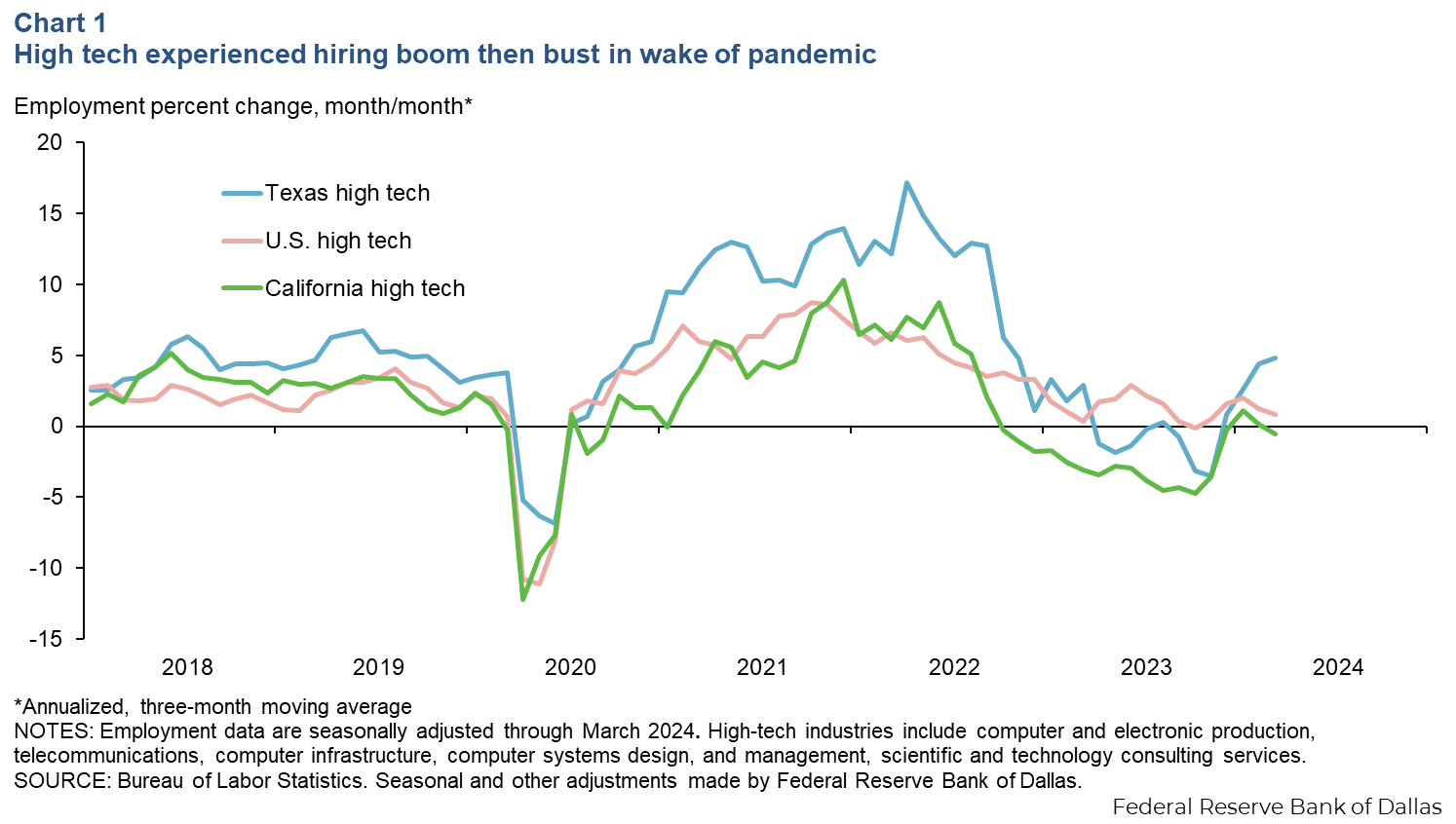
As the dust settles from the pandemic, Texas’ high-tech sector is shaking off its post-pandemic slump and gearing up for a new growth trajectory. The state, already a significant player in the U.S. economy, is poised for further expansion as it attracts business relocations from other tech hubs like Silicon Valley and rides the wave of increased demand for emerging AI technologies.
High tech contributes nearly 5% to Texas’ GDP and over 9% to employment, making it an essential driver of innovation and technological development. This sector, characterized by rapid growth and high wages, is crucial for productivity and is positioned to benefit from ongoing business relocations and new investments in high-tech manufacturing capacity. For more insights into the sector’s impact, visit the Federal Reserve Bank of Dallas.
High-Tech Hiring Dynamics
The high-tech industry experienced a hiring boom post-pandemic, driven by the surge in demand for technology products and services. However, this rapid expansion led to overhiring, and companies soon faced cost pressures, resulting in layoffs. Despite these challenges, Texas managed to avoid the severe job losses seen in California, thanks in part to the reallocation of tech activity to other parts of the country.
Layoff announcements in Texas spiked during early 2023 but have since moderated, suggesting stabilization in the local tech labor market. The state’s resilience is attributed to gains in computer manufacturing and tech consulting services, which offset losses in other tech industries.
Legislative Support and Future Outlook
The federal CHIPS and Science Act, along with the Texas CHIPS Act, provides significant support to the high-tech sector. These initiatives encourage semiconductor manufacturing, helping stabilize supply chains and aiming for technological self-sufficiency. Investments include Texas Instruments’ $30 billion semiconductor manufacturing plant and Samsung’s $44 billion investment in semiconductor facilities.
Corporate relocations and population migrations have also fueled high-tech growth in Texas. Major companies like Hewlett Packard and Apple have moved to Texas, bringing along a highly skilled workforce from states like California and New York. This influx of talent has bolstered the state’s high-tech sector, making it a pillar of Austin’s economy. For more on corporate relocations, see the Dallas Fed’s report.
Skilled Labor and Remote Work
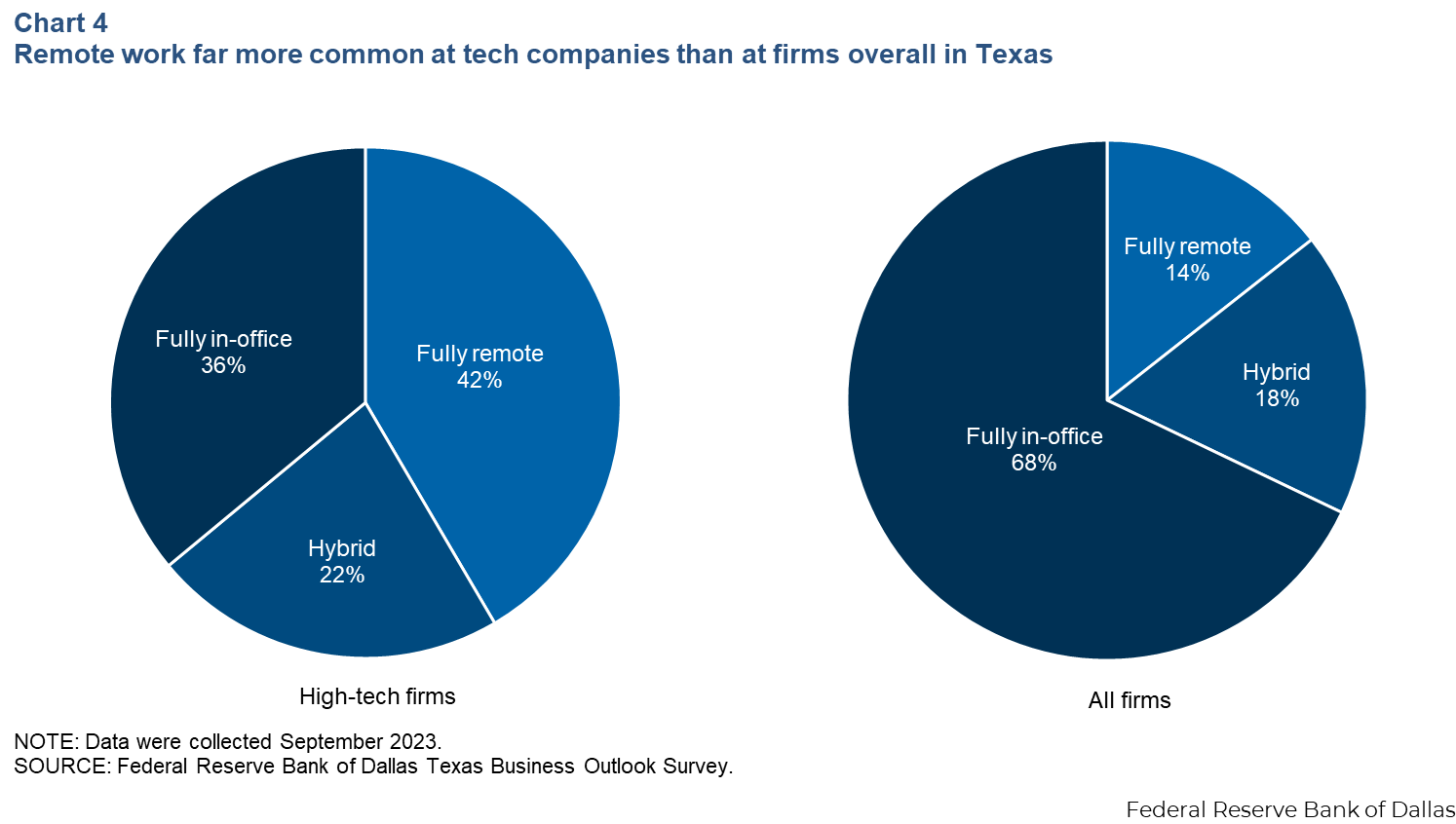
High-tech wages in Texas are significantly higher than the state average, with 2022 hourly wages averaging $43.51 compared to $29.26 for workers overall. The sector employs a larger share of highly skilled workers, supporting elevated pay. The prevalence of remote work in high tech is notable, with 36% of employees working fully remote, compared to 14% in other sectors. For trends in remote work, refer to the Harvard Business Review.
Looking ahead, high-tech firms in Texas are optimistic about future growth, buoyed by continued investments and policy support for emerging technologies like AI and semiconductor production. This optimism could be a precursor to further expansion in the sector.
More Articles
Getting licensed or staying ahead in your career can be a journey—but it doesn’t have to be overwhelming. Grab your favorite coffee or tea, take a moment to relax, and browse through our articles. Whether you’re just starting out or renewing your expertise, we’ve got tips, insights, and advice to keep you moving forward. Here’s to your success—one sip and one step at a time!
United Real Estate is revolutionizing the real estate industry with its innovative approach to empowering agents and bridging the value gap. The company's Bullseye Lead Boost Program aims to transform the lead generation process, giving agents more control over their leads and ensuring they get the most value out of their investment. United Real Estate also provides comprehensive support and resources to franchisees, helping them maximize their returns in the competitive real estate market. Learn more about this innovative approach at Cameron Academy.
Fannie Mae, the government-sponsored enterprise (GSE), recently announced the launch of innovative programs and resources aimed at tackling the homeownership gap experienced by the Latino community. These initiatives are designed to provide responsible access to housing and long-term sustainable homeownership opportunities. In an effort to promote homeownership among Latinos, Fannie Mae is implementing the HomeReady® Hispanic Centric Approach, a program tailored to meet the unique needs of this community. This initiative offers flexible underwriting guidelines and low down payment options, making homeownership more attainable for qualified Latino borrowers. Furthermore, Fannie Mae is expanding its downpayment assistance program, providing financial support to eligible homebuyers. This expansion aims to help more Latino families overcome the challenge of saving for a down payment, turning their dreams of homeownership into a reality.
This comprehensive report delves into the ongoing demands for change within the National Association of Realtors (NAR) following allegations of sexual harassment and a toxic work environment. The demands include the resignation of top leaders, the implementation of a third-party human resources reporting system, and an independent review of the organization's policies and procedures. We will also explore the response from NAR and the advocacy efforts of the NAR Accountability Project. This report aims to provide a thorough analysis of the situation and shed light on the need for accountability and a more inclusive work culture.
The mortgage market experienced a significant uptick in rates last week, with figures inching closer to the annual high of 7.49%. This unexpected surge has raised concerns among potential homebuyers and industry experts alike. The recent rise in mortgage rates can be attributed to two key factors: a hawkish Federal Reserve meeting and robust jobless claims data. Despite the overall upward trajectory, mortgage rates found some relief towards the end of the week as bond yields began to decline. This reversal offered a glimmer of hope for potential homebuyers, suggesting that rates may stabilize in the near future. However, market volatility and external factors remain influential, warranting cautious optimism.
California is implementing new rules for homeowners insurance carriers to address challenges faced by insurance companies and provide homeowners with more options. The proposed changes aim to retain insurance companies within the state, ensuring a stable insurance market and offering homeowners a wider range of coverage choices. These changes come in response to the departure of major insurance companies and the increased enrollment in the California FAIR Plan. The proposed changes would allow insurers to consider climate change and reinsurance costs when setting their rates. However, they would still require permission from the state to make rate adjustments.
The housing market is currently grappling with a significant decline in pending-home sales due to the surge in mortgage rates and home prices. A recent report from Redfin reveals a 13% drop in pending-home sales compared to the previous year, underscoring the hurdles faced by potential homebuyers. The affordability crisis in the housing market continues to escalate as mortgage rates and home prices hit record highs. The combination of these factors has led to an unprecedented increase in monthly housing payments, making it increasingly challenging for prospective homebuyers to enter the market.