“`html

In the world of financial planning, the Certified Financial Planner (CFP) designation stands as a beacon of expertise and trust. This prestigious certification, awarded by the Certified Financial Planner Board of Standards, is a testament to a professional’s dedication to providing comprehensive financial advice and planning services.


A CFP serves as a personal financial coach, guiding individuals through the complexities of wealth management, tax planning, insurance, and more. To earn this certification, candidates must undergo a rigorous process, including a demanding examination that tests their knowledge across various financial domains.


The role of a CFP is underpinned by a strong fiduciary duty, ensuring that client interests are always prioritized. This duty is not just a promise but a legal obligation, setting CFPs apart from other financial professionals, such as stockbrokers.


The Path to Becoming a CFP

Achieving the CFP designation requires meeting stringent criteria in education, experience, and ethics. Candidates must hold a bachelor’s degree and complete specific coursework in financial planning, covering areas like financial planning principles and retirement planning.


Real-world experience is crucial, with candidates needing at least three years of professional experience in the industry. This hands-on experience ensures that CFPs are well-equipped to handle the diverse needs of their clients.


CFP vs. CFA

While both CFPs and Chartered Financial Analysts (CFAs) hold esteemed credentials, their roles differ significantly. CFPs typically focus on individual clients, providing personal financial planning and advice. In contrast, CFAs often work within investment management firms, analyzing company growth and financial health.


Certified financial planner (cfp)

The journey to becoming a CFP is challenging but rewarding, offering professionals the opportunity to make a significant impact on their clients’ financial well-being. For those seeking expert financial guidance, a CFP provides a level of trust and competence that is unmatched in the industry.

“`

More Articles

Getting licensed or staying ahead in your career can be a journey—but it doesn’t have to be overwhelming. Grab your favorite coffee or tea, take a moment to relax, and browse through our articles. Whether you’re just starting out or renewing your expertise, we’ve got tips, insights, and advice to keep you moving forward. Here’s to your success—one sip and one step at a time!

Artificial Intelligence in Diagnostics: A Revolution in Healthcare

The global market for artificial intelligence in diagnostics is poised for remarkable growth, with projections estimating it to reach USD 7.3 billion by 2032.

By |December 10, 2024|Categories: Article, Artificial Intelligence, Healthcare|Tags: , |0 Comments

Revolutionizing Medical Education with Extended Reality

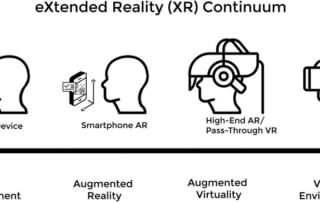
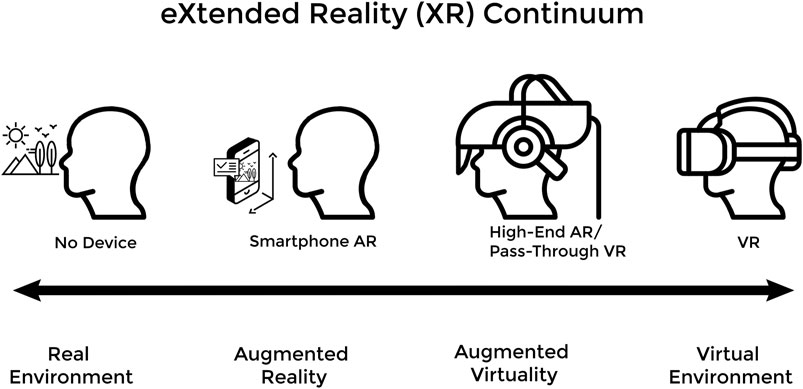
In the ever-evolving landscape of medical education, a new player has emerged, promising to revolutionize the way future doctors are trained. The integration of eXtended Reality (XR) technologies is reshaping the educational landscape by addressing the limitations of traditional methods.

Genetic Testing: A New Dawn in Healthcare

Genetic testing represents more than just a scientific advancement; it signifies a fundamental shift in how we approach health and wellness.

Sustainable Architecture: Blending Innovation with Ecological Responsibility

The journey toward sustainable architecture is ongoing, with each project serving as a beacon of what's achievable when creativity meets ecological awareness.

By |December 9, 2024|Categories: Architecture, Article, Sustainability|Tags: |0 Comments

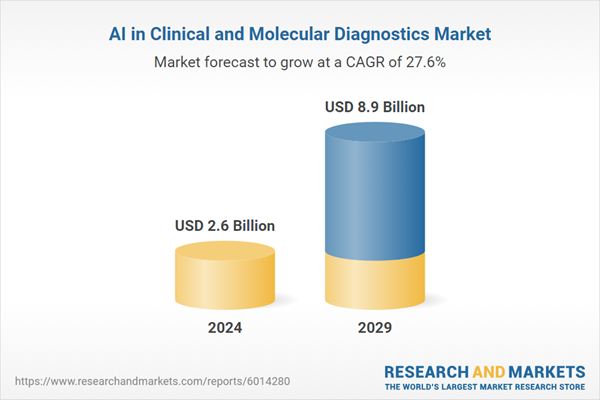
AI in Clinical and Molecular Diagnostics: A Market on the Rise

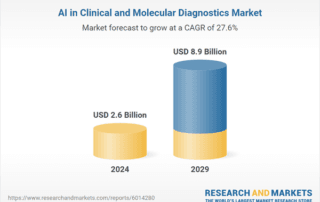
AI in Clinical and Molecular Diagnostics Market is set to experience remarkable growth, projected to surge from USD 2.6 billion in 2024 to USD 8.9 billion by 2029. This growth is driven by the integration of advanced AI technologies such as machine learning and deep learning into traditional diagnostic methodologies like imaging, genomics, and laboratory testing.

AI: A Revolution in Healthcare’s Future

AI is not a distant dream but a present reality, already integrated into everyday life through virtual assistants like Alexa and Siri. AI shows promise in enhancing medical accuracy, such as in predicting mesothelioma survival and improving colonoscopy accuracy, it is not intended to replace healthcare professionals.