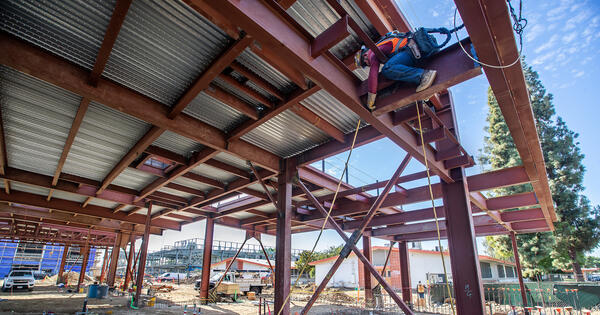
As families consider relocating, the quality of local public schools often becomes a pivotal factor. The allure of modern athletic facilities, spacious classrooms, and cutting-edge technology in science and computer labs can be irresistible for parents who equate these attributes with a superior education. But, as a recent study from Yale Insights explores, does the financial investment in school infrastructure genuinely enhance educational outcomes?
Barbara Biasi, an Assistant Professor of Economics at Yale SOM, alongside her colleagues Julien Lafortune and David Schönholzer, delved into this question. Their research, which spans data from across the United States, seeks to unravel the complex relationship between capital spending on schools and its impact on educational quality and real estate prices. For those interested in a deeper dive, the full article can be found here.
The study’s findings indicate that while capital projects generally increase both test scores and property values, the benefits are predominantly seen in districts with disadvantaged students. Interestingly, the type of capital project plays a crucial role in determining its impact. Projects focused on infrastructure improvements, such as HVAC systems, significantly enhance test scores but do not necessarily raise property values. Conversely, investments in visible amenities like athletic facilities tend to boost property prices.
Biasi’s research highlights a critical consideration for voters who decide on capital proposals. She emphasizes the importance of understanding whether these investments will truly benefit students or merely serve to increase local property values. As she notes, “Public schools are supposed to be free, but really people are paying for the best public school they can afford.”
Implications for Policy and Community
This study raises essential questions about the role of voters in making decisions that impact educational infrastructure. With the majority of voters not being parents, there’s a risk that the benefits of certain projects may not be fully appreciated or prioritized. Biasi hopes that this research will encourage a more informed discussion around school funding and its implications for both students and the broader community.
Looking ahead, Biasi and her team plan to explore how different funding rules across states affect the approval and impact of capital projects. This next phase aims to provide further insights into how modifications in funding rules could potentially reshape the educational landscape.
For more insights from Barbara Biasi and her team, visit her profile on Yale Insights.
More Articles
Getting licensed or staying ahead in your career can be a journey—but it doesn’t have to be overwhelming. Grab your favorite coffee or tea, take a moment to relax, and browse through our articles. Whether you’re just starting out or renewing your expertise, we’ve got tips, insights, and advice to keep you moving forward. Here’s to your success—one sip and one step at a time!
Palm Beach protests erupted as intensified immigration enforcement reached the heart of Trump’s hometown, while millions in Florida brace for rising health care costs as key subsidies near expiration. At the same time, state regulators boldly declare the long‑running property insurance crisis “over,” leaving homeowners and industry professionals questioning whether true stability has finally returned.
As 2025 comes to a close, the real estate industry is shifting from uncertainty to strategic expansion. According to DWS’s Year-End 2025 Outlook, property values are stabilizing after years of repricing, capital is concentrating on high-quality assets, and Sunbelt markets—especially Florida—continue to outperform. With technology enhancing rather than replacing professional expertise, 2026 is shaping up to reward professionals who stay informed, skilled, and strategically positioned for the next cycle.
Texas capital is pouring into San Francisco’s long‑struggling commercial real estate market, with Lone Star investors buying up discounted Union Square buildings and signaling what many experts believe is the city’s market bottom. As office activity and confidence begin to return, buyers from across the country are joining the rush, turning SF’s post‑pandemic slump into one of the nation’s hottest bargain opportunities.
With 2026 HousingWire Tech100 nominations closing on December 19, the housing tech sector is accelerating at full speed. AI‑powered data platforms, digital closing breakthroughs, embedded insurance growth, and next‑generation servicing automation are reshaping real estate, mortgage, insurance, and finance. From ATTOM’s AI‑ready property intelligence to Hapi Homes’ Martha Stewart design revival, Obie’s nationwide expansion, Outamation’s servicing automation, and ServiceLink’s next‑level borrower scheduling, this year’s standout innovators are defining the future of the housing economy.
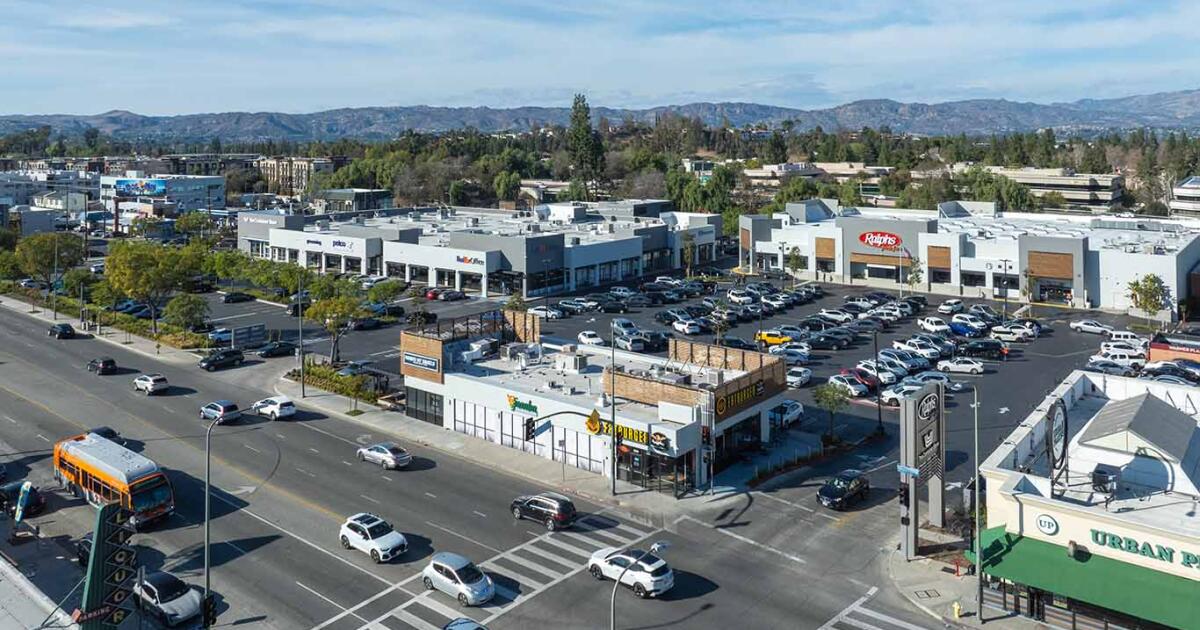
Space Investment Partners has acquired the 123,402‑square‑foot Topanga Gateway retail center in Woodland Hills for $64 million, marking another significant move in the firm’s expanding grocery‑anchored investment strategy. Located at a high‑visibility intersection and 97% occupied at the time of sale, the property strengthens the company’s push toward $500 million to $1 billion in retail acquisitions for 2026, underscoring continued investor confidence in necessity‑based retail assets.
After the Federal Reserve’s final 2025 rate cut on December 10, mortgage markets are recalibrating, giving buyers and homeowners a glimmer of relief. Rates remain lower than earlier in the year, with 30-year fixed loans at 6.12% and refinances dipping as well. This shift may spark renewed activity for buyers, refinancers, and real estate professionals heading into 2026.