The Surprising Truth Behind America’s Housing Crisis: Why Deregulation Isn’t the Fix
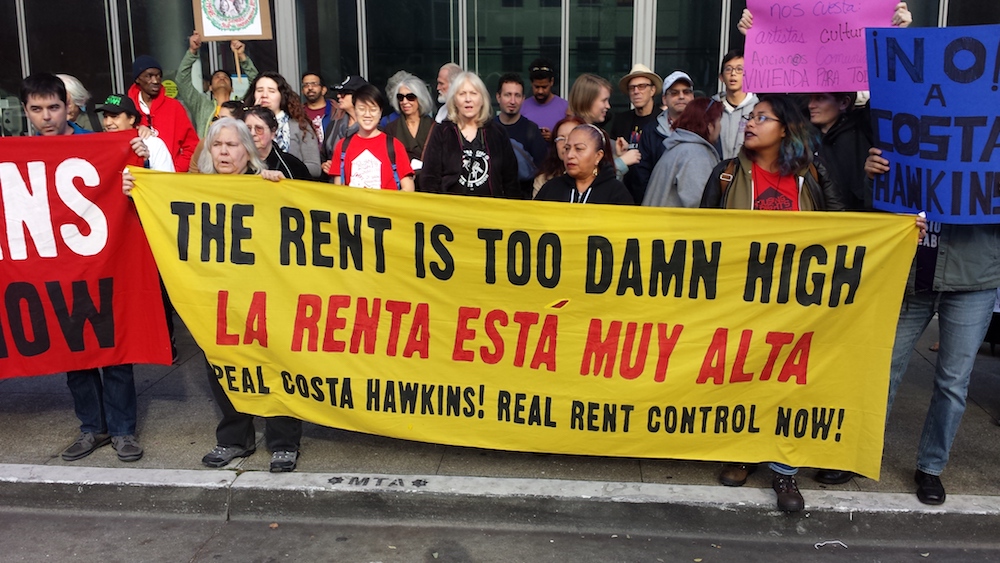
Rent control protest

Every few months, a familiar message resurfaces in housing policy debates: if cities would simply “deregulate” and eliminate zoning restrictions, housing would become magically affordable. But a groundbreaking academic study challenges this long‑held assumption—and the findings are shaking the foundation of the deregulation narrative.

According to the research, conducted by four leading urban scholars, the true driver of America’s affordability crisis isn’t zoning, regulations, or construction slowdowns.

It’s economic inequality—pure and simple.

Why Deregulation Isn’t the Golden Ticket

The authors modeled several major U.S. cities, including San Francisco, and demonstrated that even if construction boomed at unrealistically high levels, rents would barely move for decades. Their mathematical simulation found it could take up to 100 years of extraordinary housing production to bring rents down to levels ordinary workers could afford.

“The simulation makes clear it is unrealistic to think that we can deregulate and build our way out of the affordability crisis with market-rate housing, even with large positive supply shocks.”

Even one of the study’s lead authors, UCLA professor Michael Storper, has repeatedly warned that deregulation can actually worsen displacement in high-demand areas.

Upzoning Has Benefits—But Not the Ones You Think

The authors don’t villainize upzoning. In fact, it has real perks: improved access to jobs, shorter commutes, and reduced carbon emissions. But there’s a catch—those perks make neighborhoods more desirable, often pushing prices up, not down.

“Upzoning may be desirable from some policy perspectives, but it is not a robust tool to increase affordability.”

The Real Culprit: Wealth Gaps and Inequality

The study reinforces findings from the National Bureau of Economic Research: housing prices follow income growth, not zoning policy. Even places with minimal zoning—like Houston—or shrinking cities like Cleveland continue to face affordability issues because wage gaps are widening.

San Francisco, for example, saw both mean rent and mean income rise roughly 600% between 1980 and 2019. But workers without degrees saw far smaller income gains. That widening gulf is the core of the crisis.

“Rising national inequality and the spatial sorting of economic activity have reshaped regional labor markets and incomes.”

The Tax Factor No One Talks About

The mid‑20th century—a period often remembered as an era of affordable American housing—had something the modern era doesn’t: extremely high marginal tax rates for the wealthy. That suppressed inequality and pumped more money into middle‑income households.

Today, wealth is concentrated in stock options and investments—many lightly taxed or not taxed at all.

Developers Aren’t the Villains—But the Market Has Limits

The study highlights an emerging economic idea: option value. Developers often hold off on construction when they expect future profits to be higher. Ironically, regulations can sometimes push them to build sooner, not later.

Even in wildly optimistic scenarios—tens of thousands of new units built every year—rents wouldn’t fall meaningfully for decades. One projection estimated 124 years before the average working-class resident could afford typical rent.

If Inequality Isn’t Addressed, No Policy Will Fix Housing

The authors warn that unless the U.S. confronts its economic divides, housing policy tweaks like upzoning amount to little more than rearranging deck chairs on the Titanic.

“We can’t solve our problem now until there is a radical redistribution of economic and political power.” — Martin Luther King Jr.

This is the conversation cities urgently need—not just how many units we can squeeze onto land, but how income inequality shapes every corner of the housing market.

What This Means for Real Estate Professionals

For agents, mortgage brokers, investors, and anyone navigating today’s volatile market, understanding these dynamics is essential. Markets aren’t shaped by zoning alone—they’re driven by wage trends, economic forces, and investor expectations.

This is why institutions like Cameron Academy emphasize economic literacy alongside licensing. Today’s professionals must understand not just the laws—but the forces behind them.

Explore the Original Reporting

This article draws from excellent investigative reporting by Tim Redmond at 48 Hills. Explore the full story here:

New study shows that deregulation is not the answer to the affordable housing crisis – 48 Hills

Join their community discussion on Facebook, Twitter, and Instagram.

More Articles

Getting licensed or staying ahead in your career can be a journey—but it doesn’t have to be overwhelming. Grab your favorite coffee or tea, take a moment to relax, and browse through our articles. Whether you’re just starting out or renewing your expertise, we’ve got tips, insights, and advice to keep you moving forward. Here’s to your success—one sip and one step at a time!

United Real Estate’s Innovative Approach: Empowering Franchisees

United Real Estate is revolutionizing the real estate industry with its innovative approach to empowering agents and bridging the value gap. The company's Bullseye Lead Boost Program aims to transform the lead generation process, giving agents more control over their leads and ensuring they get the most value out of their investment. United Real Estate also provides comprehensive support and resources to franchisees, helping them maximize their returns in the competitive real estate market. Learn more about this innovative approach at Cameron Academy.

By |October 3, 2023|Categories: Real Estate Lead Generation|Tags: |0 Comments

New Initiatives by Fannie Mae to Enhance Latino Homeownership Access

Fannie Mae, the government-sponsored enterprise (GSE), recently announced the launch of innovative programs and resources aimed at tackling the homeownership gap experienced by the Latino community. These initiatives are designed to provide responsible access to housing and long-term sustainable homeownership opportunities. In an effort to promote homeownership among Latinos, Fannie Mae is implementing the HomeReady® Hispanic Centric Approach, a program tailored to meet the unique needs of this community. This initiative offers flexible underwriting guidelines and low down payment options, making homeownership more attainable for qualified Latino borrowers. Furthermore, Fannie Mae is expanding its downpayment assistance program, providing financial support to eligible homebuyers. This expansion aims to help more Latino families overcome the challenge of saving for a down payment, turning their dreams of homeownership into a reality.

By |October 3, 2023|Categories: Latino Homeownership Access|Tags: |0 Comments

Demands for Resignation and Accountability at NAR: A Comprehensive Report

This comprehensive report delves into the ongoing demands for change within the National Association of Realtors (NAR) following allegations of sexual harassment and a toxic work environment. The demands include the resignation of top leaders, the implementation of a third-party human resources reporting system, and an independent review of the organization's policies and procedures. We will also explore the response from NAR and the advocacy efforts of the NAR Accountability Project. This report aims to provide a thorough analysis of the situation and shed light on the need for accountability and a more inclusive work culture.

Approaching Annual High: Mortgage Rates Hit 7.49%

The mortgage market experienced a significant uptick in rates last week, with figures inching closer to the annual high of 7.49%. This unexpected surge has raised concerns among potential homebuyers and industry experts alike. The recent rise in mortgage rates can be attributed to two key factors: a hawkish Federal Reserve meeting and robust jobless claims data. Despite the overall upward trajectory, mortgage rates found some relief towards the end of the week as bond yields began to decline. This reversal offered a glimmer of hope for potential homebuyers, suggesting that rates may stabilize in the near future. However, market volatility and external factors remain influential, warranting cautious optimism.

By |October 2, 2023|Categories: Mortgage Rates|Tags: |0 Comments

Changes to Homeowners Insurance Rules in California

California is implementing new rules for homeowners insurance carriers to address challenges faced by insurance companies and provide homeowners with more options. The proposed changes aim to retain insurance companies within the state, ensuring a stable insurance market and offering homeowners a wider range of coverage choices. These changes come in response to the departure of major insurance companies and the increased enrollment in the California FAIR Plan. The proposed changes would allow insurers to consider climate change and reinsurance costs when setting their rates. However, they would still require permission from the state to make rate adjustments.

13% Decline in Pending-Home Sales Amid High Mortgage Rates: A Redfin Report

The housing market is currently grappling with a significant decline in pending-home sales due to the surge in mortgage rates and home prices. A recent report from Redfin reveals a 13% drop in pending-home sales compared to the previous year, underscoring the hurdles faced by potential homebuyers. The affordability crisis in the housing market continues to escalate as mortgage rates and home prices hit record highs. The combination of these factors has led to an unprecedented increase in monthly housing payments, making it increasingly challenging for prospective homebuyers to enter the market.

By |September 26, 2023|Categories: Real Estate Market Analysis|Tags: |0 Comments