The Surprising Truth Behind America’s Housing Crisis: Why Deregulation Isn’t the Fix
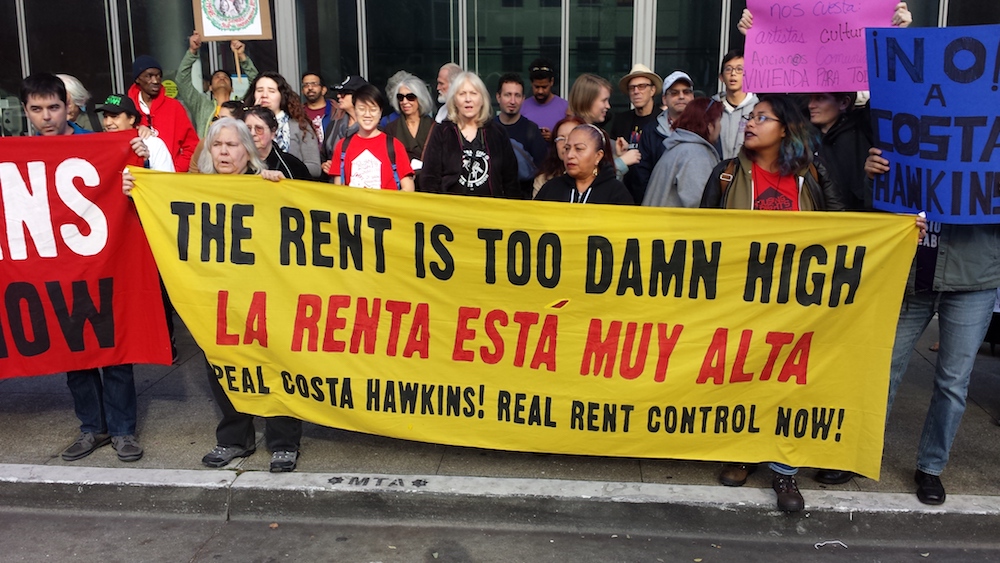
Rent control protest

Every few months, a familiar message resurfaces in housing policy debates: if cities would simply “deregulate” and eliminate zoning restrictions, housing would become magically affordable. But a groundbreaking academic study challenges this long‑held assumption—and the findings are shaking the foundation of the deregulation narrative.

According to the research, conducted by four leading urban scholars, the true driver of America’s affordability crisis isn’t zoning, regulations, or construction slowdowns.

It’s economic inequality—pure and simple.

Why Deregulation Isn’t the Golden Ticket

The authors modeled several major U.S. cities, including San Francisco, and demonstrated that even if construction boomed at unrealistically high levels, rents would barely move for decades. Their mathematical simulation found it could take up to 100 years of extraordinary housing production to bring rents down to levels ordinary workers could afford.

“The simulation makes clear it is unrealistic to think that we can deregulate and build our way out of the affordability crisis with market-rate housing, even with large positive supply shocks.”

Even one of the study’s lead authors, UCLA professor Michael Storper, has repeatedly warned that deregulation can actually worsen displacement in high-demand areas.

Upzoning Has Benefits—But Not the Ones You Think

The authors don’t villainize upzoning. In fact, it has real perks: improved access to jobs, shorter commutes, and reduced carbon emissions. But there’s a catch—those perks make neighborhoods more desirable, often pushing prices up, not down.

“Upzoning may be desirable from some policy perspectives, but it is not a robust tool to increase affordability.”

The Real Culprit: Wealth Gaps and Inequality

The study reinforces findings from the National Bureau of Economic Research: housing prices follow income growth, not zoning policy. Even places with minimal zoning—like Houston—or shrinking cities like Cleveland continue to face affordability issues because wage gaps are widening.

San Francisco, for example, saw both mean rent and mean income rise roughly 600% between 1980 and 2019. But workers without degrees saw far smaller income gains. That widening gulf is the core of the crisis.

“Rising national inequality and the spatial sorting of economic activity have reshaped regional labor markets and incomes.”

The Tax Factor No One Talks About

The mid‑20th century—a period often remembered as an era of affordable American housing—had something the modern era doesn’t: extremely high marginal tax rates for the wealthy. That suppressed inequality and pumped more money into middle‑income households.

Today, wealth is concentrated in stock options and investments—many lightly taxed or not taxed at all.

Developers Aren’t the Villains—But the Market Has Limits

The study highlights an emerging economic idea: option value. Developers often hold off on construction when they expect future profits to be higher. Ironically, regulations can sometimes push them to build sooner, not later.

Even in wildly optimistic scenarios—tens of thousands of new units built every year—rents wouldn’t fall meaningfully for decades. One projection estimated 124 years before the average working-class resident could afford typical rent.

If Inequality Isn’t Addressed, No Policy Will Fix Housing

The authors warn that unless the U.S. confronts its economic divides, housing policy tweaks like upzoning amount to little more than rearranging deck chairs on the Titanic.

“We can’t solve our problem now until there is a radical redistribution of economic and political power.” — Martin Luther King Jr.

This is the conversation cities urgently need—not just how many units we can squeeze onto land, but how income inequality shapes every corner of the housing market.

What This Means for Real Estate Professionals

For agents, mortgage brokers, investors, and anyone navigating today’s volatile market, understanding these dynamics is essential. Markets aren’t shaped by zoning alone—they’re driven by wage trends, economic forces, and investor expectations.

This is why institutions like Cameron Academy emphasize economic literacy alongside licensing. Today’s professionals must understand not just the laws—but the forces behind them.

Explore the Original Reporting

This article draws from excellent investigative reporting by Tim Redmond at 48 Hills. Explore the full story here:

New study shows that deregulation is not the answer to the affordable housing crisis – 48 Hills

Join their community discussion on Facebook, Twitter, and Instagram.

More Articles

Getting licensed or staying ahead in your career can be a journey—but it doesn’t have to be overwhelming. Grab your favorite coffee or tea, take a moment to relax, and browse through our articles. Whether you’re just starting out or renewing your expertise, we’ve got tips, insights, and advice to keep you moving forward. Here’s to your success—one sip and one step at a time!

Exploring the Reciprocal License Agreement for Alabama Real Estate Sales Agents

Are you a seasoned real estate professional considering expanding your horizons to Alabama? Alabama has a reciprocal license agreement with several states, which means you can acquire your Alabama real estate license through a simplified process. This comprehensive guide will take you through the requirements and the process of getting your Alabama real estate license via reciprocity. Real estate license reciprocity is an agreement between states that allows real estate agents and brokers licensed in one state to secure a license in another state without having to meet all the licensing requirements. This agreement provides a convenient pathway for experienced professionals to expand their business and serve clients across multiple states. Alabama, in particular, has established a reciprocal license agreement with several qualifying states. By meeting certain criteria and following the necessary steps, you can leverage your existing license to obtain an Alabama real estate license and tap into the thriving real estate market of the state.

Preparing for Success: Tips and Strategies for the Alabama Real Estate Sales Agent License Exam

Preparing for the Alabama real estate sales agent license exam is a significant undertaking, but with the right resources and support, you can achieve your goals. Enroll in Cameron Academy's Exam Prep Course and gain the competitive edge you need to succeed. Our course offers a range of features designed to enhance your exam readiness, including interactive tools, animated learning videos, instructor Q&A sessions, live exam cramming webinars, and a pass-or-don't-pay guarantee. Don't leave your success to chance – invest in your future with our comprehensive program. Start your journey towards a successful real estate career today. To enroll, visit https://cameronacademy.com/our-courses-cameron-academy/alabama-real-estate-sales-agent-exam-prep-course/.

How to Obtain a Real Estate Broker License in Alabama

Are you ready to take your real estate career to the next level? Enroll in the Alabama Real Estate Broker 60-Hour Pre-License Course and kickstart your journey to becoming a fully licensed real estate broker in Alabama. Whether you're an experienced real estate agent looking to expand your opportunities or you're just starting out in the industry, this comprehensive guide will walk you through the steps and requirements to obtain a real estate broker license in Alabama. Plus, we'll share some unique insights about the benefits of opening your own brokerage. Ready to dive in? Enroll in the Alabama Real Estate Broker 60-Hour Pre-License Course and get started on your path to success in the real estate industry.

A Comprehensive Guide to Becoming a Real Estate Agent in Alabama

Are you ready to dive into the world of real estate? The Alabama Real Estate Sales Agent 60-Hour Pre-License Course is your starting point. This all-inclusive course covers everything from basic concepts to industry-specific topics, making it the perfect fit for both novices and seasoned investors. In this guide, we'll walk you through the process of obtaining your Alabama Real Estate Sales Agent License. Let's embark on this thrilling adventure together and open the doors to success in the Alabama real estate market!

States Experiencing Population Shifts: A Comprehensive Analysis of Migration Trends

Ever wondered about the shifting migration patterns in the United States? This article offers an in-depth look at the top 10 states people are leaving and the top 10 states people are gravitating towards. We'll delve into the reasons behind these population shifts and provide valuable insights into the dynamics of migration trends. Migration within the United States has spiked in recent years, influenced by a myriad of factors such as job prospects, family connections, retirement plans, and lifestyle choices. By dissecting these migration patterns, we can gain a richer understanding of the changing demographics and the impact on different states.

By |September 16, 2023|Categories: Migration Trends|Tags: |0 Comments

Unlock Your Potential: The Ultimate Guide to Becoming a Real Estate Titan in Alabama

Ever dreamt of dominating the real estate market? Here's your golden ticket to becoming a licensed real estate sales agent in Alabama. This comprehensive guide will navigate you through the labyrinth of obtaining your Alabama Real Estate Sales Agent License. From meeting the eligibility criteria to acing the licensing examination, we've got you covered. So, are you ready to embark on your journey to becoming a real estate tycoon in Alabama? Visit Cameron Academy's website to learn more about the Alabama Real Estate Sales Agent 60-Hour Pre-License Course and start your journey today!