Title Insurance Leaders Lean Into Tech, Efficiency, and Resilience for 2026
As the title insurance industry heads into 2026, leaders across the sector are bracing for a complex blend of market pressures, regulatory shifts, and escalating fraud threats. But according to a powerful deep dive from HousingWire, many of the industry’s largest players are pushing forward with smarter technology, tighter operational efficiency, and expanded agent support.
A Market in Recovery Mode
Ryan Swed, group president of direct operations at Stewart Title, explained that the prolonged downturn forced companies to rethink workflows, staffing models, and the tech powering their operations. With AI and automation evolving rapidly, leaders now view technology as the centerpiece of the coming recovery.
Swed emphasized the challenge: “How do you not overstaff when the recovery comes? It always comes at some point.”
Iain Bryant, Stewart’s group president of agency operations, added that agents are more carefully evaluating their underwriting partners—expected during one of the most difficult markets in nearly four decades.
Signs of Strength in 2025 Performance
Despite headwinds, falling mortgage rates helped drive stronger Q3 2025 performance for major title insurers including First American, Stewart, Fidelity, Old Republic, and Investors Title Co.
According to the American Land Title Association, premium volume reached into the billions through the first half of 2025—signaling a slow but steady industry rebound as affordability improves.
Technology and Fraud Prevention Take Center Stage
Technology consolidation is shrinking the pool of available production systems, forcing the remaining platforms to innovate or fall behind. Bryant notes that this shift is fundamentally reshaping operational expectations.
Wire fraud remains one of the industry’s greatest threats, driving rapid adoption of identity verification, wire validation, and AI-powered anomaly detection tools.
First American president Sally Tyler highlighted major automation gains—particularly in quality control, data ingestion, standardized reviews, and exception-based processing. These innovations reduce manual workloads and accelerate closing timelines.
New Regulatory Pressures Ahead
FinCEN’s expanded Geographic Targeting Orders mark one of the most sweeping anti‑money‑laundering mandates ever applied to the industry—impacting offices of all sizes across the nation.
Potential adjustments to GSE policies—including acceptance of attorney opinion letters in place of traditional title insurance—remain controversial. Tyler stressed that even small changes from Fannie Mae or Freddie Mac could introduce serious risk to property owners.
What 2026 Looks Like
Stewart and First American are investing heavily in agent support through enhanced education, AI‑powered underwriting guidance, and more robust auditing capabilities. Tools like Stewart’s virtual underwriter and First American’s AgentNet Assist aim to reduce delays and give agents immediate access to reliable data.
Tyler describes First American’s approach as “simplify and amplify”—streamlining processes while elevating agent knowledge through clearer data and smarter workflows.
What It Means for Professionals
For professionals in real estate, mortgage, finance, and title, 2026 will be defined by efficiency, automation, and compliance awareness. Those who understand these shifts will be best positioned to lead the next era of growth.
Education and adaptability are now more important than ever. Cameron Academy continues to support professionals nationwide with licensing, continuing education, and skill‑building programs—helping future leaders thrive in a rapidly evolving industry.
This article is based on reporting from HousingWire. Explore their full coverage for deeper industry insights.
More Articles
Getting licensed or staying ahead in your career can be a journey—but it doesn’t have to be overwhelming. Grab your favorite coffee or tea, take a moment to relax, and browse through our articles. Whether you’re just starting out or renewing your expertise, we’ve got tips, insights, and advice to keep you moving forward. Here’s to your success—one sip and one step at a time!
In 2026, financial advisors are no longer just experimenting with AI — they’re relying on it. Once confined to back-office duties, AI now supports meeting prep, portfolio analysis, and even early-stage financial planning. Advisors say the tech is strengthening client relationships by freeing them from administrative overload, though entry-level roles like paraplanners may feel the squeeze as automation accelerates.
Cybercriminals are weaponizing AI to launch highly convincing email scams and system breaches across the mortgage industry, overwhelming lenders and servicers whose cybersecurity measures can’t keep up. With major companies already hit and regulation lagging behind, experts warn the sector—now considered critical infrastructure—must rapidly upgrade protections, collaborate on threat intelligence, and improve AI governance before the risks escalate further.
Escrow payments are quietly surging across the country as property taxes and insurance premiums spike—pushing many homeowners toward delinquencies and even foreclosure. New data from Cotality shows the sharpest increases hitting the South and Midwest, with Florida among the hardest‑hit states. Even with fixed mortgage rates, rising escrow requirements are driving monthly payments higher and threatening affordability heading into 2026.
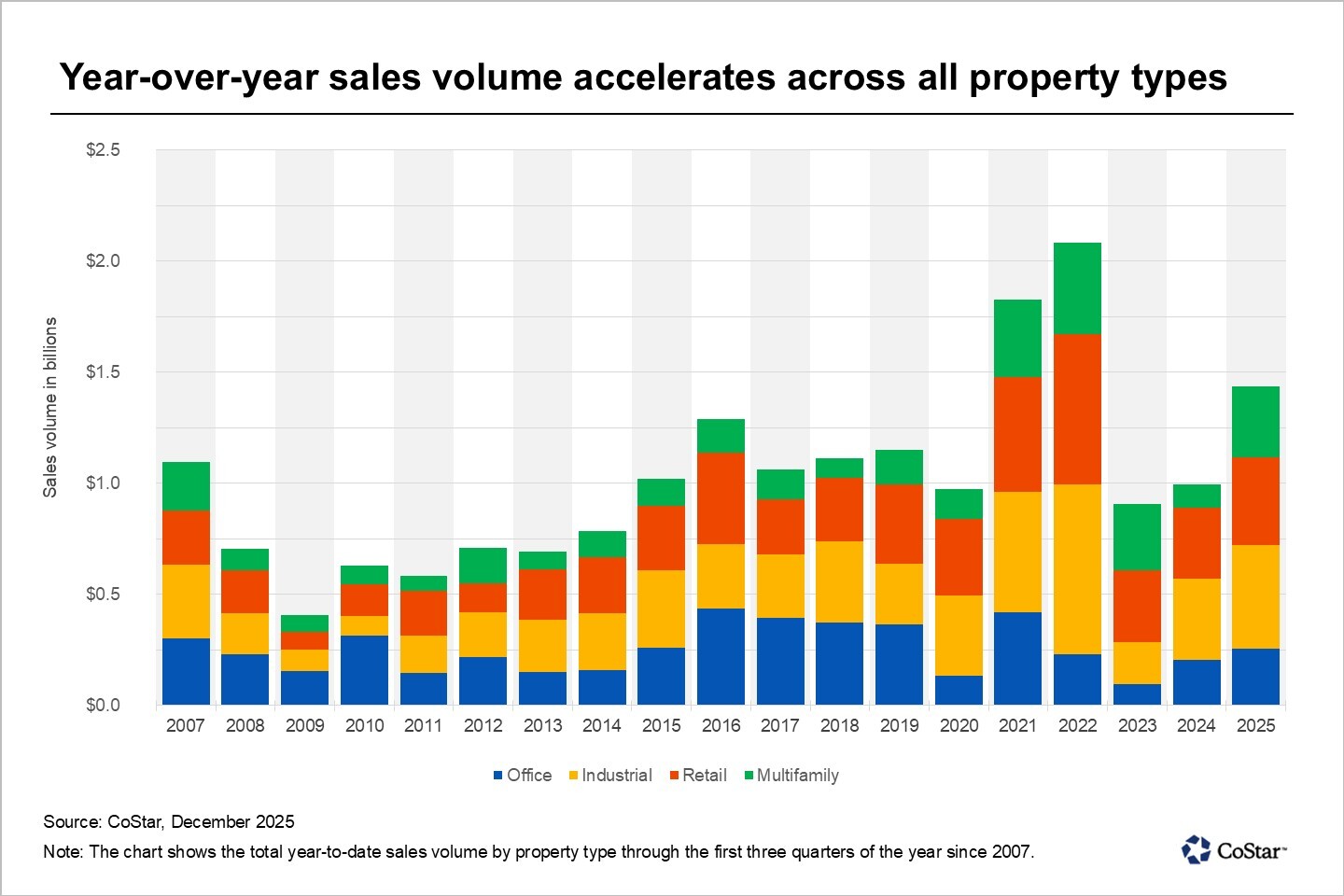
Milwaukee entered 2025 with renewed momentum, posting its strongest commercial real estate sales volume in three years. After a period of uncertainty and high capital costs, investors are returning with a sharper focus on quality assets, realistic pricing, and reliable cash flow. Activity is increasing across industrial, office, multifamily, and retail sectors, signaling a broad-based recovery fueled by stabilizing interest rates and improved market confidence.
As 2026 approaches, the title insurance industry is navigating a complex mix of market recovery, rising fraud threats, and sweeping regulatory changes. Industry leaders say the path forward centers on smarter technology, leaner operations, and stronger support for title agents. With AI-driven workflows, enhanced fraud prevention, and new compliance demands—including FinCEN’s expanded Geographic Targeting Orders—companies like Stewart and First American are reshaping how title work gets done. For real estate and mortgage professionals, the year ahead promises more automation, heightened standards, and major opportunities for those who stay ahead of the curve.
The real estate industry is undergoing a major transformation in 2025 as advancements in AI, proptech, blockchain, and data intelligence redefine how properties are marketed, valued, financed, and experienced. From instant digital valuations and immersive virtual tours to tokenized investments and predictive analytics, technology is reshaping every stage of the real estate lifecycle. Professionals who embrace these innovations—while maintaining the human expertise clients still rely on—will lead the next era of the industry.