When Luxury Meets Learning: VR Takes Miami’s Real Estate Market to the Next Level
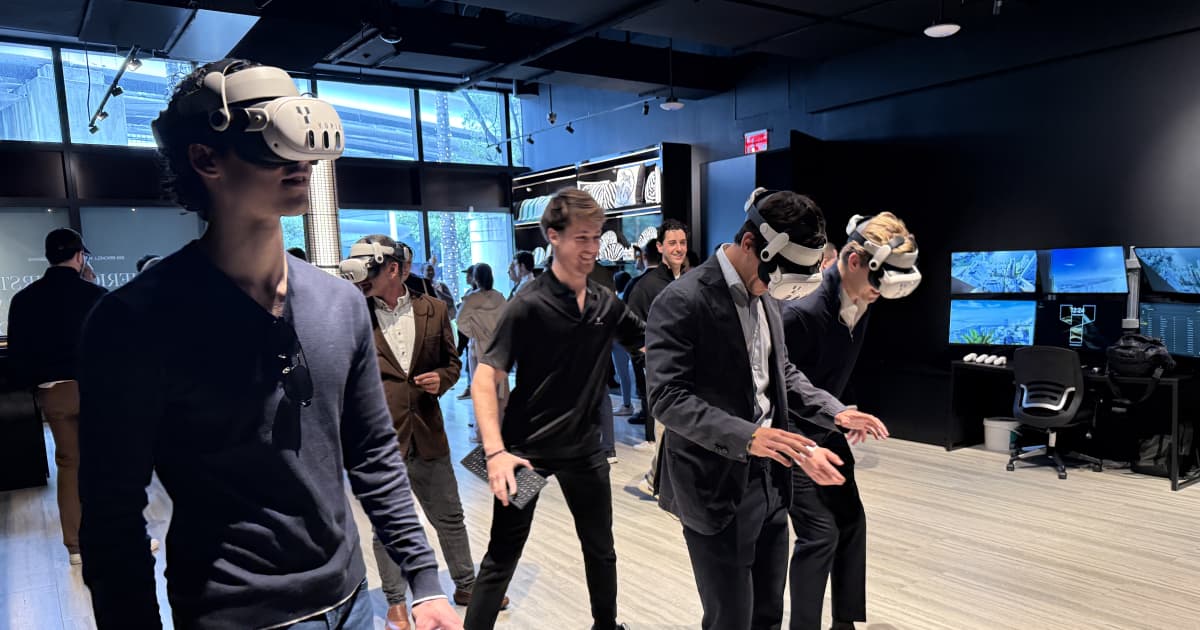
South Florida’s luxury real estate scene has never been shy about embracing the extraordinary — but this time, it’s not a penthouse view or a private concierge turning heads. It’s virtual reality. And for a group of ambitious real estate master’s students, the groundbreaking technology behind the upcoming Dolce & Gabbana tower in Miami offered a rare, up-close look at how high‑end development is evolving.
As part of a hands‑on learning experience, students stepped inside a fully immersive VR simulation of the under‑construction tower — a technological masterpiece already redefining the ultra‑luxury market. With over $1 million invested into its development, this VR system allows potential buyers to explore expansive floor plans, examine finishes, and take in Miami’s panoramic vistas long before the first wall is built.
“People Are Buying Experience and Emotion”
Elliot Lee, the project’s sales director, emphasized that VR isn’t just a tool — it’s a transformation in philosophy. “People are buying experience and emotion as much as they are buying an investment,” he said. “This puts them inside that experience before the building even exists.”
This shift matters enormously in South Florida, where ultra‑luxury towers compete not only in amenities but in sensory experiences and emotional connection.
A Real‑World Lesson for Future Professionals
Beyond the glamorous visuals and polished interior concepts, students also explored the real business mechanics behind luxury development. FIU Business adjunct professor Clay Dickenson highlighted the importance of bridging classroom learning with real‑world application.
“They can see the marketing, the production value and the numbers that go into a project like this,” Dickenson explained. “It connects what they learn in class to what actually happens in the real world.”
Professional education providers — including industry‑focused schools like Cameron Academy — understand how vital this bridge is. Modern real estate professionals need more than contract knowledge; they need fluency in technology, branding strategy, and market psychology. Experiences like these show exactly where the future of the industry is heading.
The Rise of Branded Residences
The Dolce & Gabbana tower represents a powerful trend reshaping Miami’s luxury skyline: the rapid expansion of branded residences. These homes merge traditional high‑end condo living with the prestige of world-renowned brands — offering curated design, luxe amenities, and a lifestyle narrative buyers instantly recognize.
Driven by remote work, seasonal migration, and heightened demand for service‑rich living, branded residences have become a defining staple of Miami’s luxury identity. VR technology accelerates this momentum by allowing developers to present the full “brand world” before breaking ground.
Luxury, Technology, and the Future of the Industry
For students, developers, and real estate professionals alike, the message is unmistakable: technology is no longer an accessory — it’s a foundation. Success in the evolving real estate market will require mastery of digital tools, experiential marketing, and high‑end consumer expectations, alongside traditional industry knowledge.
Those looking to strengthen or expand their real estate careers — especially in fast‑growing states like Florida — can get ahead by aligning with institutions that embrace innovation. This is where Cameron Academy continues to serve as a trusted partner, providing adaptive education for the next generation of market leaders.
Getting licensed or staying ahead in your career can be a journey—but it doesn’t have to be overwhelming. Grab your favorite coffee or tea, take a moment to relax, and browse through our articles. Whether you’re just starting out or renewing your expertise, we’ve got tips, insights, and advice to keep you moving forward. Here’s to your success—one sip and one step at a time!
Commercial real estate is entering a decade of major transformation driven by interest rate pressures, evolving work culture, rapid proptech innovation, and growing demand for AI-focused infrastructure. While the global CRE market is projected to reach $133.5 trillion by 2028, rising rates, shifting office demand, and increasing sustainability requirements are reshaping how professionals invest, manage, and develop properties. By 2030, the biggest opportunities will center on mixed‑use conversions, data center growth, premium office spaces, and ESG‑driven upgrades.
The National Association of Realtors’ landmark antitrust settlement is transforming how real estate agents negotiate compensation, work with buyers, and handle transparency in transactions. With MLS‑posted buyer‑broker commissions eliminated and written buyer agreements now required, both consumers and professionals are navigating a new, more transparent landscape. While commission levels have only dipped slightly, the real shift is in how openly compensation is discussed and negotiated—creating new challenges and opportunities for agents who adapt quickly.
Artificial intelligence is no longer a novelty in real estate — 2025 marks its breakthrough year as a dependable pillar of the proptech industry. With investors pouring capital into AI‑powered forecasting, security, automation, and property management tools, the sector is shifting from experimentation to full‑scale adoption. Brokerages, developers, and institutional players now rely on AI to streamline due diligence, enhance market modeling, reduce risk, and optimize building operations. As adoption accelerates, professionals who understand and leverage these technologies are gaining a decisive competitive edge in fast‑moving markets like Florida.
A new episode of Current Account breaks down why the insurance industry is heading into 2026 with more uncertainty — and more opportunity — than ever. From shifting global regulations and rising catastrophe risks to FSOC’s evolving role in the U.S., industry leaders Jérôme Haegeli and Philippe Brahin explain how insurers are being pushed to rethink strategy in real time. With global premium growth expected to slow and regulatory pressures rising, professionals in insurance and financial services are turning to education and new skills to stay ahead in a rapidly changing market.
New Jersey is quietly becoming one of the hottest commercial real estate markets in the nation, with Jersey City and North Jersey breaking into the top 10 in PwC’s 2026 Emerging Trends report. Fueled by redevelopment momentum, data‑center demand, mixed‑use transformations and a surge in health‑care projects, the state is drawing major investors while still battling rising construction costs and municipal fatigue. For real estate professionals, the Garden State’s evolution signals fresh opportunity—and a market worth watching closely heading into 2026.
The National Council of Insurance Legislators is pushing back against President Trump’s new executive order on artificial intelligence, arguing that it threatens decades of state‑based insurance oversight. NCOIL leaders say federal attempts to centralize AI authority could disrupt markets, weaken consumer protections, and limit states’ ability to innovate—setting the stage for a significant legal and political battle with major implications for insurance professionals who rely on AI‑driven tools and regulatory clarity.