Why Microcredentials Will Rule 2026 Hiring — And What Every Professional Should Do Now
The job market heading into 2026 is shaping up to be one of the most competitive and transformative in years. With managers balancing AI adoption, economic shifts, and evolving workforce needs, the people who rise above the noise will be those who can prove they are still learning, adapting, and upskilling.
That’s exactly why microcredentials — compact, targeted professional certificates — are becoming the No. 1 hiring advantage across nearly every industry. And according to Coursera CEO Greg Hart, companies are demanding them at record levels.
In an exclusive Fortune interview, Hart explains that more than 90% of employers prefer candidates who have microcredentials over those who do not.
Tap to Explore: Why Employers Love Microcredentials
• They show commitment to learning
• They signal adaptability during rapid AI change
• They demonstrate real, measurable skills
• They differentiate applicants in crowded fields
Gen Z Is Feeling the Pressure — But They’re Not Alone
Young workers have been hit the hardest. Recent analyses from Oxford Economics reveal unemployment rates of 14% for ages 16–19 and around 9% for ages 19–24.
With employers seeking job-ready skills and demonstrated knowledge, microcredentials help bridge the gap between “I’m capable” and “Here’s proof.”
The AI Skills Explosion: What Everyone Must Learn
Coursera reports that its most in-demand certificates are AI-driven, including Google’s “Foundations of Data Science,” “Data, Data Everywhere,” and its cybersecurity and project management tracks.
“It’s the most in-demand skill in our history as a company right now,” Hart says of generative AI.
Popular Skills for 2026
• Generative AI
• Data analytics
• HR technology
• Soft skills: communication, assertiveness, collaboration
And Don’t Forget Soft Skills
A report from General Assembly highlights a major warning: fewer than half of workers — and only 12% of mid-level executives — believe entry-level talent is prepared for the workforce. Missing communication skills and weak adaptability are among the top concerns.
As AI automates more functional tasks, Hart believes the value of uniquely human abilities will rise: “The value of the human side of the equation actually increases.”
Real Advice From a CEO to His Gen Z Sons
Hart’s guidance to his two sons reflects the reality many young people — and career‑shifting adults — now face.
To his finance‑major son, he suggested starting with “Gen AI for finance,” then building into data analytics tools that can reshape modern spreadsheet-heavy workflows.
To his game-design‑major son, he emphasized project management, entrepreneurship, and expanding every adjacent skill possible.
Lesson for All Professionals
Your major doesn’t matter — your momentum does.
What This Means for Licensed Professionals
Whether you’re in real estate, mortgage, insurance, medical services, or financial fields, employers and clients expect ongoing proof of your commitment to staying sharp. Licensing alone is no longer the finish line — it’s the foundation.
That’s where organizations like Cameron Academy become invaluable. From Florida real estate licensing to mortgage, insurance, and continuing education across the U.S., Cameron Academy helps professionals stay competitive, relevant, and opportunity‑ready.
The Bottom Line
2026 will reward learners — not the perfect, not the overly experienced, but the ones who keep building, keep adapting, and keep sharpening their skills.
Microcredentials aren’t a trend. They’re becoming the new career currency.
And there has never been a better moment to start earning them.
More Articles
Getting licensed or staying ahead in your career can be a journey—but it doesn’t have to be overwhelming. Grab your favorite coffee or tea, take a moment to relax, and browse through our articles. Whether you’re just starting out or renewing your expertise, we’ve got tips, insights, and advice to keep you moving forward. Here’s to your success—one sip and one step at a time!
Local elections across major U.S. cities have kicked off a wave of policy changes that could reshape development costs, rental income, and investment strategies heading into 2026. From NYC’s aggressive tenant‑protection agenda to Chicago’s sustainability push, Miami’s political uncertainty, and Boston’s steady zoning overhaul, the post‑election environment is redefining how real estate professionals, investors, and lenders should prepare for the year ahead.
Insurance carriers are rapidly rolling out AI-related exclusions that strip coverage from claims involving AI tools, automated decision‑making, or generative platforms like ChatGPT and Midjourney. With firms like Berkley and Hamilton introducing sweeping “absolute” and generative‑AI‑specific exclusions, professionals in real estate, mortgage, insurance, and finance now face new liability gaps. As AI becomes unavoidable in everyday work, understanding these exclusions is essential for protecting your career and staying compliant in a fast‑changing risk environment.
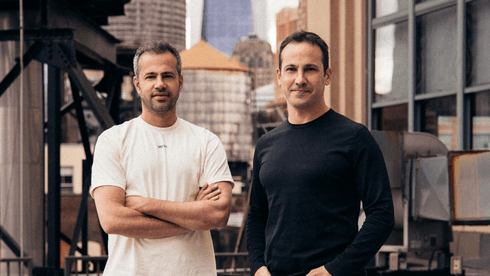
Proptech startup Venn has raised a $52 million Series B to unify the entire renting lifecycle into one intelligent platform, replacing over a dozen traditional systems and serving more than half a million tenants. As AI‑powered tools like Venn rapidly reshape property operations, real estate professionals — especially in fast‑moving markets like Florida — will need stronger education and tech‑savvy skills to stay competitive.
Florida’s Gulf Coast is undergoing a dramatic transformation as soaring insurance premiums, costly construction requirements, and the long shadow of Hurricane Ian force middle‑class families, workers, and longtime residents out of communities they once anchored. With premiums topping $5,700 a year — and many paying far more — Realtors warn of looming foreclosures, renters face steep increases, and entire neighborhoods are being rebuilt for wealthier newcomers. This mounting crisis is reshaping the state’s real estate landscape and leaving professionals scrambling to adapt.
Economic uncertainty, rapid tech advances and shifting population patterns are setting the stage for a pivotal year in commercial real estate. New findings from the Counselors of Real Estate, presented at NAR NXT, outline ten major forces reshaping strategy, investment and opportunity in 2026—from policy impacts and portfolio risk to AI adoption, capital flow changes, housing attainability and demographic shifts. This outlook offers clarity and caution for professionals across real estate, mortgage, finance and related fields.
Florida’s home insurance crisis is back in the spotlight as new reforms appear to be repeating decades‑old mistakes. Despite efforts to depopulate Citizens and attract private insurers, many of the companies taking over policies have ties to past insolvencies. Critics say weak oversight, generous ratings, and political influence are allowing unstable insurers to thrive while homeowners pay more for less protection. Experts warn that without transparent ratings, real accountability, and unified regulation, Florida’s insurance market will remain vulnerable—putting property values, lending, and the broader real estate industry at risk.