Why Tax‑Deferred Property Programs Are Surging — and What It Means for Today’s Real Estate Professionals
Investment managers across the U.S. are rapidly rolling out new tax‑deferred real estate investment programs as demand skyrockets. With stronger market certainty, favorable conditions, and one of the largest generational wealth transfers in history underway, Delaware Statutory Trusts (DSTs) are becoming a major force in modern estate planning.
In recent weeks, major development and investment groups such as Denholtz, Forum Investment Group, and PREP Property Group have launched new DST offerings. These programs allow property sellers to defer capital gains taxes by reinvesting through 1031 exchanges—an increasingly appealing strategy for owners seeking passive income and long‑term estate benefits.
Even real estate powerhouse Blackstone has entered the DST arena, joining Brookfield, Starwood, Nuveen, Hines, and Ares Management. As DSTs move into the mainstream, both new and seasoned professionals are paying close attention.
“The DST market is projected to have an increase of about 30% year‑over‑year,” said Jennifer McCool, Executive Vice President and Head of Capital Markets at Denholtz.
The Mechanics Behind the Demand
DSTs allow investors to shift from active property management to passive income while maintaining tax‑deferred real estate exposure via fractional interests in institutional‑grade assets. Through 1031 exchanges, sellers can reinvest proceeds into like‑kind commercial properties, avoiding taxes that would otherwise be due immediately.
According to Mountain Dell Consulting, DST‑related sales hit $7.34 billion through November, with projections of $7.5 billion in 2025—up 33% from the prior year.
The Wealth‑Transfer Wave
With more than $100 trillion expected to change hands over the next two decades, estate planning strategies like DSTs are seeing structural demand growth. The recent federal “Big Beautiful Bill” preserved 100% capital gains deferral through like‑kind exchanges, removing the uncertainty that had previously slowed some investors’ planning.
As Forum Investment CEO Darren Fisk explained, many property owners hold highly appreciated assets and are seeking reduced operational intensity without sacrificing upside potential.
Risks Still Matter
DSTs aren’t without drawbacks. Investors must accept long capital lock‑ups, illiquid assets, and reliance on sponsor performance. These risks are familiar territory for many approaching retirement, reinforcing the need for proper education and due diligence—areas where real estate professionals can add tremendous value.
Market Conditions Fueling Rapid Growth
A tight supply of quality replacement properties and rising tax concerns are amplifying interest in DSTs. Denholtz recently launched its first DST—DX SB Industrial I DST—featuring a nine‑building industrial campus in Tampa, Florida. The offering sold out in just six weeks, demonstrating powerful investor demand.
Sponsors are increasingly focusing on defensive assets such as industrial, multifamily, and essential‑needs retail, backed by long‑term, predictable cash flow. PREP Property Group, known for retail assets like Hillside Village Mall in Texas, plans to launch its inaugural DST offering in early 2026.
“Retail real estate is experiencing its strongest fundamentals in decades,” said PREP CEO Michael Phillips. “New supply is at historic lows, making this a prime moment for investors to reposition capital.”
Why This Matters for Real Estate Professionals
DSTs and 1031 strategies are more than investment buzzwords—they’re essential knowledge for today’s real estate agents, brokers, and advisors. Clients increasingly seek professionals who understand advanced tax‑advantaged investment structures.
This is where education becomes a differentiator. At Cameron Academy, real estate professionals across Florida and beyond are strengthening their expertise in topics like 1031 exchanges, investment analysis, and portfolio‑driven real estate strategy—making them more competitive in a rapidly evolving market.
Source
This article was inspired by reporting from CoStar News, a leading authority on commercial real estate insights.
More Articles
Getting licensed or staying ahead in your career can be a journey—but it doesn’t have to be overwhelming. Grab your favorite coffee or tea, take a moment to relax, and browse through our articles. Whether you’re just starting out or renewing your expertise, we’ve got tips, insights, and advice to keep you moving forward. Here’s to your success—one sip and one step at a time!
The Phoenix housing market continues to outperform the rest of the country, posting stronger sales, rising equity, and an influx of qualified buyers. With closed sales, pending sales, new listings, and median prices all trending upward, the Valley is outpacing national growth by a wide margin. City‑level data shows impressive strength across Scottsdale, Goodyear, Gilbert, Phoenix, and more—making 2025 a powerful year for agents, investors, and professionals watching the Arizona market.
With the 2026 FIFA World Cup and America’s 250th birthday celebrations on the horizon, the U.S. job market is gearing up for a surge across multiple industries. Seasonal, flexible, and part‑time roles are expected to rise—especially for workers 50+ who have struggled in a cooling labor market. From accounting and HR leadership to event staffing and delivery driving, major cities are preparing for increased hiring tied to tourism, infrastructure, and yearlong national celebrations. Many of these fast‑growing roles connect directly to licensing and certification pathways, giving professionals new chances to pivot or upskill through programs offered by Cameron Academy.
Florida is rolling out a new wave of laws on January 1, 2026 that will impact professionals in real estate, insurance, healthcare, education, and other regulated industries. From new insurance rules and healthcare billing requirements to condo association deadlines and statewide databases, these updates reshape compliance expectations across the state. Whether you work in property, finance, or public‑facing services, understanding these changes is essential for staying aligned with Florida’s evolving regulations.
Nearly every commercial real estate professional is expecting a stronger year ahead, with 97% predicting increased or stable activity in 2026, according to Avison Young’s latest outlook. Confidence has surged dramatically since mid‑2025 as strong sales, anticipated rate cuts, and improving fundamentals across key sectors signal that CRE recovery and growth may finally be taking hold.
Dallas‑Fort Worth is finishing 2025 as the nation’s top real estate and business powerhouse, fueled by corporate relocations, a dominant industrial sector, infrastructure megaprojects, and a rapidly evolving workforce landscape. From data center expansion to the launch of the DART Silver Line, the region continues to outpace national trends—while also confronting a growing demand for skilled professionals and licensed talent across construction, real estate, and technical fields.
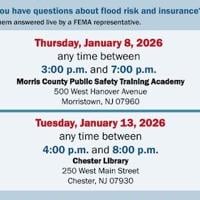
FEMA and the NJDEP have released revised preliminary flood maps for Morris County, reshaping how homeowners, real estate agents, insurers, and mortgage professionals assess flood risk. The updated FIRMs may shift properties into or out of higher‑risk zones, affecting insurance requirements, closing processes, and long‑term property values. With public review and appeals ahead, industry professionals are urged to study the changes now and prepare clients for potential impacts.