Why Toronto’s Real Estate Market Is Basically Playing ‘Would You Rather?’
Ever find yourself scrolling through charts and stats about real estate prices and think, “This looks like my retirement plan—confusing and kind of worrisome?” Well, buckle up, because Toronto’s real estate market has been on a rollercoaster ride that makes Canada’s Wonderland look like a kids’ playground. And honestly, it’s giving me some serious “Do I laugh or cry?” vibes.
The Great Toronto Housing Drama You Missed
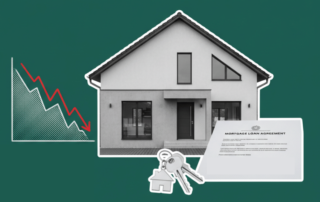
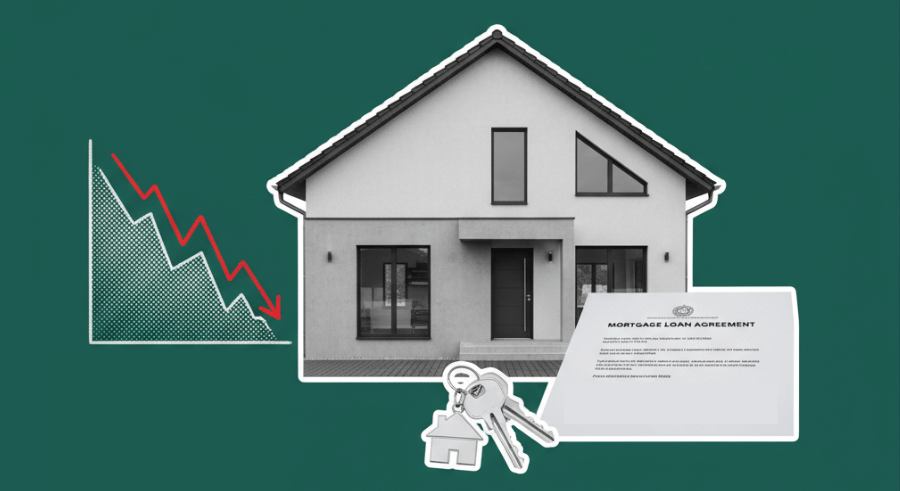
Let’s get everyone up to speed with some context, shall we? Picture this: in 2020, the average home price in the Greater Toronto Area (GTA) sat at a (still crazy) $930,000. Then came the pandemic—a time when sourdough bread rose, TikTok dances went viral, and apparently, home prices decided to hit turbo mode. By 2022, the average cost had skyrocketed to $1.19 million. That’s, like, a 28% increase in just three years!
But as with all wild parties, there was an inevitable hangover. Cue the economic chaos, spiking interest rates, and “what-is-happening-right-now” vibes in the market. By the end of 2024, everything sort of… plateaued? The average price dipped just slightly to $1.126 million, which, let’s be honest, is still an astronomical price tag. Compared to the peak, that’s only a 5.3% drop. Let’s pause for a moment of silence for my very not-millionaire-level bank account.
The Big Question: Up or Down in 2025?
Okay, so here’s where things get spicy. Are we gearing up for another housing boom, or should we brace for more tears (and maybe some very serious calls to our landlords)? That depends on who you ask.
- On the bullish side: Big banks like TD are forecasting a 6.4% increase in prices by 2025. Now, I’m no economist, but I do know a suspiciously optimistic prediction when I see one.
- On the bearish side: Remember when Toronto’s housing market imploded in the late ’80s? Prices didn’t just drop—they spent seven years in the real estate penalty box before beginning a snail-paced recovery.
Mark Twain’s famous words, “History doesn’t repeat, but it often rhymes,” never felt more relevant.
My Personal Take: This Is Like Predicting the Oscars
You know that moment when you’re watching the Oscars, and you’re absolutely sure your favorite movie will win Best Picture? And then they call something completely unexpected, and you’re left shaking your popcorn bag in disbelief? Yeah, that’s how it feels trying to guess Toronto’s housing market right now.
- Freehold Properties: These are the prom king and queen of the housing world. Everyone loves them, they’re in demand, and they perform better (looking at you, townhomes and semi-detached).
- Condos: Sorry, condos, but you’re kind of like the reliable but boring friend in the GTA real estate market. You’re staying flat while everyone else is out here stealing the show.
If I had to throw my hat in the ring, I’d go with a more modest prediction. Maybe we’re looking at a small increase (2.5% max if rates drop—big if there) or relative stability. A major boom? Hard to imagine unless the Bank of Canada busts a move with those interest rates. At the same time, I don’t see prices absolutely tanking either.
Analysis: Is Real Estate Still the Move?
Here’s the truth, friends: deciding if you should keep chasing property ownership in Toronto is like trying to figure out if you should bet on Teslas because Elon Musk tweets funny memes. The transcript draws a great parallel here: just like you can’t judge Tesla stock by looking at its did-you-just-skyrocket chart, you can’t judge Toronto’s housing market just by glancing at price tags.
Context matters. Nuances matter. And, let’s be real, timing really, really matters.
Let’s Chat! What’s Your Move?
So, what do YOU think? Are we in for a 1980s-style market meltdown or another era of climbing prices and sad PayPal balances? Would you buy now or hold out for a theoretical crash? And seriously, if someone actually predicts 2025 prices correctly, can we name them the real estate Oracle of Toronto?
Drop your thoughts in the comments (or, you know, just yell them into the void—you do you). In the meantime, I’ll be over here plotting my next move… or at least trying to figure out if I should switch to buying plants instead of real estate. Less commitment, more green vibes.