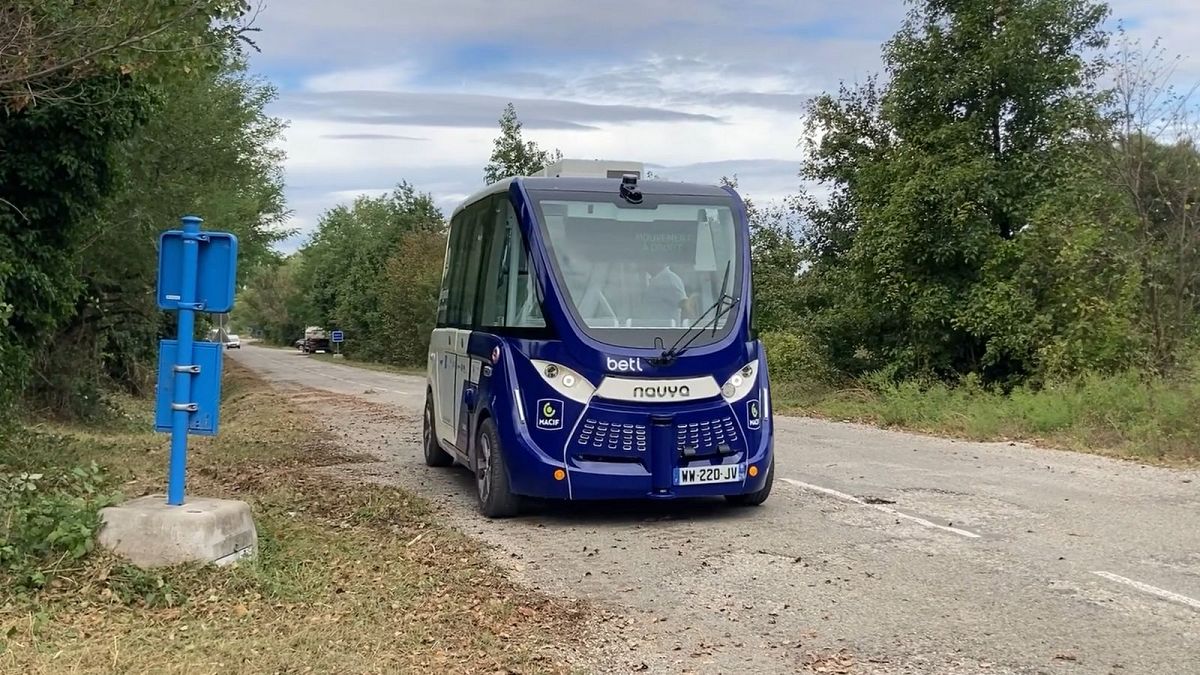
Driverless Shuttles: A New Era of Mobility in Rural France
In the picturesque yet sparsely populated region of Val de Drôme – Crest in southeastern France, a quiet revolution is underway. The deployment of self-driving shuttles is transforming the way residents navigate their rural surroundings. This initiative, launched in 2020, is part of a broader European effort to harness automated electric vehicles (EVs) as a viable public transport solution in areas where traditional services are often lacking.
Yann Arnaud, director of responses to customer needs and innovation at the French insurance company MACIF, emphasized the potential of these shuttles during a conversation with Euronews. “We are trying to ensure that this is a new means of travel and mobility for people living in suburban or rural areas,” he stated, highlighting the project’s aim to reduce isolation and improve accessibility.
Technology and Safety
The shuttles operate on a predefined 5 km route, making seven stops over a 20-minute journey. A control operator oversees the operation to ensure safety. Benjamin Beaudet, general director at Beti, the operator of the automated shuttles, explained that the technology aligns with the European vision for automated vehicles. The shuttles “learn” their routes and compare real-time observations with pre-learned data to navigate safely.
In contrast to American and Chinese companies like Waymo, Uber, and Tesla, which focus on self-driving taxis with flexible routes, the European approach prioritizes defined paths, enhancing safety and predictability.
Addressing Rural Needs
The introduction of these shuttles in Val de Drôme – Crest, where the population density is significantly lower than the national average, has been met with positive feedback. Residents appreciate the newfound mobility options, especially in areas where alternatives are limited. Arnaud noted, “The question of acceptability arises when you have the luxury of having other options. When you don’t have a choice, you’re very happy to have [the shuttle].”
This sentiment underscores the potential of driverless vehicles to address mobility challenges in rural areas, particularly for the elderly and those without access to personal transportation.
Challenges and Future Prospects
Despite the promising start, scaling these projects to permanent services remains a challenge. High costs, logistical hurdles, and technological requirements, as outlined in an Open Research Europe article, pose significant barriers. The EU has invested €159 million in research and innovation related to automated mobility since 2021, yet achieving commercial viability continues to be elusive.
The success of initiatives like AVENUE and SHOW, which have conducted pilot projects across Europe, including in Crest, offers hope. However, transitioning from pilot programs to sustainable, everyday solutions requires overcoming substantial obstacles.
As Europe continues to explore the potential of automated vehicles, the experiences in rural France provide valuable insights into the future of mobility. With continued innovation and investment, driverless shuttles could become a cornerstone of public transport in remote areas, offering a greener, more accessible alternative to traditional car use.
More Articles
Getting licensed or staying ahead in your career can be a journey—but it doesn’t have to be overwhelming. Grab your favorite coffee or tea, take a moment to relax, and browse through our articles. Whether you’re just starting out or renewing your expertise, we’ve got tips, insights, and advice to keep you moving forward. Here’s to your success—one sip and one step at a time!
The advent of Artificial Intelligence (AI) has ushered in a new era in the realm of property valuation and appraisal. AI, a formidable tool capable of swiftly analyzing vast amounts of data, provides real-time insights into property values. However, the importance of human expertise in interpreting data and making informed judgments cannot be undermined. A blend of AI and human judgment ensures accurate and reliable property valuations. AI has also made significant strides in the development of valuation products for Home Equity Lines of Credit (HELOCs) and second-lien mortgages. These products leverage AI technology to assess risk more effectively, providing lenders with a comprehensive understanding of the property's value. As AI continues to evolve, we can expect further advancements in the property valuation and appraisal process. The future of property valuations lies in the synergy between AI and human expertise, ensuring accurate, reliable, and contextually informed property valuations.
The U.S. housing market has experienced a significant surge in home prices, marking the largest annual increase since February 2023. In August alone, home prices recorded a remarkable 3.7% gain. While this upward trend has been observed across the country, there are specific housing markets where prices are projected to decline. In this article, we explore the factors driving the rise in home prices and delve into the markets that are likely to experience price drops. Join us as we navigate through the intricacies of the housing market, uncovering the driving forces behind the price increase and shedding light on the markets where caution may be warranted.
The real estate industry is abuzz with the news of RE/MAX's proposed agreement that effectively ends the National Association of Realtors (NAR) membership requirement and commission rule. This groundbreaking settlement has far-reaching implications for RE/MAX agents and franchisees, as well as the broader real estate industry. The proposed settlement by RE/MAX marks a significant departure from the status quo. By eliminating the NAR membership requirement and commission rule, RE/MAX is paving the way for a more open and competitive real estate market. This move has the potential to disrupt long-standing practices and reshape the industry as we know it.
Chase Bank has made a groundbreaking decision to accept cryptocurrencies, including SHIB and XRP, as a form of payment for mortgage loans. This move marks a significant milestone in the mainstream adoption of digital currencies. It offers numerous benefits for both customers and Chase Bank, providing a convenient and efficient way to make mortgage payments and attracting tech-savvy customers. However, it also comes with risks due to the volatility of digital currencies. This development has the potential to reshape the financial industry and the way we think about mortgage payments. Explore more about finance and technology with Cameron Academy's online career education courses.
Fannie Mae, a government-sponsored enterprise, has launched a new initiative to expand homeownership opportunities. This initiative introduces a 5% down payment option, revolutionizing the traditional requirements for purchasing multifamily homes. The program offers aspiring homeowners and investors the chance to secure a multifamily property with just a 5% down payment. This reduced requirement breaks down the barriers that have hindered many individuals from entering the multifamily housing market. The program is available for both owner-occupied and non-owner-occupied multifamily properties, offering flexibility for investors and homeowners alike. Discover how Fannie Mae's 5% down payment option can help you achieve your dream of owning a multifamily property. Contact our team today to learn more about Fannie Mae's 5% down payment option and find the perfect multifamily property for your needs.
In a surprising turn of events, Redfin, a prominent real estate brokerage, has made the decision to sever ties with the National Association of Realtors (NAR). This move has sparked a wave of reactions within the industry, with experts weighing in on the potential implications for the real estate market. Redfin's criticism of NAR's rules and regulations stems from their belief in the need for innovation and competition in the real estate market. The industry's response to the Redfin-NAR split has been mixed. Some industry experts view this split as a positive development that will foster healthy competition and drive innovation in the real estate market. However, not everyone shares this optimistic outlook. Critics argue that the split could potentially undermine the stability and unity of the real estate market. The Redfin-NAR split has far-reaching implications for the future of the real estate industry. It highlights the ongoing tensions and debates surrounding the role of traditional brokerages versus emerging online platforms. The split also raises important questions about industry regulations and the balance between competition and cooperation.