Driverless Shuttles: A New Era of Mobility in Rural France
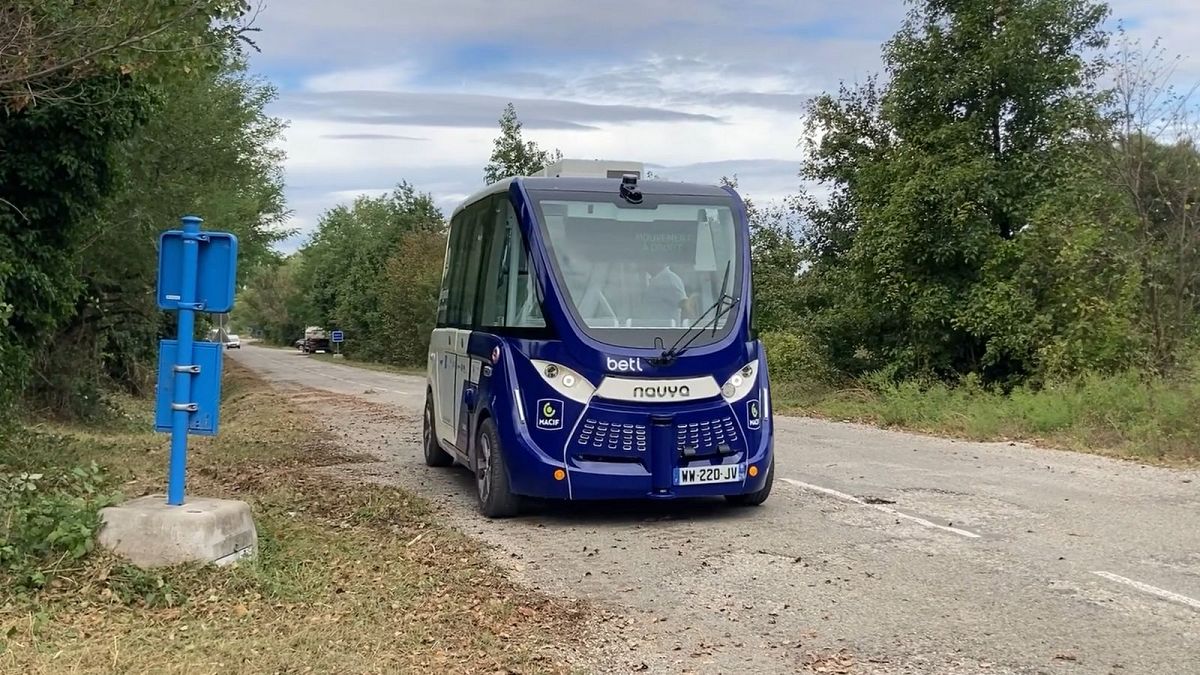
In the picturesque yet sparsely populated region of Val de Drôme – Crest in southeastern France, a quiet revolution is underway. The deployment of self-driving shuttles is transforming the way residents navigate their rural surroundings. This initiative, launched in 2020, is part of a broader European effort to harness automated electric vehicles (EVs) as a viable public transport solution in areas where traditional services are often lacking.
Yann Arnaud, director of responses to customer needs and innovation at the French insurance company MACIF, emphasized the potential of these shuttles during a conversation with Euronews. “We are trying to ensure that this is a new means of travel and mobility for people living in suburban or rural areas,” he stated, highlighting the project’s aim to reduce isolation and improve accessibility.
Technology and Safety
The shuttles operate on a predefined 5 km route, making seven stops over a 20-minute journey. A control operator oversees the operation to ensure safety. Benjamin Beaudet, general director at Beti, the operator of the automated shuttles, explained that the technology aligns with the European vision for automated vehicles. The shuttles “learn” their routes and compare real-time observations with pre-learned data to navigate safely.
In contrast to American and Chinese companies like Waymo, Uber, and Tesla, which focus on self-driving taxis with flexible routes, the European approach prioritizes defined paths, enhancing safety and predictability.
Addressing Rural Needs
The introduction of these shuttles in Val de Drôme – Crest, where the population density is significantly lower than the national average, has been met with positive feedback. Residents appreciate the newfound mobility options, especially in areas where alternatives are limited. Arnaud noted, “The question of acceptability arises when you have the luxury of having other options. When you don’t have a choice, you’re very happy to have [the shuttle].”
This sentiment underscores the potential of driverless vehicles to address mobility challenges in rural areas, particularly for the elderly and those without access to personal transportation.
Challenges and Future Prospects
Despite the promising start, scaling these projects to permanent services remains a challenge. High costs, logistical hurdles, and technological requirements, as outlined in an Open Research Europe article, pose significant barriers. The EU has invested €159 million in research and innovation related to automated mobility since 2021, yet achieving commercial viability continues to be elusive.
The success of initiatives like AVENUE and SHOW, which have conducted pilot projects across Europe, including in Crest, offers hope. However, transitioning from pilot programs to sustainable, everyday solutions requires overcoming substantial obstacles.
As Europe continues to explore the potential of automated vehicles, the experiences in rural France provide valuable insights into the future of mobility. With continued innovation and investment, driverless shuttles could become a cornerstone of public transport in remote areas, offering a greener, more accessible alternative to traditional car use.
More Articles
Getting licensed or staying ahead in your career can be a journey—but it doesn’t have to be overwhelming. Grab your favorite coffee or tea, take a moment to relax, and browse through our articles. Whether you’re just starting out or renewing your expertise, we’ve got tips, insights, and advice to keep you moving forward. Here’s to your success—one sip and one step at a time!
Cameron Academy is thrilled to offer the Free Annual Florida Real Estate Sales Associate 63-Hour Pre-License Course Livestream. This exclusive event is an opportunity for aspiring real estate professionals to gain expert instruction, access a comprehensive curriculum, and connect with a network of professionals in the industry. The course will be livestreamed from December 04-15, 2023, allowing you to participate from the comfort of your own home or office. Register now to secure your spot in this highly sought-after course. Spaces are limited, so early registration is highly recommended. Take the first step towards your real estate career today!
Coldwell Banker, a renowned real estate brand, has recently appointed Jason Waugh as the new president of Coldwell Banker Affiliates. In his new role, Waugh will be responsible for overseeing the brand's strategy, operations, and sales for its growing network of franchises. This appointment comes as Coldwell Banker aims to further strengthen its position in the real estate market. With an impressive background in the industry, Waugh brings a wealth of experience to his new position. Previously associated with Berkshire Hathaway HomeServices and Berkshire Hathaway Home Services Real Estate Professionals for 18 years, Waugh's expertise and leadership qualities make him an ideal fit for this role.
United Wholesale Mortgage (UWM), the country's leading lender, has increased its agency conforming loan limits to $750,000. This move, ahead of the Federal Housing Finance Agency's expected decision, applies to conventional and VA loans locked from October 11. The decision offers borrowers greater flexibility and access to larger loan amounts, with the benefits of conforming loans. These loans meet the guidelines set by government-sponsored enterprises like Fannie Mae and Freddie Mac, offering lower interest rates and more favorable terms compared to non-conforming or jumbo loans.
PNC Bank has implemented a cost-cutting strategy, leading to layoffs and a shift in focus towards expense management and strategic priorities. The bank aims to streamline operations, improve efficiency, and reallocate resources to align with long-term goals. Despite the layoffs, PNC Bank is committed to supporting affected employees during the transition period. Learn more about PNC Bank's strategy and its impact on the industry at Cameron Academy, a leading career education school.
Government-sponsored enterprise (GSE) loan buybacks have emerged as a significant issue for lenders in the mortgage market. The sudden increase in buybacks from entities like Fannie Mae and Freddie Mac is causing financial and operational strain among lenders. The rise in loan buybacks is largely due to stricter underwriting guidelines enforced by these GSEs. The impact of these buybacks is significant and far-reaching. Lenders not only face financial losses from repurchasing loans, but they also encounter operational challenges. The surge in loan buybacks has created uncertainty in the mortgage market, potentially slowing down the housing market. In response to the challenges posed by loan buybacks, lenders are implementing stricter underwriting practices and enhancing their quality control processes.
The housing market is currently witnessing an unusual trend - a deceleration in the growth of housing inventory, despite the rise in mortgage rates. This unexpected development has triggered concerns among potential buyers and industry experts. With mortgage rates climbing from their historic lows, the number of homes available for sale remains surprisingly stagnant. We investigate the factors contributing to this unexpected stagnation in inventory growth and examine the implications of rising mortgage rates, limited new listings, and an increase in price cuts. We also consider the impact of external elements such as labor reports and geopolitical risks on the housing market.