Florida Insurance Costs Drop 14.5% After Major Reforms, New Report Finds
Florida’s sweeping 2022 and 2023 legislative reforms are doing more than calming the state’s turbulent insurance market—they’re reshaping the economic landscape. According to a powerful new analysis from the Perryman Group, property‑casualty insurance costs in Florida are now 14.5% lower than they would have been without the reforms.
The update arrives after years of soaring premiums, insurer failures, and widespread concern that the state’s insurance market was reaching a breaking point. Now, the numbers reveal something Floridians haven’t seen in years: real relief.
Billions Flowing Back Into Florida’s Economy
The Perryman Group—a respected, non-partisan economic research firm—reports that the insurance cost reductions are responsible for generating more than $4.2 billion in economic activity statewide. Even more striking: over 29,000 new jobs have been created as a result.
“Florida’s tort reforms are achieving exactly what policymakers intended,” said Stef Zielezienski, executive vice president and chief legal officer for the American Property Casualty Insurance Association. According to APCIA, the reforms have eased excessive litigation pressures, encouraged insurers to re-enter the market, and slowed the once‑explosive rise of premiums for consumers and businesses alike.
Premiums Finally Cooling After Years of Increases
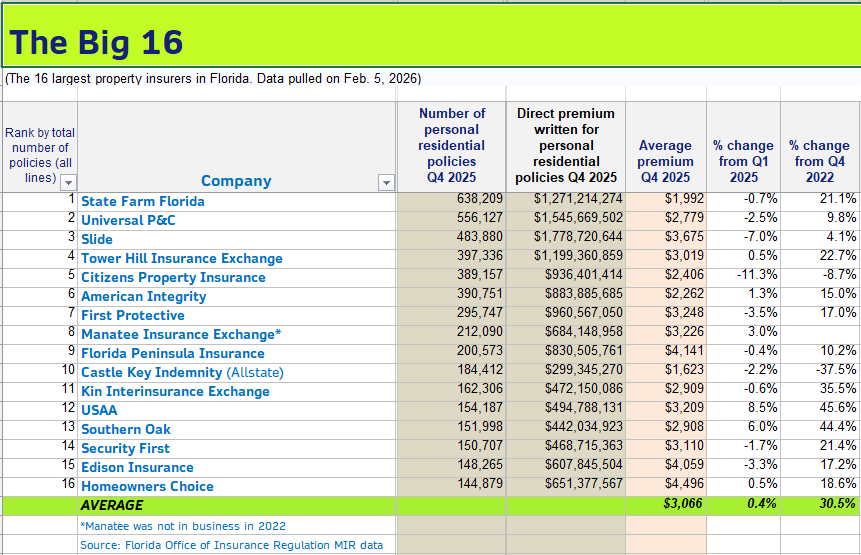
Fresh data from the Florida Office of Insurance Regulation adds even more support. Among the 16 largest property insurers in the state, average residential premiums rose less than 1% in 2025—an astonishing improvement compared to the back‑to‑back years of double‑digit increases.
Even better: ten of those carriers actually lowered their premiums last year, with reductions as significant as 11%. After a decade of turbulence, this marks a notable step toward true market stability.
Lower insurance costs affect far more than homeowners. They ripple outward—boosting commercial development, empowering small businesses, and strengthening long‑term economic health across Florida.
For professionals in industries like insurance, real estate, finance, and beyond, understanding these shifts is essential. Schools such as Cameron Academy play a pivotal role by helping Florida professionals stay educated, licensed, and prepared for rapid changes in the market.
As the Perryman analysis highlights, these benefits are expected to grow exponentially over time, supporting a stable legal environment and fueling sustainable statewide economic expansion.
More Articles
Getting licensed or staying ahead in your career can be a journey—but it doesn’t have to be overwhelming. Grab your favorite coffee or tea, take a moment to relax, and browse through our articles. Whether you’re just starting out or renewing your expertise, we’ve got tips, insights, and advice to keep you moving forward. Here’s to your success—one sip and one step at a time!
The Western U.S. commercial real estate sector is gearing up for a pivotal year in 2026, with new forecasts from Kidder Mathews showing steady economic growth, moderating inflation, and improving fundamentals across office, industrial, retail, and multifamily markets. From slow but stabilizing office recovery to strong retail performance and tightening industrial demand, the region is entering a period of rebalancing that presents fresh opportunities for real estate and related professionals.
A delayed federal jobs report has pushed ADP’s data into the spotlight, revealing that private employers added just 22,000 jobs in January — far below expectations. Revised December numbers and ongoing declines in key sectors like professional services and manufacturing point to a cooling labor market heading into 2025. While wage growth remains steady, uneven job creation across regions and industries is raising new questions about future interest‑rate cuts and what this shifting economy means for professionals in fields like real estate, mortgage, insurance, and finance.
Nashville’s booming tech-driven population is transforming luxury real estate, making smart technology and eco‑friendly design the new standard. From AI‑powered adaptive living and advanced security systems to high‑efficiency construction and green incentives, the city’s top communities—Brentwood, Franklin, and Nolensville—are leading a movement toward intelligent, energy‑saving homes that offer long‑term value and modern comfort.
Florida legislators have confirmed that no new insurance relief is coming in 2026, leaving homeowners to grapple with rising premiums and shrinking options. While Republican leaders argue that past reforms simply need more time to stabilize the market, Democrats are pushing for immediate action as families across the state feel the financial strain. With insurance changes off the table, lawmakers are shifting their focus to property tax relief—creating important ripple effects for real estate, mortgage, and insurance professionals watching the market closely.
A new CBRE survey reveals that 2026 is shaping up to be a bullish year for commercial real estate, with most investors planning to expand their portfolios. Dallas secures the top spot for the fifth year in a row, but Southeast metros like Atlanta, Miami, Tampa, and Charlotte are rapidly gaining ground thanks to population growth, strong job creation, and resilient demand in sectors like tech, logistics, and healthcare.
Washington State University’s Carson College of Business has introduced Carson Pro, a flexible online platform offering non‑credit certificates in finance, management, marketing, accounting, and specialty fields like the business of aging and wine business management. Designed for working professionals seeking practical, career-ready skills or a complete career reset, the program reflects a nationwide shift toward continuous learning as industries—from real estate to finance—evolve at a rapid pace.