The Rapid Evolution of Telehealth Under Medicare
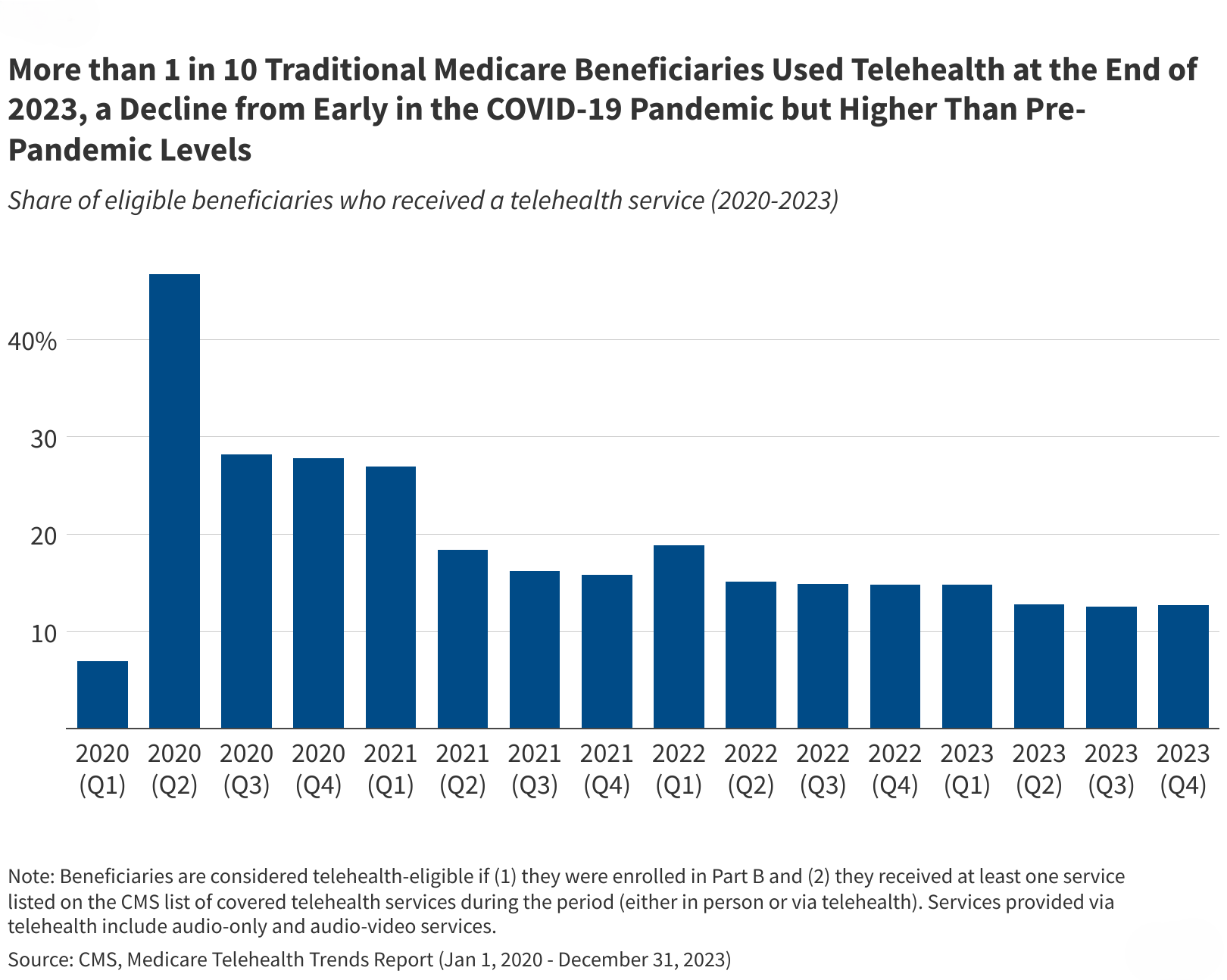
Medicare telehealth usage The landscape of healthcare has dramatically shifted in recent years, with telehealth emerging as a key player in the delivery of medical services. This transformation has been particularly evident in the realm of Medicare, where telehealth has seen a significant uptick in utilization. The Kaiser Family Foundation recently highlighted this trend, noting the legislative changes and policy shifts that have facilitated the growth of telehealth services for Medicare beneficiaries.

The Pandemic’s Role in Telehealth Expansion

Prior to the onset of the COVID-19 pandemic, telehealth was a relatively niche service within Medicare, primarily available to those in rural settings. However, the public health emergency necessitated rapid adaptation, leading to a dramatic increase in telehealth utilization. Temporary measures were introduced, allowing for broader access and coverage, as detailed in the Medicare Telehealth Report. These changes not only increased access but also highlighted the potential of telehealth to address healthcare disparities.

Legislative Measures and Future Prospects

With the official end of the COVID-19 public health emergency on May 11, 2023, Congress faces the challenge of deciding the future of these telehealth flexibilities. There is bipartisan support for extending these measures, as seen in proposed legislation like the Preserving Telehealth, Hospital, and Ambulances Act. However, the majority of these flexibilities are set to expire by December 2024, prompting ongoing discussions about the potential for permanent expansion.

Demographic Disparities in Telehealth Usage

The adoption of telehealth services varies significantly across different demographics. Urban areas have seen higher rates of telehealth use compared to rural regions, likely due to disparities in broadband access and communication technologies, as noted in a Brookings article. Additionally, usage is higher among Asian, Pacific Islander, and Hispanic beneficiaries, suggesting that telehealth may play a role in improving access to care for certain groups.

The Financial Implications

Medicare’s payment structure for telehealth services has also evolved, with current rates matching those of in-person visits. This parity is crucial for encouraging providers to invest in telehealth infrastructure. However, questions remain about the long-term financial impact on the Medicare program. The Congressional Budget Office has estimated the cost of extending telehealth flexibilities, and ongoing research is needed to assess the balance between increased spending and potential savings from reduced emergency department visits and improved medication adherence.

Ensuring Program Integrity

As telehealth becomes more entrenched in the Medicare landscape, concerns about program integrity and potential fraud have arisen. Despite some high-profile cases, investigations have shown minimal evidence of widespread misuse. Recommendations from the MedPAC include increased scrutiny of outlier billing patterns and in-person visit requirements for high-cost services.
In conclusion, while telehealth has proven to be a valuable tool for expanding access to healthcare, its future within Medicare remains uncertain. The ongoing legislative discussions will determine whether the current flexibilities will become a permanent fixture, shaping the healthcare landscape for years to come.


More Articles

Getting licensed or staying ahead in your career can be a journey—but it doesn’t have to be overwhelming. Grab your favorite coffee or tea, take a moment to relax, and browse through our articles. Whether you’re just starting out or renewing your expertise, we’ve got tips, insights, and advice to keep you moving forward. Here’s to your success—one sip and one step at a time!

AI Sentiment Analysis Is Becoming Investors’ New Early‑Warning Signal

AI-powered sentiment analysis is giving real estate investors a major edge by scanning millions of online conversations to detect market shifts long before traditional data responds. From predicting neighborhood momentum to spotting declining tenant satisfaction, this technology captures real-time public emotion across office, retail, and multifamily sectors. As trends in sentiment become as important as demographics and NOI, professionals who understand these tools will stay ahead of the next market move.

Florida’s Property Tax Overhaul Nears Climax as Lawmakers Clash on Bold Reforms

Florida lawmakers are racing toward a high-stakes finish to the legislative session as a sweeping property tax overhaul triggers fierce debate. The House is pushing to eliminate most non-school property taxes on primary homes, while the Senate urges caution and Gov. Ron DeSantis floats even bigger changes. With Democrats warning of budget crises and only weeks left to strike a deal, the future of Florida’s tax structure—and its real estate market—hangs in the balance.

Florida Ends Insurance Assessment Early, Saving Homeowners Millions

Florida homeowners are getting rare financial relief as the emergency insurance assessment—added after multiple insurers collapsed post‑Hurricane Ian—has been paid off two years early. The early payoff wipes out the charge of about $30 per household per year and delivers more than $650 million in statewide savings. With the insurance market stabilizing faster than expected, real estate and insurance professionals can expect a slightly more favorable environment for buyers and policyholders alike.

Commercial Real Estate Investors Eye 2026 as the Year of True Market Recovery

After years of pandemic‑driven disruption, rising vacancies, and interest‑rate volatility, confidence is finally returning to commercial real estate. Major analysts report that leasing activity is accelerating, investor appetite is rising, and high‑quality properties are leading the rebound. With investment volumes expected to jump and vacancies beginning to fall, 2026 is shaping up to be the long‑awaited turning point for the industry.

Sioux Falls Powers Into 2026 With Surging Growth and Unshakable Market Strength

Sioux Falls enters 2026 with a commercial real estate market outperforming nearly every regional competitor. Fueled by strong fundamentals, major private investment, and confidence across all sectors, the city is positioned for what experts call “white‑hot economic activity.” From booming land sales and rising retail absorption to stabilizing office and industrial sectors, the metro’s momentum is undeniable—making it a prime environment for real estate professionals and investors looking for opportunity.

Florida House Passes HB 767, Aiming to Bring Clarity and Transparency to Property Insurance

Florida lawmakers have advanced HB 767, a major insurance transparency bill that would create a statewide online rate database, boost consumer education, and prevent insurers from using land value to inflate premiums. The proposal promises clearer insurance data and stronger accountability—bringing much‑needed relief and insight to homeowners, real estate agents, mortgage professionals, and insurance producers across the state.