The Rapid Evolution of Telehealth Under Medicare
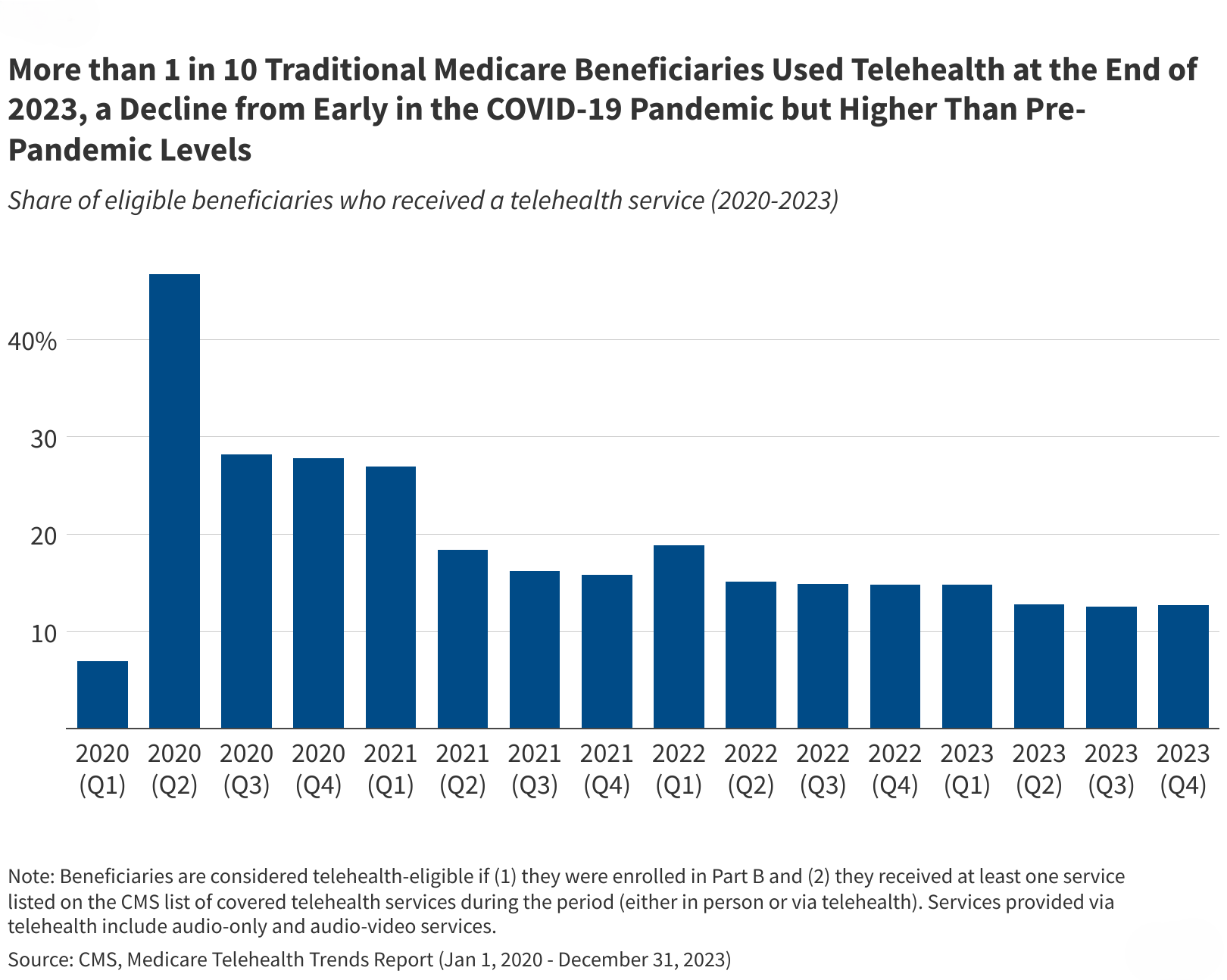
Medicare telehealth usage The landscape of healthcare has dramatically shifted in recent years, with telehealth emerging as a key player in the delivery of medical services. This transformation has been particularly evident in the realm of Medicare, where telehealth has seen a significant uptick in utilization. The Kaiser Family Foundation recently highlighted this trend, noting the legislative changes and policy shifts that have facilitated the growth of telehealth services for Medicare beneficiaries.

The Pandemic’s Role in Telehealth Expansion

Prior to the onset of the COVID-19 pandemic, telehealth was a relatively niche service within Medicare, primarily available to those in rural settings. However, the public health emergency necessitated rapid adaptation, leading to a dramatic increase in telehealth utilization. Temporary measures were introduced, allowing for broader access and coverage, as detailed in the Medicare Telehealth Report. These changes not only increased access but also highlighted the potential of telehealth to address healthcare disparities.

Legislative Measures and Future Prospects

With the official end of the COVID-19 public health emergency on May 11, 2023, Congress faces the challenge of deciding the future of these telehealth flexibilities. There is bipartisan support for extending these measures, as seen in proposed legislation like the Preserving Telehealth, Hospital, and Ambulances Act. However, the majority of these flexibilities are set to expire by December 2024, prompting ongoing discussions about the potential for permanent expansion.

Demographic Disparities in Telehealth Usage

The adoption of telehealth services varies significantly across different demographics. Urban areas have seen higher rates of telehealth use compared to rural regions, likely due to disparities in broadband access and communication technologies, as noted in a Brookings article. Additionally, usage is higher among Asian, Pacific Islander, and Hispanic beneficiaries, suggesting that telehealth may play a role in improving access to care for certain groups.

The Financial Implications

Medicare’s payment structure for telehealth services has also evolved, with current rates matching those of in-person visits. This parity is crucial for encouraging providers to invest in telehealth infrastructure. However, questions remain about the long-term financial impact on the Medicare program. The Congressional Budget Office has estimated the cost of extending telehealth flexibilities, and ongoing research is needed to assess the balance between increased spending and potential savings from reduced emergency department visits and improved medication adherence.

Ensuring Program Integrity

As telehealth becomes more entrenched in the Medicare landscape, concerns about program integrity and potential fraud have arisen. Despite some high-profile cases, investigations have shown minimal evidence of widespread misuse. Recommendations from the MedPAC include increased scrutiny of outlier billing patterns and in-person visit requirements for high-cost services.
In conclusion, while telehealth has proven to be a valuable tool for expanding access to healthcare, its future within Medicare remains uncertain. The ongoing legislative discussions will determine whether the current flexibilities will become a permanent fixture, shaping the healthcare landscape for years to come.

More Articles

Getting licensed or staying ahead in your career can be a journey—but it doesn’t have to be overwhelming. Grab your favorite coffee or tea, take a moment to relax, and browse through our articles. Whether you’re just starting out or renewing your expertise, we’ve got tips, insights, and advice to keep you moving forward. Here’s to your success—one sip and one step at a time!

Florida’s Insurance Crisis Explained: Why Coastal Risk Is Pushing the Market to Its Breaking Point

Florida’s insurance market is under intense pressure as millions of residents and trillions in property wealth cluster along hurricane‑vulnerable coastlines. This article breaks down how decades of growth in high‑risk zones created today’s crisis, why traditional pricing models can’t keep up, and what real estate and insurance professionals must do to stay ahead. It offers actionable insights on underwriting, risk communication, policy partnerships, and resilience planning—critical knowledge for anyone advising Florida homeowners or navigating the state’s evolving insurance landscape.

Sky‑High Insurance Rates Are Now Florida’s “New Normal,” Experts Warn

Florida’s homeowners insurance market may have stabilized, but not in the way residents hoped. After years of runaway increases, premiums have stopped spiking—but they’re holding at painfully high levels. Coastal properties remain the hardest hit, with some policies topping $15,000 a year, while insurers continue demanding costly upgrades and resisting calls for transparency. For real estate professionals, understanding these pricing pressures is becoming essential as insurance costs increasingly shape buyer decisions across the state.

Hurricane Insurance in Florida: The 2026 Coverage Guide Every Homeowner Needs

Florida homeowners face soaring premiums, shrinking insurer options, and storms that grow stronger each year. This article breaks down what hurricane insurance actually covers, how deductibles really work, why flood insurance is essential, and what professionals in real estate, mortgage, and insurance must understand to protect clients and properties before the next major storm hits.

The Legacy Leader Steps Down: Teresa King Kinney Retires After 33 Years Transforming MIAMI Realtors

Teresa King Kinney, one of the most influential executives in modern real estate, is retiring after 33 years as CEO of the MIAMI Association of Realtors. Under her leadership, the organization grew from 5,000 members to 60,000, became a global real estate powerhouse, and built the nation’s largest association‑owned MLS. As she transitions into CEO Emeritus, MIAMI prepares for a new era shaped by the foundation she spent decades building.

Miami’s Commercial Real Estate Surges Back as Retail Leads a 2025 Rebound

Miami’s commercial property market is heating up again, posting an 11% jump in investment volume for 2025. The surge is driven largely by a revitalized retail sector fueled by population growth, strong tourism, and new mixed‑use development. While office and industrial activity remains steady but softer, investor confidence is returning as Miami’s CRE landscape matures and buyers re‑enter the market with renewed interest in high‑traffic retail opportunities.

The Fed Signals Big Mortgage Rule Changes That Could Reshape Home Lending

The Federal Reserve is preparing major changes to mortgage regulations in an effort to pull more mortgage activity back into the banking sector. With banks losing significant market share to nonbank lenders over the past decade, Fed Vice Chair for Supervision Michelle Bowman says new proposals may ease capital requirements and make mortgage servicing more attractive for banks. These shifts could have wide‑ranging effects on real estate professionals, lenders, and borrowers as the balance of power in the mortgage market begins to shift once again.