The Rapid Evolution of Telehealth Under Medicare
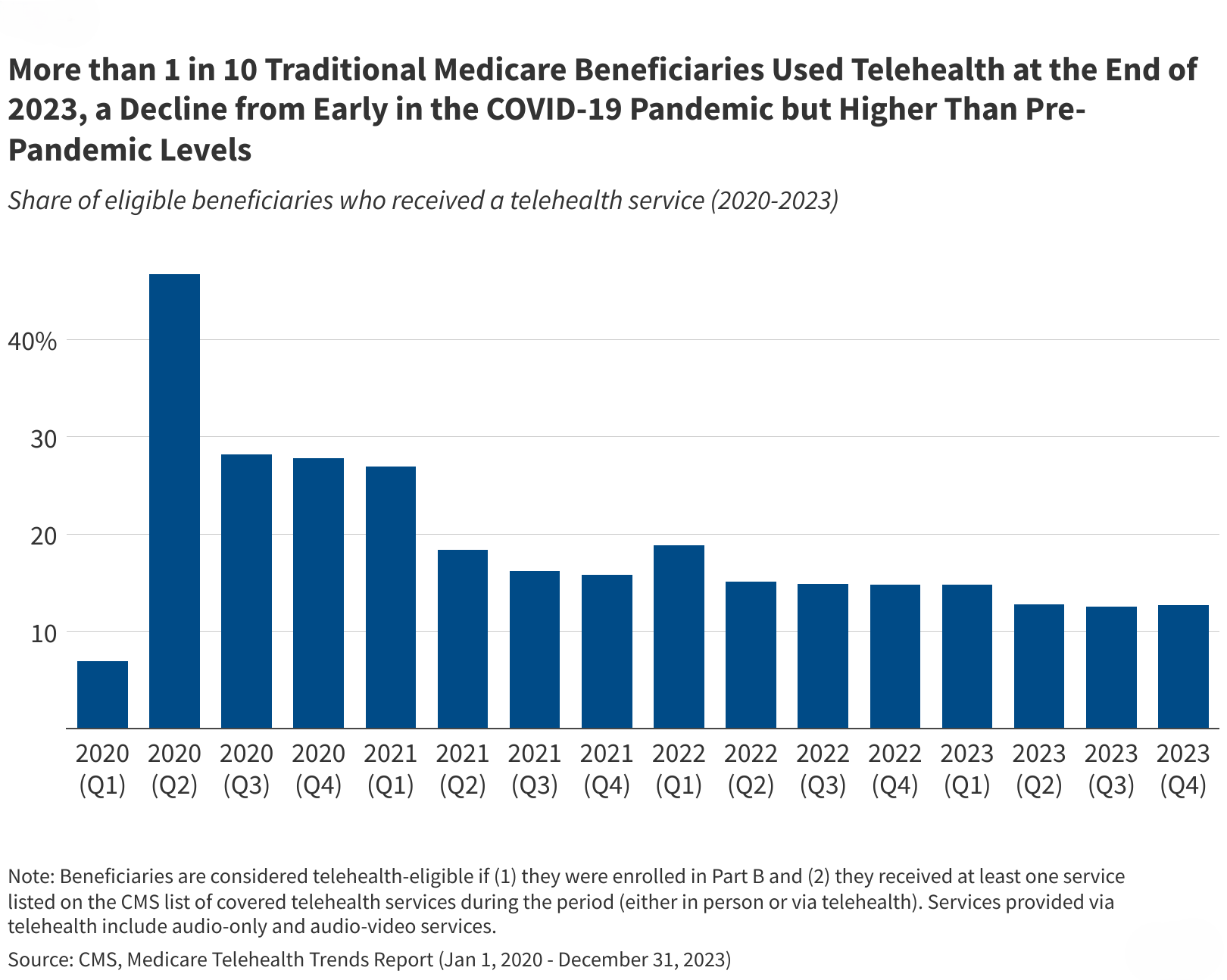
Medicare telehealth usage The landscape of healthcare has dramatically shifted in recent years, with telehealth emerging as a key player in the delivery of medical services. This transformation has been particularly evident in the realm of Medicare, where telehealth has seen a significant uptick in utilization. The Kaiser Family Foundation recently highlighted this trend, noting the legislative changes and policy shifts that have facilitated the growth of telehealth services for Medicare beneficiaries.

The Pandemic’s Role in Telehealth Expansion

Prior to the onset of the COVID-19 pandemic, telehealth was a relatively niche service within Medicare, primarily available to those in rural settings. However, the public health emergency necessitated rapid adaptation, leading to a dramatic increase in telehealth utilization. Temporary measures were introduced, allowing for broader access and coverage, as detailed in the Medicare Telehealth Report. These changes not only increased access but also highlighted the potential of telehealth to address healthcare disparities.

Legislative Measures and Future Prospects

With the official end of the COVID-19 public health emergency on May 11, 2023, Congress faces the challenge of deciding the future of these telehealth flexibilities. There is bipartisan support for extending these measures, as seen in proposed legislation like the Preserving Telehealth, Hospital, and Ambulances Act. However, the majority of these flexibilities are set to expire by December 2024, prompting ongoing discussions about the potential for permanent expansion.

Demographic Disparities in Telehealth Usage

The adoption of telehealth services varies significantly across different demographics. Urban areas have seen higher rates of telehealth use compared to rural regions, likely due to disparities in broadband access and communication technologies, as noted in a Brookings article. Additionally, usage is higher among Asian, Pacific Islander, and Hispanic beneficiaries, suggesting that telehealth may play a role in improving access to care for certain groups.

The Financial Implications

Medicare’s payment structure for telehealth services has also evolved, with current rates matching those of in-person visits. This parity is crucial for encouraging providers to invest in telehealth infrastructure. However, questions remain about the long-term financial impact on the Medicare program. The Congressional Budget Office has estimated the cost of extending telehealth flexibilities, and ongoing research is needed to assess the balance between increased spending and potential savings from reduced emergency department visits and improved medication adherence.

Ensuring Program Integrity

As telehealth becomes more entrenched in the Medicare landscape, concerns about program integrity and potential fraud have arisen. Despite some high-profile cases, investigations have shown minimal evidence of widespread misuse. Recommendations from the MedPAC include increased scrutiny of outlier billing patterns and in-person visit requirements for high-cost services.
In conclusion, while telehealth has proven to be a valuable tool for expanding access to healthcare, its future within Medicare remains uncertain. The ongoing legislative discussions will determine whether the current flexibilities will become a permanent fixture, shaping the healthcare landscape for years to come.

More Articles

Getting licensed or staying ahead in your career can be a journey—but it doesn’t have to be overwhelming. Grab your favorite coffee or tea, take a moment to relax, and browse through our articles. Whether you’re just starting out or renewing your expertise, we’ve got tips, insights, and advice to keep you moving forward. Here’s to your success—one sip and one step at a time!

Florida’s Property Insurance Crisis Reaches Breaking Point as Lawmakers Hit Pause

Florida now leads the nation in property insurance costs, with many homeowners paying more than $10,000 a year for shrinking coverage and higher deductibles. Despite nearly half of hurricane‑related claims ending with no payout and appeals failing over 90% of the time, state leaders say reforms “need more time to work.” With key relief bills stalled and real estate professionals feeling the shockwaves, experts warn that legislative inaction is deepening a crisis that threatens homeownership and the state’s economic stability.

A Time of Reckoning for Commercial Real Estate

Banks are finally calling in billions tied to troubled commercial real estate loans, pushing delinquency rates to historic highs and ending years of “extend and pretend.” With more than 12% of office loans now delinquent and $875 billion in commercial debt maturing in 2026, regional banks and property owners are facing mounting pressure. As valuations drop and refinancing becomes harder, experts warn that tighter lending standards and broader economic ripple effects are on the horizon—making strategic preparation essential for today’s real estate and finance professionals.

Florida Ends FIGA’s 1% Insurance Assessment Two Years Early

Florida policyholders are getting rare good news: the Florida Insurance Guaranty Association is ending its 1% emergency insurance assessment on October 1—two years ahead of schedule. The decision follows a calmer hurricane season, fewer insurer insolvencies, and growing market stability. The early termination is expected to save Floridians up to $650 million, with the average homeowner seeing about $31 in annual savings. This marks another milestone in the state’s insurance market recovery after major legislative reforms in 2022 and 2023.

The Moment Real Estate Realized AI Isn’t a Toy Anymore

The real estate industry has officially moved past its AI honeymoon phase. What began as a fun, optional tool has quietly become the backbone of how agents create content, communicate with clients, and market properties. But with that shift comes rising concern about authenticity, legal risks, and whether consumers will start questioning what they’re really paying agents for. As AI blends into everything from listing descriptions to client advice, professionals now face a new challenge: proving the human value behind the technology.

Commercial Real Estate Is Finally Turning Around: Why 2026 Could Be the Big Rebound Year

After years of volatility, industry analysts say commercial real estate may finally be on the verge of a major comeback. Investment activity is rising, leasing demand is strengthening, and key cities like Manhattan are leading a broader national recovery. With vacancy rates expected to drop and high‑quality buildings outperforming the rest, 2026 is shaping up to be the turning point investors and professionals have been waiting for.

Rising Costs and Slower Premium Growth Signal a Tougher 2026 for P/C Insurance

AM Best warns that the property and casualty insurance market is heading into a more challenging 2026 as premium growth slows, inflation drives up claims costs, and combined ratios rise. Despite a strong 2025, moderating rates, higher repair and construction expenses, and ongoing reserve deficiencies are pressuring profitability. While commercial lines and personal lines both feel the strain, the E&S market continues to expand as traditional carriers pull back. This shifting landscape highlights the need for insurance professionals to stay sharp, informed, and adaptable.