How Redmond’s “Prisma” Project Is Rewriting the Rules of Affordable Housing Near Transit
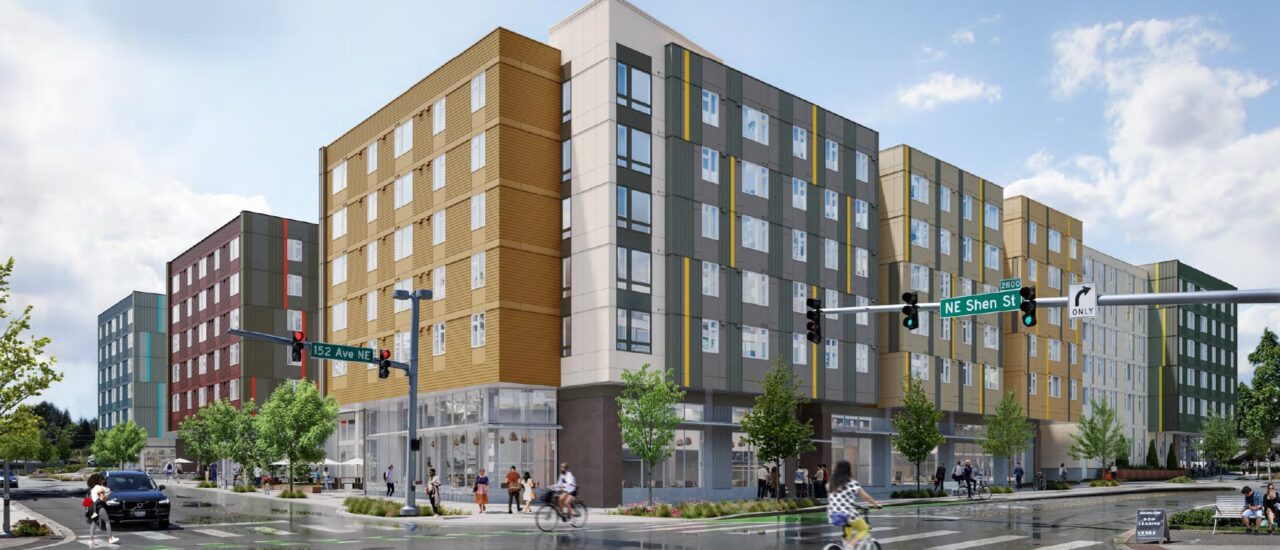
Mixed-use development near transit

Every conversation about housing in Washington seems to echo the same refrain: It’s too expensive, too scarce, and too far from where people work and live. But in Redmond, Washington, a powerful coalition of local government, nonprofits, regional partners, and philanthropic organizations is proving that thoughtful collaboration can break the cycle.

The result is Prisma—a six‑story, mixed-use, transit‑oriented development rising next to Overlake Village Station. Its mission is critical and refreshingly bold: deliver deeply affordable homes for those earning 50% of AMI or less, including dozens of residences reserved for families, people with disabilities, and extremely low-income households.

Quick Highlights

• Surplus Sound Transit land valued at $30M sold for just $250K.
• 328 units, including 55 set aside for households at or below 30% AMI.
• A healthy mix of studios, family-sized units, accessible apartments, and ground-floor retail.
• A national model for equitable transit-oriented development.

Why Redmond Needed a New Approach

Like much of East King County, Redmond has watched its housing prices skyrocket over the past decade, pushing workers farther from jobs, schools, and daily conveniences. A booming economy brought growth—but demand for smaller, more attainable units surged while market-rate developers focused on studios and one-bedrooms.

The city built an impressive “housing toolbox”: inclusionary zoning, expanded land‑use options, expedited permitting, pooled regional funding, and voluntary tax exemptions. These tools supported over 3,900 multifamily units since 2020, but most were affordable only to households earning 60% to 80% of AMI.

The missing piece? Housing for families earning 50% AMI or less. Countywide projections show that over 70% of Redmond’s future housing need through 2050 is concentrated in that income bracket. Prisma delivers directly to this underserved group.

Turning Surplus Transit Land Into Stable Homes

Sound Transit’s Equitable TOD Policy ensures that excess transit land supports community needs. Prisma benefited dramatically: land valued at $30 million was offered at just $250,000—removing one of the largest barriers to deep affordability.

The development also includes a covenant maintaining affordability for at least 50 years, supporting stability and minimizing displacement as the broader tech corridor continues to boom.

A Funding Puzzle Solved Through Collaboration

Prisma demonstrates how layered financing—when carefully structured—makes the impossible possible:

• Sound Transit: land at a near‑donation price.
• King County: over $5 million in gap financing.
• Amazon Housing Equity Fund: soft loans supporting TOD development.
• Washington State Housing Finance Commission: LIHTC allocations + bonds.
• City of Redmond: nearly $3 million in funding plus fee waivers + expedited permits.
• ARCH: regional housing funds pooled across East King County.

With front‑loaded public investment and aligned goals, the project is set to begin construction in early 2026 and open its doors in 2028.

A Blueprint for Cities Nationwide

Prisma is more than another development—it’s a playbook for pairing transit, affordability, and equitable regional planning. Its replicable strategies include:

• Leveraging discounted transit land to reach deep affordability.
• Stacking multiple subsidies instead of relying on a single funding stream.
• Prioritizing families, fully accessible units, and long-term affordability covenants.

For real estate professionals, planners, and policy leaders, Prisma stands as an essential case study in modern development strategy. It illustrates how collaborative leadership can reshape an entire region’s housing future.

If you’re exploring urban development, housing strategy, or seeking to advance your real estate knowledge, a strong educational foundation is essential. Programs at Cameron Academy offer flexible, accredited pathways to help professionals thrive in a rapidly evolving industry—especially as projects like Prisma redefine the future of U.S. housing.


More Articles

Getting licensed or staying ahead in your career can be a journey—but it doesn’t have to be overwhelming. Grab your favorite coffee or tea, take a moment to relax, and browse through our articles. Whether you’re just starting out or renewing your expertise, we’ve got tips, insights, and advice to keep you moving forward. Here’s to your success—one sip and one step at a time!

Escalating Risk of Fraud in the Title Industry

The title industry is facing a growing threat of fraud, driven by the decrease in transactions. With fewer transactions taking place, the percentage of potential fraud per file has significantly increased. It is crucial for industry professionals and consumers to be aware of the risks and take necessary precautions to safeguard their interests. In this article, we explore the two primary types of fraud that are becoming more prevalent in the title industry: escrow account manipulation and seller impersonation fraud. We also discuss the strategies being implemented to combat fraud and the importance of collaboration among industry stakeholders. By understanding the evolving landscape of fraud in the title industry and staying informed about the latest prevention measures, individuals can protect themselves and ensure the integrity of real estate transactions.

By |October 30, 2023|Categories: Title Industry Fraud Prevention|Tags: |0 Comments

Interest Rate Hikes: Philadelphia Federal Reserve President Advocates for a Pause

Philadelphia Federal Reserve President Patrick Harker is advocating for a pause in the ongoing cycle of interest rate hikes. He believes the central bank should assess the impact of previous increases on the economy before proceeding further. His stance reflects concerns about potential harm to economic growth. The Federal Reserve is under pressure to continue raising interest rates to prevent the economy from overheating and to keep inflation in check. However, Harker believes the current pace of rate hikes may be too aggressive. This article delves deeper into Harker's stance and the ongoing debate within the Federal Reserve.

By |October 29, 2023|Categories: Monetary Policy|Tags: |0 Comments

Value Takes Center Stage for Real Estate Brokers Amid Commission Lawsuit Uncertainty

The real estate industry is currently facing a class-action commission lawsuit, prompting major companies to reevaluate their strategies. Regardless of the lawsuit's outcome, real estate brokers are focusing on the value they bring to clients and preparing for potential changes in the industry. Brokers are prioritizing transparency and educating clients about the importance of real estate agents. They are implementing various strategies to adapt to potential industry changes and ensure they continue to provide exceptional service. Real estate brokers are proactively addressing the uncertainty brought about by the commission lawsuit. They are prioritizing transparency, education, and diversification to ensure they continue to deliver exceptional service and remain valuable partners to their clients. By adapting to potential industry changes, brokers are embracing the evolving landscape of the real estate industry and positioning themselves for continued success.

Blend IMB Essentials: A Cost-Effective Solution for Retail Independent Mortgage Banks

Blend, a prominent player in the digital lending technology space, has recently introduced Blend IMB Essentials, a lower-cost version of its mortgage suite specifically designed for retail independent mortgage banks (IMBs). This new offering aims to provide a more affordable solution for smaller lenders while still incorporating many of the features found in Blend's standard offering. One of the key features of Blend IMB Essentials is its ability to streamline the mortgage application process for retail IMBs. By pulling soft credits instead of tri-merge credits during the initial phase of the application, Blend IMB Essentials reduces costs and saves time for both lenders and borrowers. This innovative approach enhances operational efficiency and allows lenders to focus on providing a seamless experience for their clients.

By |October 28, 2023|Categories: Digital Lending Technology|Tags: |0 Comments

Insights into New Mortgage Servicing Regulations, Basel III, and CFPB Funding

The forthcoming changes in mortgage servicing regulations, proposed updates to Basel III, and discussions surrounding the funding structure of the Consumer Financial Protection Bureau (CFPB) have been making waves in the financial industry. In this article, we delve into the key points raised by CFPB Director Rohit Chopra and explore the potential implications of these developments on the mortgage industry. As the COVID-19 pandemic continues to impact borrowers, enhancing consumer protections and ensuring that mortgage servicers provide clearer and more timely information has become crucial. The proposed amendments to the mortgage servicing rules aim to address these concerns and establish better communication channels regarding loss mitigation options and foreclosure prevention measures.

Implications of the 8% Mortgage for Homebuyers and the Housing Market

The mortgage rates for 30-year fixed-rate loans have surged to 8%, a level not seen since 2007. This sudden increase has far-reaching implications for homebuyers, homebuilders, and the overall housing market. The rise in mortgage rates means a higher cost of borrowing, making homeownership more expensive for potential buyers. Homebuilders are also likely to face challenges due to these higher mortgage rates. As the cost of borrowing increases, the demand for new homes may decline, leading to a slowdown in new home construction. Cameron Academy provides comprehensive insights into these market changes, helping both homebuyers and homebuilders navigate these challenging times.

By |October 27, 2023|Categories: Real Estate Industry|Tags: |0 Comments