How Redmond’s “Prisma” Project Is Rewriting the Rules of Affordable Housing Near Transit
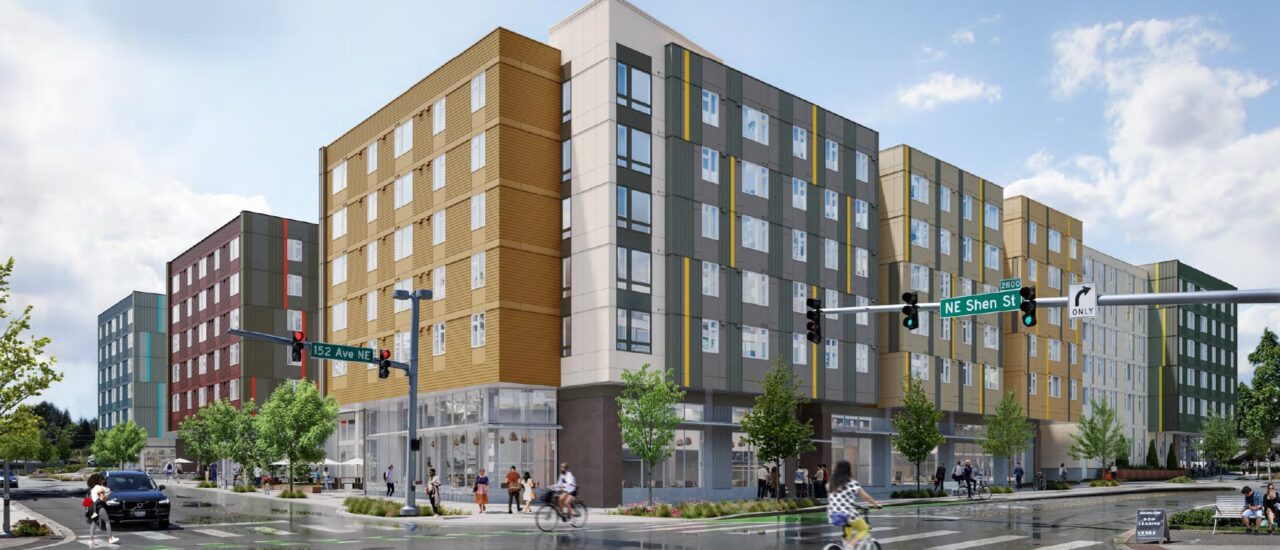
Mixed-use development near transit

Every conversation about housing in Washington seems to echo the same refrain: It’s too expensive, too scarce, and too far from where people work and live. But in Redmond, Washington, a powerful coalition of local government, nonprofits, regional partners, and philanthropic organizations is proving that thoughtful collaboration can break the cycle.

The result is Prisma—a six‑story, mixed-use, transit‑oriented development rising next to Overlake Village Station. Its mission is critical and refreshingly bold: deliver deeply affordable homes for those earning 50% of AMI or less, including dozens of residences reserved for families, people with disabilities, and extremely low-income households.

Quick Highlights

• Surplus Sound Transit land valued at $30M sold for just $250K.
• 328 units, including 55 set aside for households at or below 30% AMI.
• A healthy mix of studios, family-sized units, accessible apartments, and ground-floor retail.
• A national model for equitable transit-oriented development.

Why Redmond Needed a New Approach

Like much of East King County, Redmond has watched its housing prices skyrocket over the past decade, pushing workers farther from jobs, schools, and daily conveniences. A booming economy brought growth—but demand for smaller, more attainable units surged while market-rate developers focused on studios and one-bedrooms.

The city built an impressive “housing toolbox”: inclusionary zoning, expanded land‑use options, expedited permitting, pooled regional funding, and voluntary tax exemptions. These tools supported over 3,900 multifamily units since 2020, but most were affordable only to households earning 60% to 80% of AMI.

The missing piece? Housing for families earning 50% AMI or less. Countywide projections show that over 70% of Redmond’s future housing need through 2050 is concentrated in that income bracket. Prisma delivers directly to this underserved group.

Turning Surplus Transit Land Into Stable Homes

Sound Transit’s Equitable TOD Policy ensures that excess transit land supports community needs. Prisma benefited dramatically: land valued at $30 million was offered at just $250,000—removing one of the largest barriers to deep affordability.

The development also includes a covenant maintaining affordability for at least 50 years, supporting stability and minimizing displacement as the broader tech corridor continues to boom.

A Funding Puzzle Solved Through Collaboration

Prisma demonstrates how layered financing—when carefully structured—makes the impossible possible:

• Sound Transit: land at a near‑donation price.
• King County: over $5 million in gap financing.
• Amazon Housing Equity Fund: soft loans supporting TOD development.
• Washington State Housing Finance Commission: LIHTC allocations + bonds.
• City of Redmond: nearly $3 million in funding plus fee waivers + expedited permits.
• ARCH: regional housing funds pooled across East King County.

With front‑loaded public investment and aligned goals, the project is set to begin construction in early 2026 and open its doors in 2028.

A Blueprint for Cities Nationwide

Prisma is more than another development—it’s a playbook for pairing transit, affordability, and equitable regional planning. Its replicable strategies include:

• Leveraging discounted transit land to reach deep affordability.
• Stacking multiple subsidies instead of relying on a single funding stream.
• Prioritizing families, fully accessible units, and long-term affordability covenants.

For real estate professionals, planners, and policy leaders, Prisma stands as an essential case study in modern development strategy. It illustrates how collaborative leadership can reshape an entire region’s housing future.

If you’re exploring urban development, housing strategy, or seeking to advance your real estate knowledge, a strong educational foundation is essential. Programs at Cameron Academy offer flexible, accredited pathways to help professionals thrive in a rapidly evolving industry—especially as projects like Prisma redefine the future of U.S. housing.

More Articles

Getting licensed or staying ahead in your career can be a journey—but it doesn’t have to be overwhelming. Grab your favorite coffee or tea, take a moment to relax, and browse through our articles. Whether you’re just starting out or renewing your expertise, we’ve got tips, insights, and advice to keep you moving forward. Here’s to your success—one sip and one step at a time!

New Policy by REBNY Mandates Direct Payment to Buyer’s Agent

The Real Estate Board of New York (REBNY) has announced a new policy requiring sellers to directly pay the buyer's agent, effective from January 1. This significant shift aims to enhance transparency and address potential conflicts of interest in real estate transactions. The policy comes amidst ongoing lawsuits related to commission sharing and allegations of unethical practices. The implementation of this policy is expected to impact the real estate industry significantly, with sellers needing to factor in the cost of the buyer's agent commission when pricing their properties.

By |October 27, 2023|Categories: Real Estate Policy|Tags: |0 Comments

Senate Decision Sparks Controversy Over Small Business Lending

In a significant development, the U.S. Senate has voted to block the implementation of the Consumer Financial Protection Bureau's (CFPB) small business lending rule. This decision has sparked a heated debate over the impact it may have on small businesses across the country. President Biden, in response, has threatened to veto the Senate's decision, emphasizing his commitment to fair lending practices and supporting small businesses. The CFPB's rule, implemented in October 2020, requires lenders to collect and report data on small business lending. This includes information on the race, sex, and ethnicity of borrowers, with the aim of identifying and addressing potential disparities in access to credit for minority-owned and women-owned small businesses. The Senate's decision to block the CFPB's rule has been celebrated by small business advocates and industry groups critical of the CFPB's regulatory approach. However, the implications of this decision remain uncertain, as President Biden's threatened veto looms large.

By |October 26, 2023|Categories: Small Business Lending|Tags: |0 Comments

Assessing the Merits of Class-Action Commission Lawsuits

The world of real estate has recently been shaken by a wave of class-action commission lawsuits, sparking a contentious debate. These lawsuits demand scrutiny to understand their implications and validity. A primary counter-argument is the freedom of consumer choice. In today's digital age, potential buyers and sellers have access to a wealth of online resources, enabling them to undertake real estate transactions independently. Another critical factor is the negotiability of commissions in the real estate sector. Commission rates are not fixed, they are subject to negotiation between the agent and the client. This flexibility allows for open discussions, leading to mutually agreeable terms. Despite the emergence of discount brokerage firms, consumers continue to place their trust in traditional real estate agents. This preference stems not only from cost considerations but also from the value of expertise, guidance, and personalized service that agents offer. Real estate transactions are complex and often involve significant financial investments. Trusted agents provide invaluable insights, market knowledge, and negotiation skills, helping clients make informed decisions and navigate potential challenges confidently.

Understanding the Current Housing Market: The Affordability of the Typical US Home

In the last two years, the housing market has seen a dramatic shift. Soaring mortgage rates and rising home prices have led to the fastest erosion in housing market affordability in modern history, with first-time homebuyers feeling the impact the most. The housing market has undergone significant changes over the past two years, leading to a substantial increase in the income required to purchase a median-priced home. According to recent data from Redfin, a homebuyer must now earn $114,627 to afford the typical U.S. home. This is a 15% increase from the previous year and more than 50% higher than pre-pandemic levels.

Unwavering New Listings Data Amid 8% Mortgage Rates

The housing market has shown remarkable resilience in the face of rising mortgage rates. Despite rates reaching 8%, new listings data remains steady, indicating a healthy supply of homes for sale. This stability is a positive sign for both buyers and sellers, demonstrating the strength of the housing market. Despite the increase in mortgage rates, sellers in the housing market have maintained their confidence. This confidence is reflected in the steady new listing data, as sellers continue to list their properties without hesitation. It indicates that sellers believe there is still strong demand from buyers and that the potential financial impact of higher mortgage rates does not outweigh the benefits of selling their homes.

Revolution in the Real Estate Industry: New Requirement for Sellers to Compensate Buyers’ Agents

The Real Estate Board of New York (REBNY) has introduced a groundbreaking requirement for sellers to directly compensate buyers' agents. This significant change has the potential to transform the real estate industry, eliminating conflicts of interest and promoting a more client-centric approach. This shift in the compensation landscape aims to create a more transparent and trustworthy environment for buyers. Moreover, this shift towards a client-centric approach aligns with the mission and values of Cameron Academy. As a leading provider of real estate education, Cameron Academy is committed to empowering professionals to navigate the evolving industry landscape and prioritize the best interests of their clients.

By |October 25, 2023|Categories: Real Estate Industry|Tags: |0 Comments