How Redmond’s “Prisma” Project Is Rewriting the Rules of Affordable Housing Near Transit
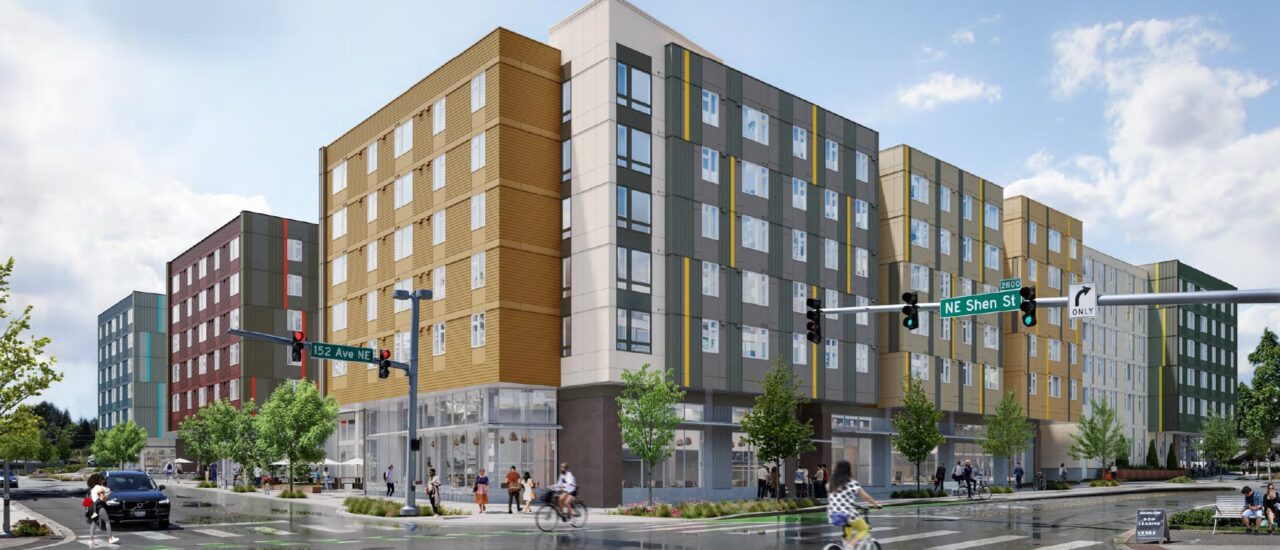
Mixed-use development near transit

Every conversation about housing in Washington seems to echo the same refrain: It’s too expensive, too scarce, and too far from where people work and live. But in Redmond, Washington, a powerful coalition of local government, nonprofits, regional partners, and philanthropic organizations is proving that thoughtful collaboration can break the cycle.

The result is Prisma—a six‑story, mixed-use, transit‑oriented development rising next to Overlake Village Station. Its mission is critical and refreshingly bold: deliver deeply affordable homes for those earning 50% of AMI or less, including dozens of residences reserved for families, people with disabilities, and extremely low-income households.

Quick Highlights

• Surplus Sound Transit land valued at $30M sold for just $250K.
• 328 units, including 55 set aside for households at or below 30% AMI.
• A healthy mix of studios, family-sized units, accessible apartments, and ground-floor retail.
• A national model for equitable transit-oriented development.

Why Redmond Needed a New Approach

Like much of East King County, Redmond has watched its housing prices skyrocket over the past decade, pushing workers farther from jobs, schools, and daily conveniences. A booming economy brought growth—but demand for smaller, more attainable units surged while market-rate developers focused on studios and one-bedrooms.

The city built an impressive “housing toolbox”: inclusionary zoning, expanded land‑use options, expedited permitting, pooled regional funding, and voluntary tax exemptions. These tools supported over 3,900 multifamily units since 2020, but most were affordable only to households earning 60% to 80% of AMI.

The missing piece? Housing for families earning 50% AMI or less. Countywide projections show that over 70% of Redmond’s future housing need through 2050 is concentrated in that income bracket. Prisma delivers directly to this underserved group.

Turning Surplus Transit Land Into Stable Homes

Sound Transit’s Equitable TOD Policy ensures that excess transit land supports community needs. Prisma benefited dramatically: land valued at $30 million was offered at just $250,000—removing one of the largest barriers to deep affordability.

The development also includes a covenant maintaining affordability for at least 50 years, supporting stability and minimizing displacement as the broader tech corridor continues to boom.

A Funding Puzzle Solved Through Collaboration

Prisma demonstrates how layered financing—when carefully structured—makes the impossible possible:

• Sound Transit: land at a near‑donation price.
• King County: over $5 million in gap financing.
• Amazon Housing Equity Fund: soft loans supporting TOD development.
• Washington State Housing Finance Commission: LIHTC allocations + bonds.
• City of Redmond: nearly $3 million in funding plus fee waivers + expedited permits.
• ARCH: regional housing funds pooled across East King County.

With front‑loaded public investment and aligned goals, the project is set to begin construction in early 2026 and open its doors in 2028.

A Blueprint for Cities Nationwide

Prisma is more than another development—it’s a playbook for pairing transit, affordability, and equitable regional planning. Its replicable strategies include:

• Leveraging discounted transit land to reach deep affordability.
• Stacking multiple subsidies instead of relying on a single funding stream.
• Prioritizing families, fully accessible units, and long-term affordability covenants.

For real estate professionals, planners, and policy leaders, Prisma stands as an essential case study in modern development strategy. It illustrates how collaborative leadership can reshape an entire region’s housing future.

If you’re exploring urban development, housing strategy, or seeking to advance your real estate knowledge, a strong educational foundation is essential. Programs at Cameron Academy offer flexible, accredited pathways to help professionals thrive in a rapidly evolving industry—especially as projects like Prisma redefine the future of U.S. housing.


More Articles

Getting licensed or staying ahead in your career can be a journey—but it doesn’t have to be overwhelming. Grab your favorite coffee or tea, take a moment to relax, and browse through our articles. Whether you’re just starting out or renewing your expertise, we’ve got tips, insights, and advice to keep you moving forward. Here’s to your success—one sip and one step at a time!

AI: A Revolutionary Force in Property Valuation

The advent of Artificial Intelligence (AI) has ushered in a new era in the realm of property valuation and appraisal. AI, a formidable tool capable of swiftly analyzing vast amounts of data, provides real-time insights into property values. However, the importance of human expertise in interpreting data and making informed judgments cannot be undermined. A blend of AI and human judgment ensures accurate and reliable property valuations. AI has also made significant strides in the development of valuation products for Home Equity Lines of Credit (HELOCs) and second-lien mortgages. These products leverage AI technology to assess risk more effectively, providing lenders with a comprehensive understanding of the property's value. As AI continues to evolve, we can expect further advancements in the property valuation and appraisal process. The future of property valuations lies in the synergy between AI and human expertise, ensuring accurate, reliable, and contextually informed property valuations.

Fluctuating Real Estate Market: An Insight

The U.S. housing market has experienced a significant surge in home prices, marking the largest annual increase since February 2023. In August alone, home prices recorded a remarkable 3.7% gain. While this upward trend has been observed across the country, there are specific housing markets where prices are projected to decline. In this article, we explore the factors driving the rise in home prices and delve into the markets that are likely to experience price drops. Join us as we navigate through the intricacies of the housing market, uncovering the driving forces behind the price increase and shedding light on the markets where caution may be warranted.

By |October 10, 2023|Categories: Real Estate Market Trends|Tags: |0 Comments

Real Estate Revolution: RE/MAX’s Proposed Agreement Ushers in New Era

The real estate industry is abuzz with the news of RE/MAX's proposed agreement that effectively ends the National Association of Realtors (NAR) membership requirement and commission rule. This groundbreaking settlement has far-reaching implications for RE/MAX agents and franchisees, as well as the broader real estate industry. The proposed settlement by RE/MAX marks a significant departure from the status quo. By eliminating the NAR membership requirement and commission rule, RE/MAX is paving the way for a more open and competitive real estate market. This move has the potential to disrupt long-standing practices and reshape the industry as we know it.

Cryptocurrencies: Chase Bank’s New Era for Mortgage Payments

Chase Bank has made a groundbreaking decision to accept cryptocurrencies, including SHIB and XRP, as a form of payment for mortgage loans. This move marks a significant milestone in the mainstream adoption of digital currencies. It offers numerous benefits for both customers and Chase Bank, providing a convenient and efficient way to make mortgage payments and attracting tech-savvy customers. However, it also comes with risks due to the volatility of digital currencies. This development has the potential to reshape the financial industry and the way we think about mortgage payments. Explore more about finance and technology with Cameron Academy's online career education courses.

5% Down Payment Option for Multifamily Properties: A New Initiative by Fannie Mae

Fannie Mae, a government-sponsored enterprise, has launched a new initiative to expand homeownership opportunities. This initiative introduces a 5% down payment option, revolutionizing the traditional requirements for purchasing multifamily homes. The program offers aspiring homeowners and investors the chance to secure a multifamily property with just a 5% down payment. This reduced requirement breaks down the barriers that have hindered many individuals from entering the multifamily housing market. The program is available for both owner-occupied and non-owner-occupied multifamily properties, offering flexibility for investors and homeowners alike. Discover how Fannie Mae's 5% down payment option can help you achieve your dream of owning a multifamily property. Contact our team today to learn more about Fannie Mae's 5% down payment option and find the perfect multifamily property for your needs.

Industry’s Response to Redfin-NAR Split: A Significant Development

In a surprising turn of events, Redfin, a prominent real estate brokerage, has made the decision to sever ties with the National Association of Realtors (NAR). This move has sparked a wave of reactions within the industry, with experts weighing in on the potential implications for the real estate market. Redfin's criticism of NAR's rules and regulations stems from their belief in the need for innovation and competition in the real estate market. The industry's response to the Redfin-NAR split has been mixed. Some industry experts view this split as a positive development that will foster healthy competition and drive innovation in the real estate market. However, not everyone shares this optimistic outlook. Critics argue that the split could potentially undermine the stability and unity of the real estate market. The Redfin-NAR split has far-reaching implications for the future of the real estate industry. It highlights the ongoing tensions and debates surrounding the role of traditional brokerages versus emerging online platforms. The split also raises important questions about industry regulations and the balance between competition and cooperation.

By |October 7, 2023|Categories: Real Estate Industry|Tags: |0 Comments